AUTONEWS
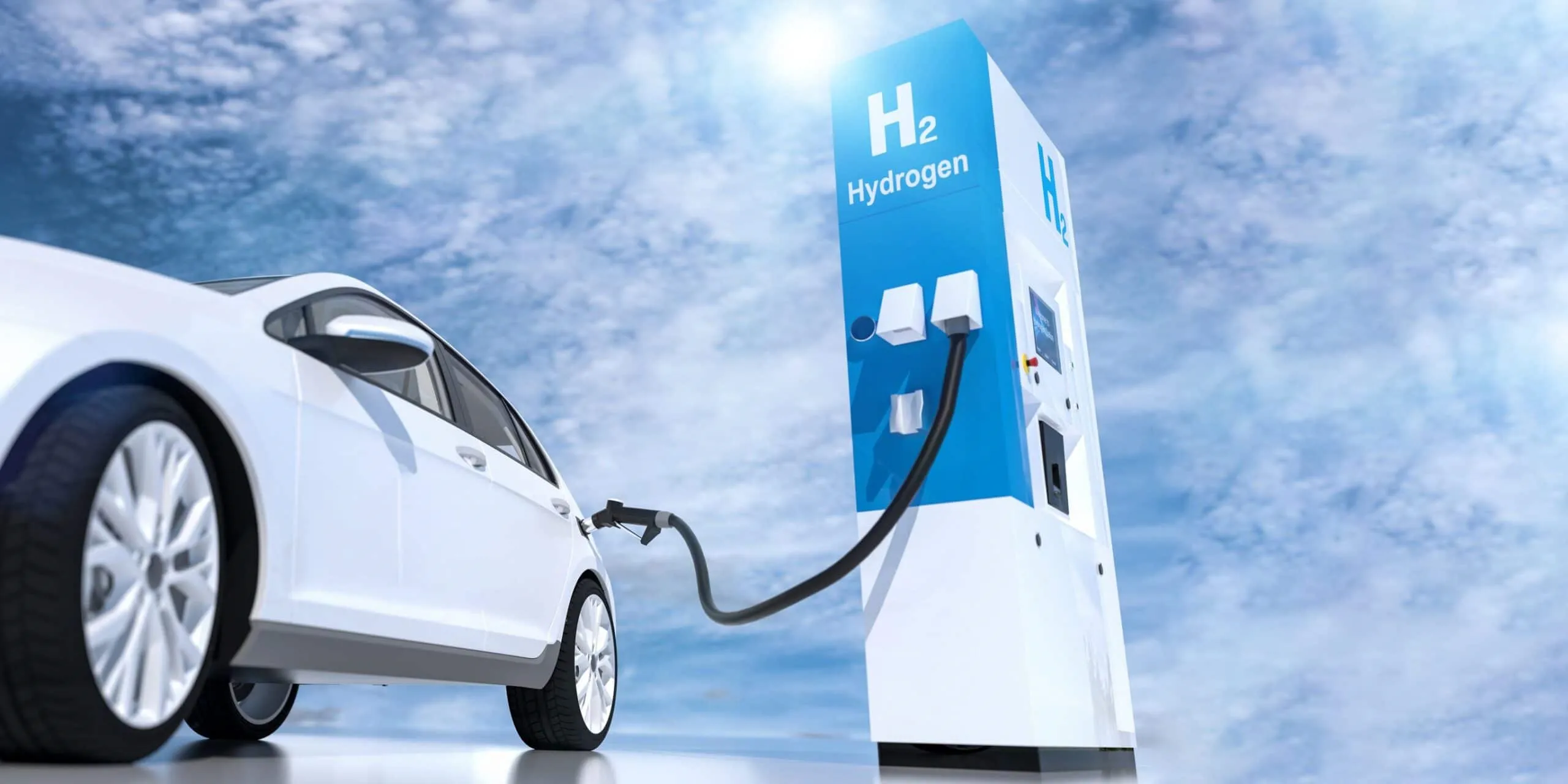
Breaking fuel cell barriers: New platinum catalyst brings high-efficiency hydrogen vehicles closer to commercialization
A research team has developed a next-generation platinum-based catalyst that improves both activity and durability in hydrogen fuel cells. The study is published in Advanced Materials. The team was led by Professor Sang Uck Lee of the School of Chemical Engineering at Sungkyunkwan University, with Ph.D. candidate Jun Ho Seok as a co-first author and Dr. Sung Chan Cho, in collaboration with Professor Kwangyeol Lee's team at Korea University and Dr. Sung Jong Yoo's team at the Korea Institute of Science and Technology (KIST).
Hydrogen fuel cells generate electricity through the electrochemical reaction of hydrogen and oxygen and are considered a promising clean energy technology. However, their broader commercialization has been hindered by the sluggish oxygen reduction reaction (ORR) at the cathode and by catalyst degradation during long-term operation.
Conventional platinum-based intermetallic catalysts are known for their structural stability, but their atomic composition and arrangement are difficult to tune precisely. This has limited efforts to optimize their electronic structure and has made it challenging to achieve both high catalytic activity and long-term durability under demanding operating conditions, such as those required for hydrogen-powered vehicles.
To address these challenges, the research team developed a new catalyst design strategy that enables more precise control over atomic composition and electronic structure while maintaining the structural stability of platinum-based intermetallic catalysts.
Using this method, they designed a ternary intermetallic nanocatalyst made of platinum (Pt), cobalt (Co), and manganese (Mn). By utilizing oxygen vacancies formed at the interface between the catalyst and the oxide support, the team was able to guide atomic ordering within the catalyst and successfully develop a ternary Pt-based intermetallic structure that had previously been hard to achieve.
A key aspect of the study was the use of a new theoretical approach to uncover the interfacial synthesis mechanism at the precursor stage, which is difficult to observe directly in experiments.
The team showed that oxygen vacancies formed early at the interface play a decisive role in driving the ordering of manganese atoms, providing a theoretical explanation for how the ternary intermetallic structure forms. This goes beyond conventional catalyst performance analysis by offering an atomic-level framework for understanding and designing the synthesis process itself.
The newly developed catalyst delivered both high ORR activity and outstanding durability through its optimized electronic structure. In electrochemical tests, it exhibited mass activity more than ten times higher than that of commercial Pt/C catalysts and retained more than 96% of its initial performance after 150,000 cycles of accelerated durability testing.

In membrane electrode assembly (MEA) tests, the catalyst exceeded the 2025 performance targets set by the U.S. Department of Energy (DOE). It also maintained a higher power output than conventional catalysts under high-load operating conditions, highlighting its potential for use in hydrogen electric vehicles and stationary fuel cell systems.
The development of next-generation platinum catalysts is driving the efficiency of hydrogen vehicles, enabling superior performance while reducing costs. New research shows that it is possible to drastically reduce the amount of platinum required (low-grade platinum) while maintaining or exceeding the efficiency of current fuel cells.
Recent advances and industry impact (below):
High efficiency and durability: New catalysts based on nano-engineered structures have demonstrated a mass activity more than ten times higher than commercial platinum/carbon (Pt/C) catalysts, maintaining more than 96% of their performance after 150,000 test cycles.
Drastic reduction in platinum: Current research indicates that it is possible to reduce the amount of platinum per cell by 89-97% compared to commercial vehicles such as the Toyota Mirai, without losing efficiency.
Exceeding Department of Energy (DOE) targets: Low-platinum catalysts, such as those using Pt-Co (platinum-cobalt), have exceeded the performance and durability targets of the US DOE, making the technology more viable for automotive use.
Improved fuel cell (PEM) technology: The strategic use of platinum nanoparticles allows fuel cells (PEMFC) to achieve energy conversion efficiencies of 40% to 60%, higher than those of internal combustion engines, which are generally below 20%.
Challenges and solutions...Although platinum is expensive, the reduction in the amount needed per vehicle (a drop of about 90% in use per FCV), combined with recycling, promises to make production costs viable, bringing them closer to conventional vehicles. Advanced catalyst technology is essential to overcome the current economic and technical obstacles to hydrogen mobility.
Provided by Sungkyunkwan University


Nenhum comentário:
Postar um comentário