AUTONEWS
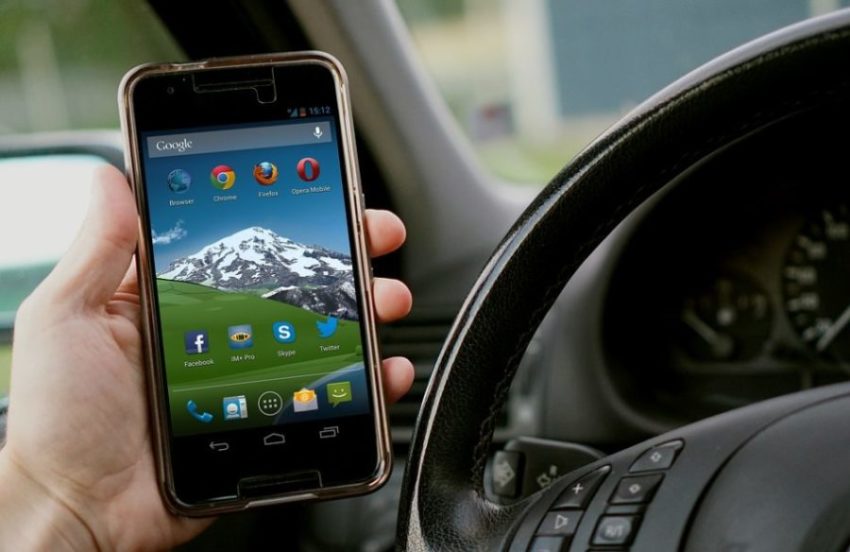
New music release day could be dangerous for distracted drivers
Researchers seeking to understand the impact of smartphones on driving safety have a warning for music fans: Release day might be dangerous. The study, described in a working paper published last month by the National Bureau of Economic Research, showed a 43% increase in streaming and a 15% increase in traffic fatalities on the days that major albums drop.
Vishal Patel, a surgical resident at Brigham and Women's Hospital, clinical fellow at Harvard Medical School, and the paper's first author, said that the work was inspired by a moment behind the wheel. His wife, a singer and avid music fan, texted him to listen to a song that had just been released on streaming services. Patel began scrolling through his phone. When he looked up a few seconds later, he realized that he'd started drifting out of his lane.
"It hit me that a split second longer with my eyes off the road could have meant a serious accident," he said. "Then I thought, if millions of people are doing the same thing at the same time—on the day a big album drops—the cumulative risk on the road must be enormous."
Smartphones tempt drivers to send emails, search, call up directions, or even find a recipe for dinner. Despite that ceaseless potential for distraction, research into the impact of phones on driving is scarce, according to Patel and the new paper's senior author, Anupam Bapu Jena, the Joseph P. Newhouse Professor of Health Care Policy at Harvard Medical School.
The principal obstacle is ethics: Researchers can't conduct live experiments that might illuminate what's going on in the millions of cars on the road today. They can't, for example, ethically instruct half of a study group to keep their eyes on the road while telling the other half to search for music as they navigate traffic.
Enter Patel's insight about the distraction of downloading music, which he recognized as an opportunity for a natural experiment.
The researchers analyzed accident stats on the release days of the 10 most streamed albums between 2017 and 2022, plus, for comparison, on the 10 days both before and after the release dates. Using Spotify data, they found an average of 123.3 million streams on the major album release days, compared with just 86.1 million streams on the days before and after—a 43% increase on release days.
Turning to traffic fatalities, they found an average of 139.1 deaths on release days, an increase of 18.2 fatalities over the average of 120.9 traffic deaths on the 10 days before and after the releases. Added together, deaths rose 15.1%, totaling 182 additional fatalities on the 10 days when those major albums were released.
"It could be manipulation of the device, it could be general distraction because of the excitement," Jena said. "It could also be that you're playing the music louder than you normally would play it, and that you don't pick up things around you that you otherwise would have picked up. Any of those things are possible."
Patel and Jena also examined accident characteristics, seeking insights on the potential role of factors other than distraction. Drivers tended to be sober, arguing against the possibility that they had attended boozy parties celebrating the album releases. The increase in fatal accidents was also larger in single-occupant vehicles, missing a passenger who might help manage the music. Drivers also tended to be younger, fitting the profile of younger people as more avid music consumers.
Patel's investigation into distracted driving continues. Technology has advanced significantly since 2022, when data collection for the current study ended. Vehicle technology has advanced, with cameras and sensors eliminating blind spots and making switching lanes safer. Many vehicles come with automatic braking and other safety features.
Among the open questions, Patel said, is the impact of artificial intelligence, which could allow a new array of distracting tasks to be performed while driving. AI could also, however, enhance safety by taking on tasks from the driver, like finding music or drafting a work email.
"People convince themselves they can multitask behind the wheel—scheduling calls, eating, putting on makeup," Patel said. "Smartphones have dramatically expanded what's possible to do while driving and, as cars become increasingly connected, the temptation to divide your attention is only going to grow."
Using data from the Fatality Analysis Reporting System and Spotify’s charts to track the top 10 most-streamed albums between 2017 and 2022, they found that on days major artists like Taylor Swift, Harry Styles and Kendrick Lamar released new albums, smartphone usage increased by 40 percent — and U.S. traffic fatalities increased by nearly 15 percent those same days.
Swift’s 2022 album Midnights topped the charts as the most-streamed album in a single day with 184,695,609 first-day streams, the data showed. She later shattered records with her following album, The Tortured Poets Department, which had over 300 million streams worldwide on its release day, and most recently The Life of a Showgirl, which was Spotify’s most-streamed album in a single day during 2025.
The researchers noted that new music typically drops on Fridays — when people are most likely to go out and party and drink. They also accounted for holiday-adjacent and heavy-travel periods. Still, they discovered that “fatalities remained elevated on album release Fridays compared with the Fridays before and after.”
Interestingly, they found that traffic fatalities associated with album releases were more prevalent among sober drivers and not more pronounced during the nighttime, therefore suggesting against other possible sources of distraction, including drunk driving.
Researchers also saw that the numbers in fatal car wrecks associated with online streaming surged in better driving conditions. They suggested this is because drivers are more likely to turn on distracting, high-energy, fast-tempo music when the weather is better.
In a 2024 industry survey of listeners conducted by Infinite Dial, it was estimated that “55 percent of U.S. adults who were drivers or passengers of a car in the past month streamed online audio, with 16 percent using Apple CarPlay and 10 percent using Android Auto infotainment platforms to connect their phone to their car’s display.”
“At the same time, while managing music in the car is an activity drivers perceive as less risky in surveys, simply listening to music has been shown to create significant distraction in simulations,” researchers wrote.
They acknowledged that passengers can also be a source of distraction; however, the data showed that “traffic fatalities associated with surges in online streaming was significantly more pronounced among single-occupant vehicles.” In fact, they suggested that passengers can potentially reduce driver distraction related to streaming music use by helping manage streaming devices.
Provided by Harvard University




Nenhum comentário:
Postar um comentário