AUTONEWS
After 100,000 km, tests with 100% plant-based biodiesel indicate technical viability in Brazilian fleets
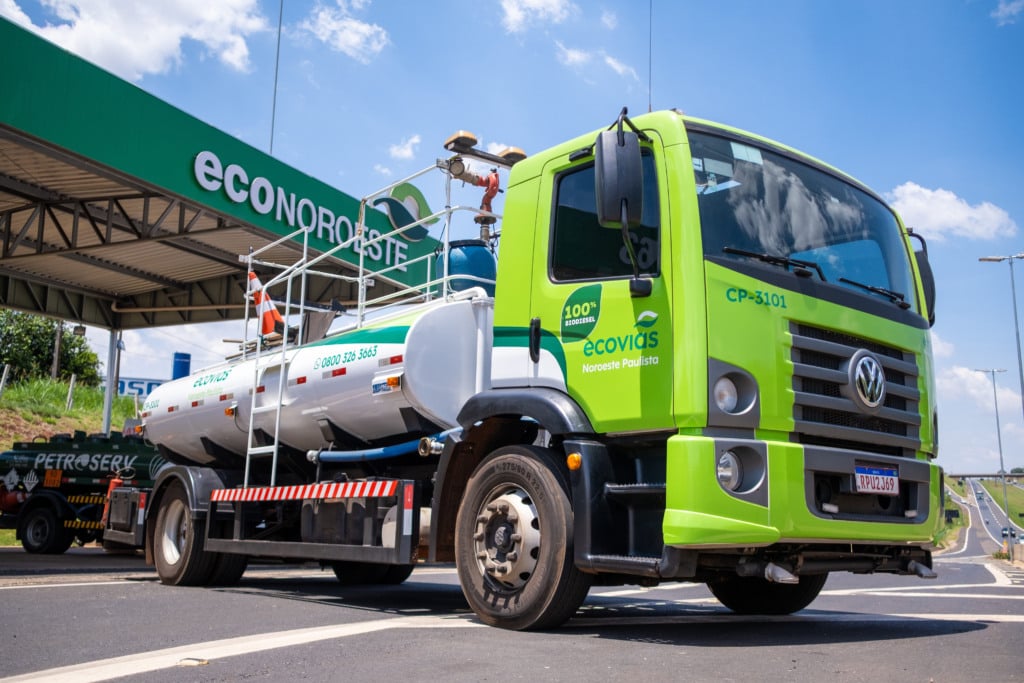
Partnership between EcoRodovias and Volkswagen Trucks and Buses registers availability exceeding 95% and reinforces B100 as an alternative for decarbonization in transportation; testing began with four trucks from Ecovias Noroeste Paulista, which are refueled on the SP-310 highway in Araraquara.
The milestone of 100,000 kilometers driven exclusively with B100 biodiesel in the operational fleet of the Ecovias Noroeste Paulista concessionaire provides concrete data for discussions on decarbonization of road transport in Brazil. The result, achieved in the first five months of the pilot project, conducted in partnership with Volkswagen Trucks and Buses, points to high vehicle performance and technical availability exceeding 95%, with no record of significant incidents. In other words, on average, vehicles were under maintenance for only 5% of the period, an indicator considered excellent for the sector.
The test involves four trucks used in activities such as towing and operational support for Ecovias Noroeste Paulista, a concessionaire that is part of the EcoRodovias group and operates on 600 kilometers in the interior of São Paulo state. The initiative continues a project started in 2025, when the companies announced the evaluation of 100% plant-based biodiesel as an alternative to fossil diesel under real-world driving conditions. In the case of serving highway users, B100 could be another solution in the pursuit of decarbonizing the sector.
The vehicles continue to be refueled by a fuel truck, with a tank installed at the User Service Center (SAU 2) base, located at kilometer 272 of the northbound lane (towards the interior of the state) of the Washington Luís Highway (SP-310), in Araraquara (SP), ensuring quality control and traceability of the fuel throughout the testing period.
The companies are continuing with the pilot project, which is expected to extend until August, completing 12 months of assisted operation. Experiments are being conducted on four vehicles from the manufacturer: a Meteor 29.530, configured as a tow truck; two Delivery 11.180s, also in tow truck versions; and a Constellation 17.190, used as a tanker truck, all used by the Ecovias Noroeste Paulista customer service teams.
In this initial phase, indicators such as performance, consumption, logistics costs, fuel quality, and fleet technical availability were monitored. According to the companies, the results confirm the technical and operational viability of B100, reinforcing its potential as a complementary solution in the sector's energy transition.
Produced from soybeans, B100 can reduce CO2 emissions by up to 90% compared to conventional diesel, according to data from the National Petroleum Agency (ANP), Abiove, and the Energy Research Company (EPE). Unlike technologies that require complete fleet replacement or charging infrastructure, as is the case with electric vehicles, biodiesel can be implemented with specific technical adaptations and dedicated supply logistics.
For Monica Jaén, Sustainability Director at EcoRodovias, this project reinforces the role of concessionaires in the climate agenda. “Reaching 100,000 kilometers with availability above 95% demonstrates that it is possible to reduce emissions immediately, while maintaining efficiency and operational safety. From this, we can begin to think about expanding the solution within the concessionaire itself and in other operations of the group,” she states.
The B100 test is part of the climate strategy defined in EcoRodovias' ESG 2030 Agenda, which aims for reductions of 25% by 2026 and 42% by 2030 in direct emissions from operations and emissions associated with energy purchased by the company.
From the manufacturer's side, the Vice President of Engineering at Volkswagen Trucks and Buses, Rodrigo Chaves, assesses the results positively. According to him, the data obtained so far indicate consistent performance, good operational stability, and mechanical reliability. "These results reinforce the potential of the B100 and contribute to building a technically and operationally viable path for its application in heavy transport," he states.
Volkswagen and Amaggi begin tests with B100...Volkswagen Trucks and Buses (VWCO) and Amaggi, a Brazilian grain and fiber producer, have begun testing pure biodiesel (B100) on roads in the Midwest and North of the country, the companies announced this Monday (March 16).
The companies will conduct the tests on a truck for 12 months, on the typical grain transport route used by the producer, which connects Sinop (MT) to Matupá (MT), and continues to Miritituba (PA).
The objective is to test, in heavy road operation, the behavior of soybean oil biodiesel manufactured by Amaggi. The information collected will guide future applications and operating practices with renewable fuels.
“As we advance in testing with 100% biodiesel, in partnership with Amaggi, we seek to validate an effective decarbonization route, improving the performance, efficiency, and operational reliability of our vehicles,” stated Rodrigo Chaves, Vice President of Engineering at VWCO.
Amaggi sees the use of biodiesel as both a business and sustainability strategy.
“We already use pure biodiesel in part of our fleet and now we will begin testing with a truck in partnership with VWCO. We expect the result of this test to be positive, given the strategic importance of replacing diesel with a renewable and less polluting fuel for Brazil's energy self-sufficiency,” said Claudinei Zenatti, Director of Logistics and Operations at Amaggi.
VWCO is already testing, in partnership with the Ecovias Noroeste Paulista concessionaire, the use of B100 in trucks. According to Volkswagen, the vehicles are showing high performance and technical availability exceeding 95%.
Autonews and Mundoquatrorodas



Nenhum comentário:
Postar um comentário