SEAT
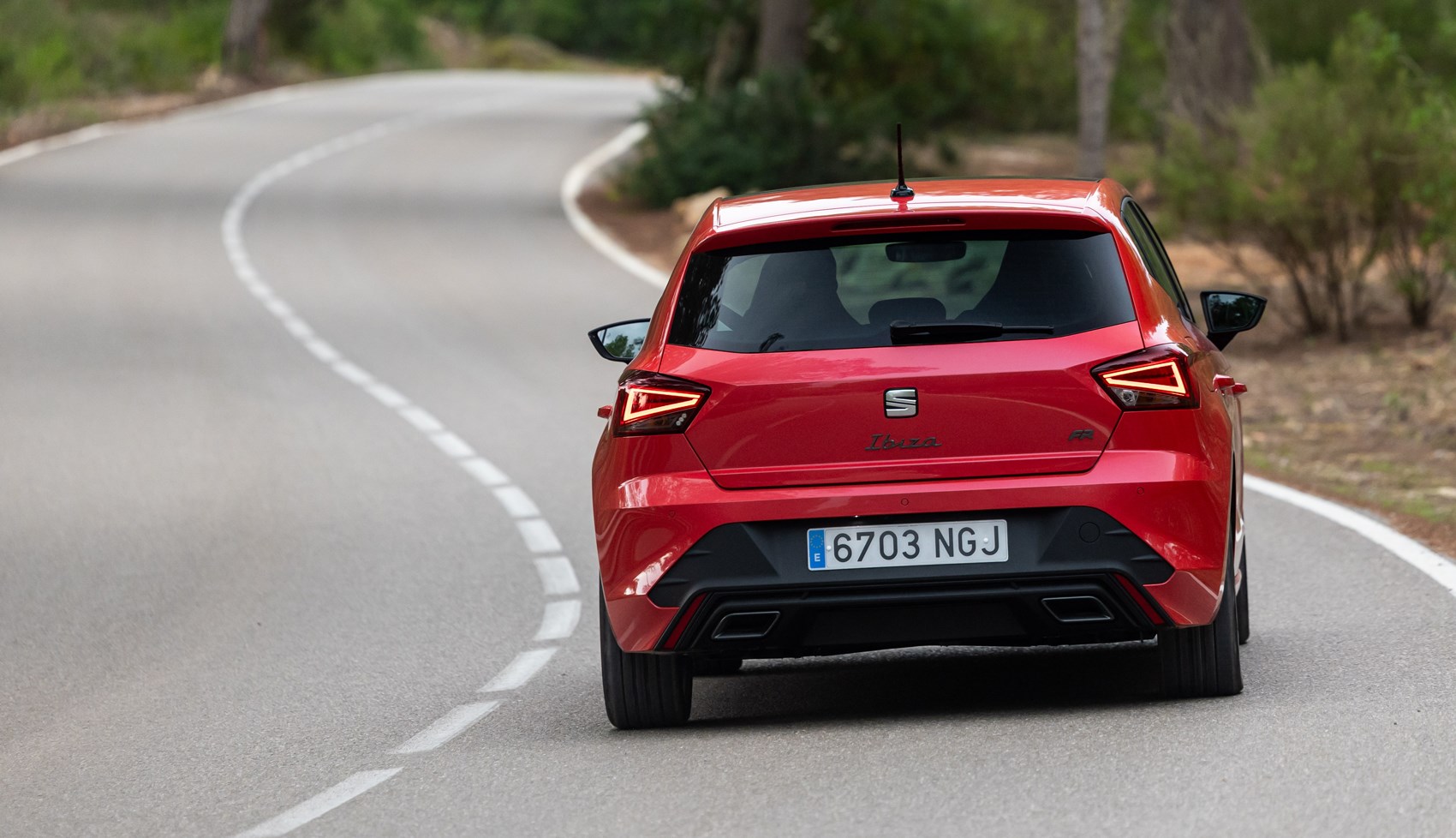
2026 Seat Ibiza
Few cars can capture the soul of a country like the SEAT Ibiza captures the soul of Spain. Since 1984, when the first model rolled off the assembly lines in Martorell, it has been much more than a simple compact car: it has been a symbol of youth, freedom, and accessible style. Now, in 2025, about to celebrate 42 years on the road, the Ibiza arrives in its latest reinterpretation – the Ibiza 2026 – officially presented in Spain as the landmark of a new phase for SEAT, in tune with the future of European mobility.
The new Ibiza features a redesigned look, maintaining familiar proportions but with sharper lines and a striking personality. The front end has gained fully LED headlights in a triangular shape, with the brand's new light signature. The grille is lower and wider, conveying solidity and sportiness, while the hood, with pronounced creases, reinforces the feeling of movement even when stationary. The newly designed wheels can be up to 18 inches, and the vibrant colors – including a ‘Desert Sunset’ red and a deep metallic blue – evoke the style and energy of the Mediterranean.
This is the Seat Ibiza, the fifth-generation supermini of a car that has remained strong since 1984. The Ibiza is Seat's longest-running model, with over six million units sold worldwide to date, and is perhaps the car for which the brand is best known.
The model is built on the VW Group's MQB A0 platform, the same one that now underpins the Volkswagen Polo, the Skoda Fabia, and the Audi A1. It is essentially a smaller and lighter variant of the platform used in all VW Group cars with transverse engines, the same platform that underpins the Arona crossover, with which it was also updated.
It is also one of the last bastions of a (potentially) endangered species. With the Ford Fiesta discontinued, it competes with models such as the Renault Clio, Peugeot 208, Citroën C3, Vauxhall Corsa, and Toyota Yaris in the conventional supermini segment. Volkswagen's once sporty brand now has its own sporty brand, Cupra, which practically eliminates the need for Seat. Insider sources tell us that it has clearly and directly become the gateway to the VW Group, offering a fun character at an unbeatable price among its competitors.
So, let's get to the latest update. The most observant will have already noticed the new front and rear bumpers, as well as a new hexagonal grille design, thinner LED headlights, and a dark aluminum finish on the handwritten lettering at the rear. Oh, and there are four – four! – new alloy wheel designs, plus a refreshed color palette.
It has a rather old-fashioned feel; there aren't many features or frills you'd want to show off to your friends (even the Beats sound system is gone). But at least you have a functional touchscreen, physical climate controls, and more space than you might expect – it's a perfect car for a single driver or a couple, maybe even for someone with a small family. It's a good size for getting around town without the refinement issues you find in cheaper city cars.
The latest update introduces a perforated leather-wrapped steering wheel, cooled wireless charging, and a new six-speaker sound system, but that's about it. In fact, everything looks very 2010s – there's no distinctive Seat personality on display here, nor any flashy features that make you look at the Ibiza over any other. Which is a shame, because this model was once seen as Volkswagen's young and bold brand.
And is it good to drive? The Ibiza offers a reasonable ride: the steering is a little light (although it can be slightly stiffened in Sport mode), albeit with little sensitivity, and the suspension is quite firm but effective at absorbing most road irregularities. There's no Cupra version of this car in sight, so you'll have to make do with what's available.
There's only one 1.0-liter, 3-cylinder petrol engine available for the Ibiza, and it can be found in a naturally aspirated version with 79 hp, or in a turbocharged version producing 94 hp or 113 hp. All are somewhat slow, with acceleration from 0 to 100 km/h taking between 10 and 15 seconds – surprising, considering Seat has built its reputation as a sporty brand.
But wait! From 2027, a mild-hybrid version will be available, as is already the case in other VW Group models. But in terms of electrification, that's all – there are no plans to launch a fully electric variant, at least for now. Seat believes this would make it too expensive for its target audience.
Seat hasn't yet confirmed final UK prices, but we've been informed that entry-level versions will start at just under £21,000, while top-of-the-line versions will start at just over £25,000. What's the verdict? “The Ibiza is a charming supermini... but it looks a bit dated and struggles to stand out compared to its competitors.”
The Seat Ibiza is a charming supermini: stylish looks, good equipment level, more space than you might expect, a vibrant yet economical 3-cylinder engine, and all this at tempting prices. But this fifth generation has been with us since 2017 and, even with this (second!) update, it undoubtedly looks a bit dated.
Especially in the interior, although this could be seen as good news if you're a bit averse to technology. But, from our point of view, it struggles to stand out alongside its VW cousins, except for the profile people attribute to the Seat customer nowadays, which, we've been told, is that of a lifestyle with a limited budget. And that's evident.
Autonews


Nenhum comentário:
Postar um comentário