AUTONEWS
Stellantis: Controversial PureTech goes down in history, replaced by this engine from the group
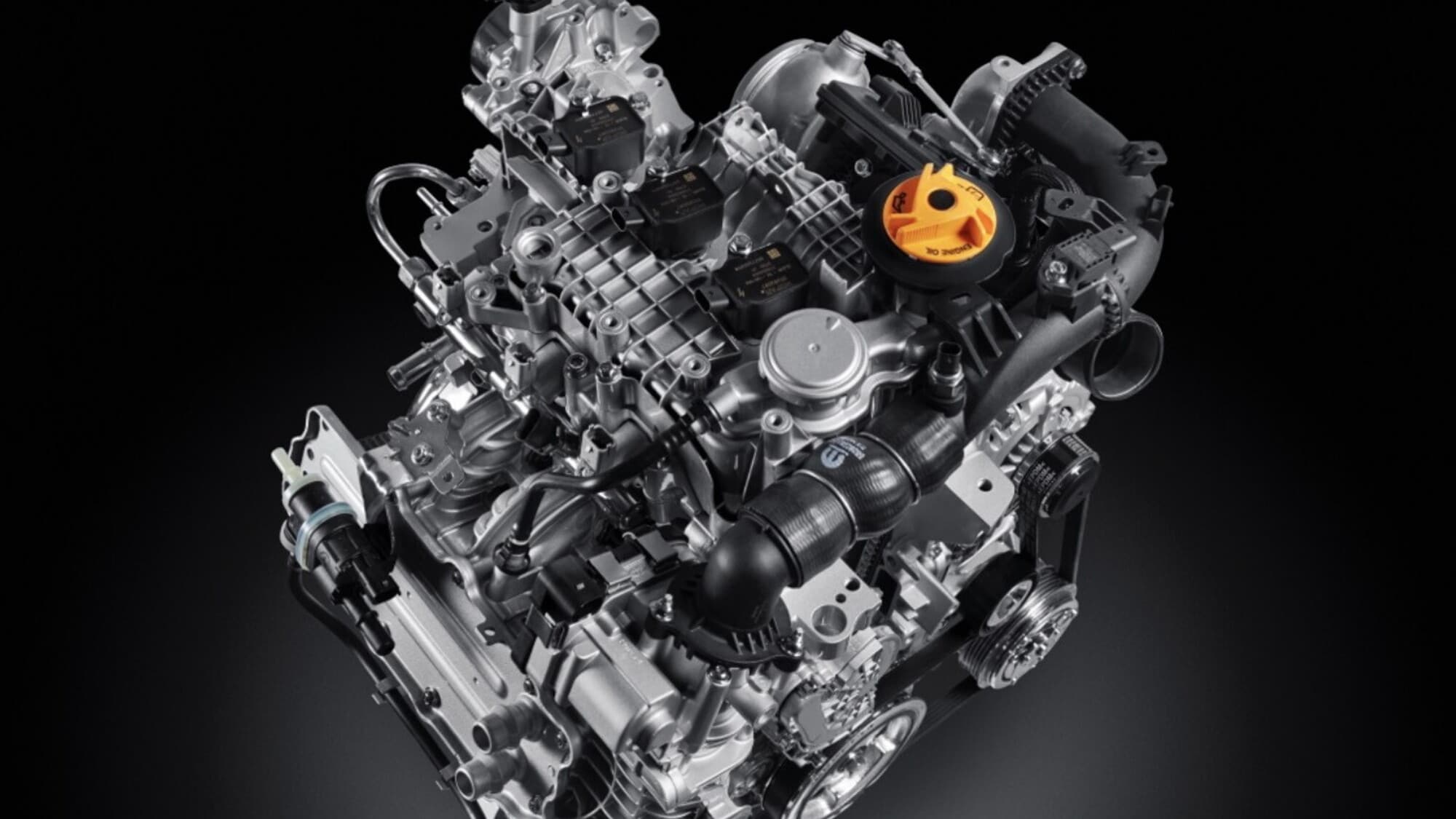
After long-standing problems and a damaged reputation related to PureTech engines, Stellantis is making a clear move – the French engines are taking a back seat, and the Italian so-called FireFly engines are becoming key to the group's future in the face of Euro 7 standards.
The group has decided to definitively distance itself from the PureTech name, which has already been removed from commercial use. Although the engines developed in the French part of the company are now simply designated as "Turbo", internally they are still the same EB2 family. However, in practice, Stellantis no longer wants to associate the future with that name.
The new CEO Antonio Filosa is determined to close the chapter marked by controversies from the time of his predecessor Carlos Tavares. Filosa, who avoids media conflicts and negative publicity, has already taken concrete steps to restore the confidence of customers affected by problems with PureTech engines, but also with AdBlue systems. Compensation measures have been introduced for the affected owners, and now a strategic shift in the engine range itself is coming, writes Motor.es.
According to the latest decision, Stellantis is gradually abandoning the production of the disputed engines from the factory in Duvrino and is shifting its focus to the Italian FireFly family, which is produced in Termoli. These are engines that were once planned to be discontinued in the European market – Tavares even planned to withdraw them in favor of the PureTech, while they remained present primarily in Latin America. However, due to their proven reliability, plans have changed.
In the European range, the FireFly is currently installed in three models – the Alfa Romeo Tonale, the Fiat Pandino and the new Fiat 500 Hybrid, which is already available in some EU markets. The hybrid 500 was originally developed to alleviate the weaker sales of the fully electric version.
Stellantis has confirmed that it will extend the life of the FireFly engine and is already working on the technical improvements needed to comply with the Euro 7 standard. The first phase is planned to implement 48-volt mild hybrid (MHEV) technology. This is a significant investment that could ensure that the Italian engines remain on the market beyond 2030. An electrified dual-clutch automatic transmission is also being developed in parallel.
The FireFly engines, also known under the GSE designation, are available in a three-cylinder 1.0-liter engine version with 70 hp, as well as in a more powerful 1.5-liter turbocharged four-cylinder version that develops 130 or 160 hp – exactly the one installed in the Tonale.
It remains an open question whether Stellantis will go a step further than mild hybridization with the adaptation of the FireFly engine to the Euro 7 standard. Future developments are also possible in the direction of self-charging hybrids and even plug-in hybrid systems, which could compete with the most advanced powertrains on the market in terms of efficiency and performance.
Looking at the broader context, the decision to retain and modernize classic gasoline engines comes at a time when some manufacturers are slowing down full electrification due to weaker growth in demand for electric vehicles in Europe. Extending the life of the FireFly can also be seen as a pragmatic move in the transition period towards full electrification.
Emanuele Cappellano, Head of Enlarged Europe and European Brands at Stellantis, speaking at the automotive roundtable underway at the Ministry of Business and Made in Italy, confirmed that the GSE (Global Small Engine), known as FireFly, will be updated to the Euro 7 standard to ensure production beyond 2030.
This represents a breath of fresh air for the Termoli plant, following the end of the battery gigafactory project, and good news for a family of FCA-originated engines.
The GSE are a family of modular gasoline engines, featuring an aluminum structure and MultiAir technology.
They began their operational career in 2016 with their commercial debut in the South American markets and then in 2018 in Europe.

The versions on our market include the 1.0 T3 3-cylinder: turbocharged or naturally aspirated, the 1.3 T4 4-cylinder turbocharged, also used in plug-in hybrid systems, and the 1.5 T4 4-cylinder specifically for e-Hybrid systems (48V Mild Hybrid).
FireFly for Euro 7: Lower fuel consumption, lower emissions...The first pillar of the plan is updating the FireFly engine to meet Euro 7 requirements. The package includes, among other things, a reduction in displacement, more advanced combustion control, and the addition of a 48V mild hybrid system. The goal is clearly stated: reduce fuel consumption and emissions, especially in city traffic, while maintaining performance and reliability. The Euro 7 issue isn't just a matter of paper.
The plan assumes meeting emissions requirements in real-world driving conditions and the need for more advanced emission control solutions. This is the moment when the engine will run cleaner, not just in the laboratory (where everyone excels).
Termoli as an e-DCT center: production from 2026 and a target of over 300,000 units per year...The second pillar is reshaping the role of the Termoli plant, which is intended to become a production center for new e-DCT (dual-clutch) transmissions for the group's electrified models. Production of these components is scheduled to begin in 2026, with a target of over 300,000 units per year. This volume is intended to ensure business continuity and strengthen the plant's position in the automotive supply chain in Italy and Europe.
In practice, this isn't just a "new production line," but an attempt to refocus the factory on components needed for electrified vehicles. The more hybrids are introduced into the product range, the more important transmissions, electronics, and drivetrain integration become.
Why 48V: Offer flexibility instead of playing the game...The third pillar is commercial flexibility, which results from combining a modernized combustion engine with a hybrid drivetrain. Stellantis aims to maintain a competitive offering where demand for hybrids remains high, without completely abandoning combustion technology in favor of exclusively electric vehicles. This approach is also intended to reduce risk at a time when the energy transition is causing uncertainty throughout the industry.
The 48V system is presented here as a pragmatic choice: it offers tangible benefits in terms of energy recovery and reduced fuel consumption, while not requiring as large an investment as a direct transition to full hybrids or fully electric platforms. In short: fewer revolutions on the slides, more impact on everyday driving (especially in cities).
Consequences for the region and a predictable dispute...For the local industry, combining the continuity of production in Termoli with the launch of e-DCT transmission production is crucial. The plan emphasizes that this will strengthen employment stability and support a network of local suppliers, which is important at a time when the transition to electric drives is raising concerns in regions traditionally associated with the automotive industry. Reactions are described as highly polarized.
Environmental organizations and some politicians express concern that extending the life of combustion technology (even in its electrified version) could slow the decarbonization of the vehicle fleet. Trade unions and local authorities, on the other hand, view the decision positively, viewing it as a tool to protect jobs and maintain specialized industrial skills.
Models that use them...Global Small Engines are important for several Group brands. Fiat has used or uses them in the 500 (1.0 Mild Hybrid), Panda (1.0 Mild Hybrid), 500X (1.0 T3 and 1.5 e-Hybrid), and Tipo (1.5 e-Hybrid).
Jeep uses them in the Renegade and Compass (1.0 T3, 1.3 T4 Plug-in, and 1.5 e-Hybrid), and Alfa Romeo uses them in the Tonale (1.5 e-Hybrid and 1.3 T4 4-cylinder turbo).
With the new prospects, the FireFly could replace the less-than-favorite (by customers) French-made 1.2 PureTech engines on a larger scale within the group. A new lease of life in the medium term that could change the balance of power within Stellantis.
by Autonews



Nenhum comentário:
Postar um comentário