AUTONEWS
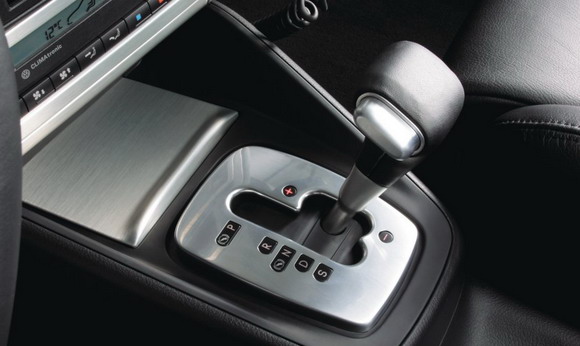
All automatic transmission drivers do one thing wrong – the consequences can be expensive
For most drivers, parking a car with an automatic transmission seems extremely simple: the vehicle stops, the lever is moved to the "P" position, the engine is turned off and that's it. However, the problem arises when the car is parked on a slope, even a very slight one. In this case, the entire weight of the vehicle rests on a small locking pin in the transmission, which puts additional strain not only on it, but also on the entire mechanism, reports Jutarnji.hr.
In the long term, such a load can cause wear, damage or jamming of the pin, which can lead to a situation in which the gear lever can no longer be moved out of the "P" position. Such a failure almost always requires a complex and expensive transmission repair. That is why the handbrake, or parking brake, is designed as the primary system for securing the vehicle when parking, while the "P" position is only a secondary, safety measure.
The handbrake operates independently of the transmission, usually via steel cables that block the rear wheels, thus taking on the entire load, reports Večernji list. In order to avoid damage to the transmission and ensure maximum safety, it is crucial to adopt the correct sequence of actions when parking.
The correct procedure is as follows:
-After stopping while holding the foot brake pressed, first shift the transmission lever to the neutral position, “N”. Then firmly pull or activate the handbrake. Only then slowly release the foot brake, allowing the weight of the vehicle to be fully taken over by the handbrake system. The car may “sway” a little, which is normal.
-Finally, depress the foot brake again and shift the transmission to the “P” position. In this way, the parking pin enters its seat without any load and serves only as an additional safety device.
Maintains the system...In addition to protecting the transmission, regular use of the handbrake also keeps the system itself in good condition. The biggest enemy of mechanical handbrake systems is disuse.
Over time, the cables can rust and get stuck inside their guides, especially if they are exposed to moisture and salt. When this happens, the brake will either not hold at all or, worse, may remain locked even after you try to release it.
Driving with the handbrake partially applied causes the brakes to overheat, accelerates wear on the pads and discs and can lead to serious damage. That is why it is recommended to use it every time you park, which regularly activates the mechanism and keeps it functional.
There are situations when using the handbrake is not only advisable, but also mandatory. The first and most obvious is when changing a tire. An activated handbrake will ensure that the vehicle does not roll off the jack, which is essential for safety. It also serves as an emergency braking system.
In the rare but possible case of a complete failure of the main hydraulic brake system, gradually and gently applying the handbrake can safely stop the vehicle. Sudden application should be avoided as it can lock the rear wheels and cause uncontrolled skidding.
However, there are rare circumstances when caution is warranted. During extremely cold temperatures, in older vehicles with damaged cable guides, moisture inside the system can freeze and block the mechanism. Also, in icy or snowy conditions, using the handbrake to stop can lead to loss of control of the vehicle.
There are different types of parking brakes on the market today. The classic mechanical lever located between the seats is still the most common. Its use is simple: you pull the cable to tighten it, and release it by pressing the button on top and lowering the lever.
Some cars, mainly older models with automatic transmissions, have a parking brake in the form of a third pedal that is activated with your foot and released by pulling the lever. In modern vehicles, the electronic parking brake (EPB), which is activated by pressing a button, is increasingly common.
This system uses small electric motors to apply the brakes and often brings additional features such as "Auto Hold", which automatically holds the vehicle on a hill without the need to hold the brake pedal.
Autonews



Nenhum comentário:
Postar um comentário