SUBARU
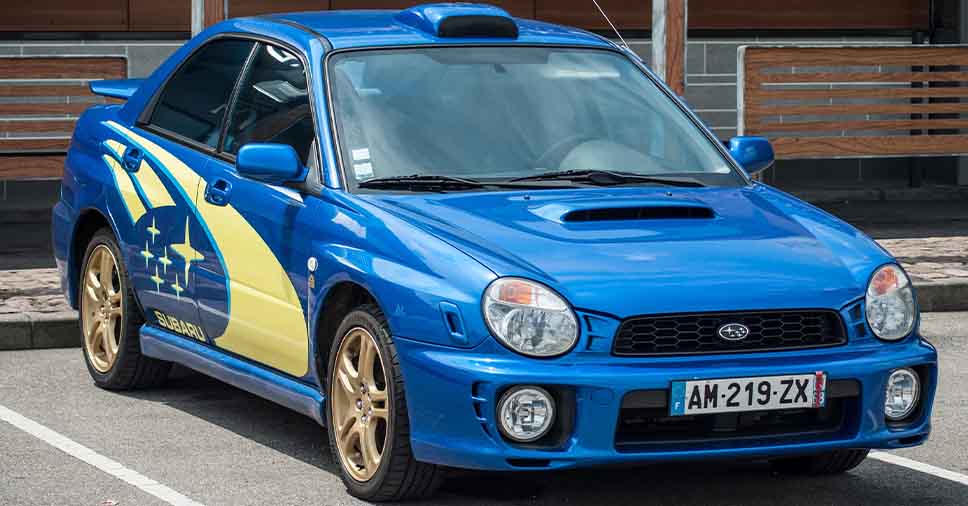
Subaru shines in Japan, but struggles in Brazil
While facing difficulties growing in Brazil, Subaru is experiencing a moment of prestige in its home market. In Japan, the Subaru Forester was elected Car of the Year 2025–2026, an award given by a specialized jury and considered one of the most relevant in the local automotive industry. The recognition reinforces the brand's technical quality, in contrast to its discreet performance in the Brazilian market.
The award highlighted precisely what Subaru has always defended as the pillars of the Forester: safety, mechanical reliability, efficiency in real-world use, and its own technical solutions, such as symmetrical all-wheel drive and a balanced mechanical assembly for different types of driving.
Forester was elected Car of the Year in Japan...The Forester won the Japanese award for presenting a package considered complete for the local consumer. The SUV was praised for its evolution in active safety, predictable handling in different weather conditions, and focus on family use, without sacrificing robustness.
In Japan, the model is seen as a rational and reliable car, with a good balance between performance, comfort, and efficiency. It's not a vehicle with sporty appeal or extreme luxury, but a product consistent with the demands of the Japanese market, which values solid engineering and a low failure rate in the long term.
Recognition at home, limitations in Brazil...In Japan, the 2025-2026 Car of the Year award for the Subaru Forester reinforces the image of a balanced, safe, and efficient SUV in real-world use. In Brazil, however, the brand faces the opposite scenario, with limited supply, a discreet presence, and a regulatory bottleneck that has hampered any ambition for short-term growth.
Here(Brazil), Subaru does not operate independently. The brand is exclusively represented by CAOA, a long-standing relationship in the country, dating back to the mid-1990s, which means that portfolio, network, and import pace decisions follow a business model that directly depends on scale. The problem is that Subaru has never been a volume manufacturer in the Brazilian market and has always lived off niche markets, fans, and technical reputation. This combination alone is not enough to sustain heavier investments.
Without new models and limited by the requirements of Proconve L8, the operation has focused its efforts on after-sales service, trying to keep the brand active while evaluating the next steps. The contrast is evident when compared to the recognition obtained in Japan.
The most objective explanation for the Brazilian stagnation lies in environmental regulations. To continue selling new cars, Subaru needs to adapt engines and calibrations to the requirements of Proconve L8. In the case of the brand, this involves not only minor adjustments, but also engineering, homologation, high costs, and, above all, financial justification for investing in a low-volume market.
When sales are reduced, the cost per unit to adapt a product increases significantly. Large-scale manufacturers can dilute this investment over tens of thousands of cars. Subaru, in Brazil, does not have this advantage. The equation, therefore, becomes difficult to balance.
Lack of Interest or Lack of Viability...For the public, the absence of new products often sounds like disinterest. From a market perspective, the scenario is more pragmatic. CAOA manages a broad portfolio with more profitable operations, while Subaru requires high investments for uncertain returns, even more so in a context of unstable exchange rates, expensive logistics, and increasingly stringent environmental requirements.
It's not just about desire, but about risk. In Brazil, risk is usually calculated based on network, volume, and margin. Subaru delivers quality and image, but does not offer sufficient scale to justify a larger offensive.
Possible Rupture and Independent Operation...There is speculation about a possible contractual rupture and the possibility of Subaru operating independently in the country. However, there is no public confirmation in this regard. The concrete scenario is that the brand remains linked to the current operation and tries to sustain its presence through after-sales service while regulatory barriers prevent portfolio renewal.
Even in a hypothetical scenario of independence, practical questions arise. Networking, initial investment, pricing strategy, and logistics infrastructure would be significant challenges. Operating alone in Brazil is usually an expensive and complex path.
The stark contrast revealed by the award...The recognition in Japan is not merely symbolic. It highlights a clear paradox. Subaru has a product capable of competing for attention in demanding markets, but in Brazil, it is hampered by the combination of small production scale and strict regulatory requirements.
Until a solution is found that enables new models within Brazilian regulations, the brand will continue to coexist with two distinct realities. Celebrated at home, almost invisible here.
Subaru's low market share in Brazil in 2026 is the result of a combination of regulatory barriers, global strategies of the Japanese parent company, and limitations in the national distribution network operated by the CAOA group.
Autonews answers: Why is Subaru almost non-existent in the Brazilian market? The main reasons include:
1. Environmental Barriers (Proconve L8) Since January 1, 2025, Brazil has implemented the extremely stringent Proconve L8 emissions standards. Subaru's Boxer engines, a central feature of the brand, do not meet these new standards without costly technical adaptations.
Investment Impasse: CAOA has shown interest in investing in adapting the engines, but Subaru's parent company in Japan is resisting the idea due to the low sales volume in Brazil, which makes the financial return uncertain.
2. Outdated and Scarce Portfolio In January 2026, the brand will have virtually no new cars to offer in the Brazilian market. Sale of Old Stock: The units available at some dealerships are 2023 Forester models (model year 2023/2023), which were registered in advance by CAOA to circumvent the ban on the sale of vehicles that do not meet Proconve L8 standards. Lack of Launches: While models such as the 2026 Forester and the 2026 Outback have already been launched abroad, there is no forecast for their arrival in Brazil.
3. Global Focus of the Parent Company: Subaru prioritizes high-volume markets such as the United States, Japan, and Australia. Operations in smaller markets, such as Brazil, do not receive the same attention in terms of production volume or priority for new products.
4. Limited Dealer Network: The brand's physical presence has shrunk drastically. Currently, Subaru has very few active dealerships, concentrated in large centers such as São Paulo (SP) and Brasília (DF). Many stores were closed or integrated into other CAOA group brands (such as CAOA Chery) for after-sales services.
5. Maintenance and Price Stigma Historically, Subaru vehicles are perceived as "niche cars." High Cost: They are imported cars with prices ranging from R$220,000 to R$254,000 for the remaining models, which puts them in direct competition with SUVs from more established brands.
After-sales: The complexity of the Boxer engine and the delay in parts replacement contribute to a reputation for difficult and expensive maintenance among the general public. Currently, Subaru's operation in Brazil survives focused on after-sales service and maintaining the warranty of current customers, while awaiting a strategic definition from the parent company about the future of the brand in the country.
Autonews answers: autonews1@yahoo.com
by Autonews


Nenhum comentário:
Postar um comentário