RALLY DAKAR 2026
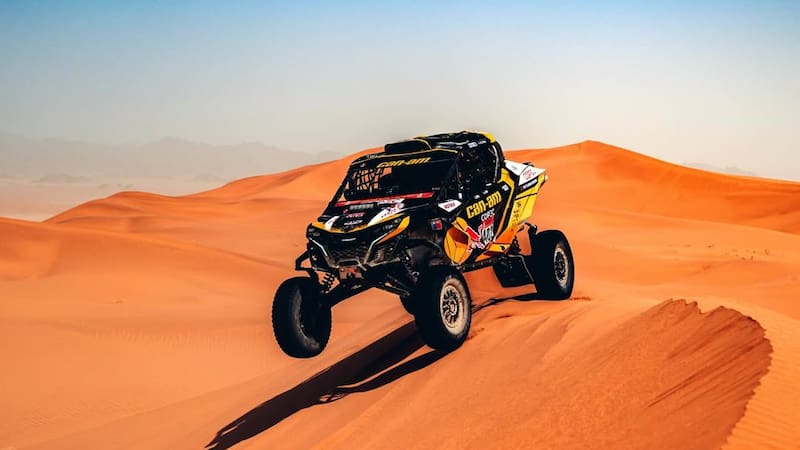
SSV: Chaleco López (Can-Am) was the fastest
The Dakar Rally began this Tuesday with the ninth marathon stage, in which the drivers departed from Wadi Ad Dawasir to spend the night in the middle of the desert before heading towards Bisha on Wednesday.
On that day, which included a timed section of 410 kilometers for the cars, Francisco Chaleco López was the fastest to complete the stage in 4h23min43s with the SSV.
Chaleco López (Can-Am) was the fastest, beating rookie Johan Kristoffersson (Loeb Fraymedia Motorsport RZR Factory/Polaris) by 33 seconds. Hélder Rodrigues and Gonçalo Reis, driving a Polaris for Santag Racing, set the seventh fastest time, 12 minutes and 32 seconds behind. Overall, Brock Heger (Loeb Fraymedia Motorsport RZR Factory/Polaris) continues to lead, with a comfortable 44 minutes and 8 seconds margin over Kyle Chaney (Can-Am). In third place is the Portuguese duo João Monteiro/Nuno Morais (Can-Am), more than an hour behind the leaders.
Paul Spierings (Rebellion/Taurus) emerged victorious in the Challenger class, beating Kevin Benavides (Odyssey Academy by BBR/Taurus) by 1 minute and 20 seconds. The Portuguese duo Pedro Gonçalves/Hugo Magalhães (BBR Motorsport/Taurus) set the eighth fastest time, 24m08 seconds behind the leader, and are seventh in the overall standings led by Pau Navarro. The Spaniard, in a Taurus for Odyssey Academy by BBR, is 41m41 seconds ahead of Yasir Seaidan (Nasser Racing Team/Taurus).
Thus, the Chilean driver remains in fifth place in the overall standings, 1 hour, 38 minutes and 19 seconds behind the leader, the American Brock Heger. His compatriot Kyle Chaney and the Portuguese João Monteiro complete the provisional podium.
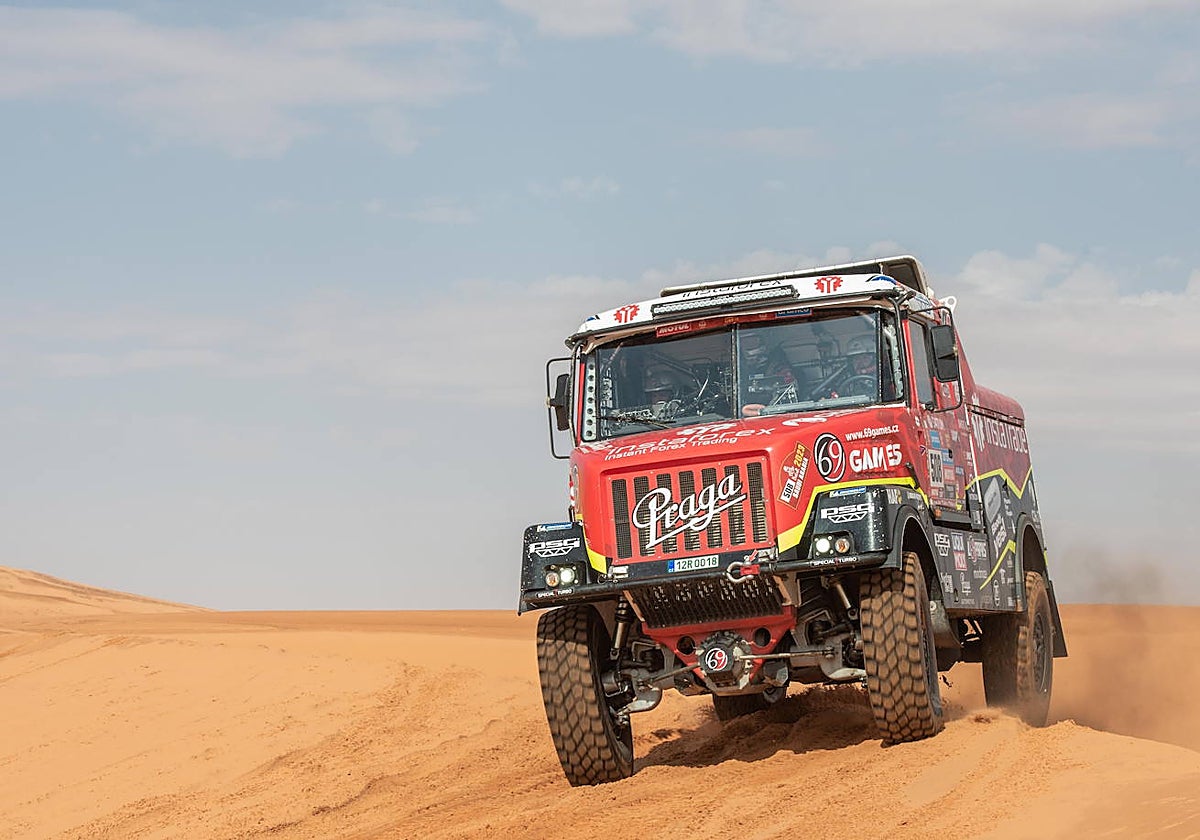
Trucks: Loprais(Team de Rooy FPT ) wins
With a lead of around 40 minutes overall, Mitchel Van Den Brink entered the second marathon stage of the 2026 Dakar Rally with a comfortable margin. Behind him, the pressure came from two well-defined sides: Vaidotas Zala, newly arrived in provisional second place, ready to capitalize on any slip-up, and two-time champion Martin Macík, relegated to third place, about 50 minutes behind.
The start of the special stage seemed to confirm that Van Den Brink was determined not to simply manage his lead. At 41 km, the Dutchman led by a narrow margin, but, as so often happens in the Dakar Rally, the hierarchy began to change quickly. At the 78km mark, Martin Macík made the most of the experience and speed that made him a benchmark among trucks: he took the lead, turned the tables in his favor, and gained 38 seconds on his direct rival, with Zala watching closely in third place, about 1 minute and 30 seconds behind.
Midway through the special stage, the race took on the characteristics of a tug-of-war between the defending champion and the overall leader. At 147km, Macík was still in the lead, although the advantage had been reduced: Van Den Brink had reacted and was again only 18 seconds behind, while Zala also closed the gap to exactly one minute. Ales Loprais then appeared in fourth place, 1 minute and 42 seconds behind, in a dangerous observer position, ready to take advantage of any mistake by the three in front.
Shortly after, at kilometer 186, the internal dynamics of the trio changed: Macík maintained the lead, but Zala was rapidly closing in, reducing the gap to 42 seconds; Van Den Brink, in turn, slowed down, dropping to fourth, 2m17s behind, overtaken by Loprais, now third with a 15-second advantage over the Dutchman. Huzink, in fifth, was already more than seven minutes behind, isolated in no man's land.
Entering the final part, the scenario seemed to stabilize. After 222 km, there were no major changes: Macík managed the lead with apparent control, keeping Zala 1m18s behind and Loprais firmly in third, 2m14s behind. Van Den Brink, in fourth, could not shorten the gap, remaining about 2m30s behind the stage leader.
But the Dakar rarely allows a plan to be fulfilled to the end without setbacks. After 252 km, the stage suddenly turned against Martin Macík. His truck stopped mid-stage due to a mechanical problem and remained immobilized for almost an hour. Macík's forced absence inevitably opened the door for Vaidotas Zala. At 271 km, he took the lead in the stage, confirming his role as the relentless pursuer he had already been playing in the general classification.
Even so, nothing was decided: Loprais appeared in second place, 1m16s behind, ready to attack, and Van Den Brink remained very close, just 1m33s behind, clearly managing the balance between not taking excessive risks and not giving free time to a direct rival in the overall classification. Further back, the gap to the rest of the peloton had become significant.
In the final part of the special stage, however, it was Zala's turn to feel the harshness of the stage. At the 351km mark, he had lost precious time and slipped to third place, now 2 minutes and 47 seconds behind the new leader: Ales Loprais. Van Den Brink, meanwhile, was stealthily closing the gap, reducing it to 1 minute and 48 seconds, while Kay Huzink halved the deficit compared to the 271km mark, placing himself about 4 minutes and 6 seconds behind the leader.
The stage ended with Loprais in the lead, 1 minute and 53 seconds ahead of Zala, and more than five minutes ahead of van den Brink. In the general classification, van den Brink remains the leader, 35 minutes ahead of Zala and Paulo Fiuza, with Loprais now in third and Macik dropping to sixth position.
by Autonews



Nenhum comentário:
Postar um comentário