AUTONEWS
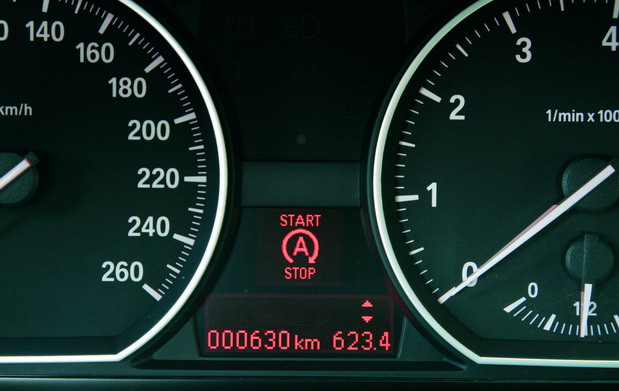
Permanently disabling this system in a car can cause costly breakdowns
Although it seems like an innocuous move, permanently disabling the system that "everyone hates" can lead to costly breakdowns
One of the first moves that many drivers make after starting the engine is pressing the button to turn off the start-stop system.
This technology, standardly installed in almost every new car with the aim of saving fuel and reducing emissions, has become synonymous with irritation for a large part of the driving population.
While the button for temporary deactivation seems like an innocuous solution, permanently disabling this integrated system can bring a number of hidden and potentially costly problems.
How much fuel does this technology really save and why can its permanent deactivation create serious, even very expensive problems?
Technology created for regulations, not for drivers? Although the idea of turning off the engine during idle time appeared back in the eighties, start-stop systems have become almost ubiquitous in the last fifteen years or so.
Their widespread adoption has been driven not by a desire to improve the driving experience, but by strict environmental standards. In the European Union and the United States, regulators have imposed ambitious targets for reducing average CO₂ emissions and fuel consumption.
For manufacturers, the start-stop system has become a relatively cheap way to earn so-called fuel-saving “credits,” allowing them to meet regulations without having to make more expensive and complex engine modifications or reduce vehicle weight.
However, this regulatory shortcut has created a feature that many drivers have found to be intrusive and irritating, culminating in the decision by the US Environmental Protection Agency (EPA) during the Donald Trump administration to remove incentives for the technology, explaining that it is a system that “everyone hates.”
How much fuel is actually saved, and why do drivers dislike it? In theory, the logic behind the start-stop system is unassailable: an engine that is not running consumes no fuel and emits no emissions. In heavy city driving with frequent stops, manufacturers claim savings of five to ten percent.
Some independent tests, such as those conducted by the American automobile club AAA, have shown savings of five to seven percent. In ideal city traffic conditions, these figures can be even higher. Globally, these systems are estimated to have cumulatively prevented the emission of more than 50 million metric tons of CO₂.
However, for many drivers, these savings do not justify the loss of comfort. The list of complaints is long: jerking when restarting the engine, noticeable weakening of the air conditioning on hot summer days, hesitation when starting uphill and a general feeling of loss of control.
Many also complain that the system causes excessive wear on the starter, battery and other engine components, although manufacturers claim that these components are reinforced. The frustration is so great that the phrase “the first thing I do when I start the car is turn it off” has become a mantra on Internet forums.
The hidden costs and dangers of permanent shutdown...It is precisely because of this irritation that a whole market of devices and software solutions has developed to permanently deactivate the start-stop system. However, such a move can be short-sighted and ultimately lead to significantly higher costs than the potential fuel savings.
Vehicles with a start-stop system are designed fundamentally differently. They are equipped with reinforced starters designed for hundreds of thousands of ignition cycles, instead of tens of thousands as in older vehicles.
The key difference is in the battery. Instead of classic lead-acid batteries, much more expensive AGM or EFB batteries are used, which can withstand deep and frequent discharges and cost from 250 to 400 euros. Their operation is monitored by a complex battery management system (BMS), which optimizes charging and protects the electronics.
Permanent shutdown of the system can disrupt this delicate balance. One of the biggest, and often overlooked, risks concerns turbocharged engines. After more dynamic driving, the turbine reaches extremely high temperatures.
The system is programmed not to shut down the engine immediately in such conditions, so that the oil and coolant circulation can cool the turbine. Forced shutdown interrupts this process, which can lead to carbonization of the oil in the turbine lines and, in the long run, to its costly failure.
In addition to the mechanical risks, there are also potential legal consequences. In some countries, such as Germany, the start-stop system is part of the vehicle's homologation. Its permanent deactivation is considered an unauthorized modification that can lead to a failure in the technical inspection, fines or even insurance problems in the event of an accident.
Although the start-stop system is far from perfect, it is an integral part of a modern car. Its permanent deactivation not only nullifies the environmental and economic benefits, but can also cause a chain reaction of problems with electronics and key mechanical components.
Before any intervention, it is wiser to consult with experts, because solving a problem that "annoys" can create one that will cost you dearly.
Many drivers habitually disable the auto start-stop system immediately after starting their vehicles to avoid several common frustrations and concerns.
Reasons for disabling the system(below)
Climate Control Performance: On hot days, the air conditioning compressor (often engine-driven) loses power or shuts off when the engine stops, causing the cabin to warm up.
Acceleration Lag: There is often a slight delay or hesitation as the engine restarts, which can be disruptive when a driver needs to merge quickly into traffic.
Unpleasant Sensation: Many drivers find the frequent "rumble" or vibration of the engine turning back on to be annoying and unrefined.
Maintenance Concerns: Despite manufacturer assurances, some owners worry that frequent restarts will cause premature wear on the starter, battery, and engine bearings over the long term.
Industry & Regulatory Shifts in 2026:
-Mandate Rollbacks: As of mid-2025, some regulatory bodies have moved to eliminate mandates for this technology, with some officials labeling it a "nuisance".
-User Experience (UX) Penalties: Starting in 2026, safety organizations like ANCAP will begin deducting points for "annoying" or "irritating" in-car technology, potentially forcing manufacturers to make these systems less intrusive or easier to disable permanently.
-Permanent Disabling: Most modern vehicles reset the system to "ON" every time the engine is started. This has led to a market for third-party "eliminator" devices that can permanently keep the feature disabled.
While disabling the feature results in a more "normal" driving feel, it eliminates the 4% to 10% fuel savings typically achieved in heavy city traffic.


Nenhum comentário:
Postar um comentário