AUTONEWS
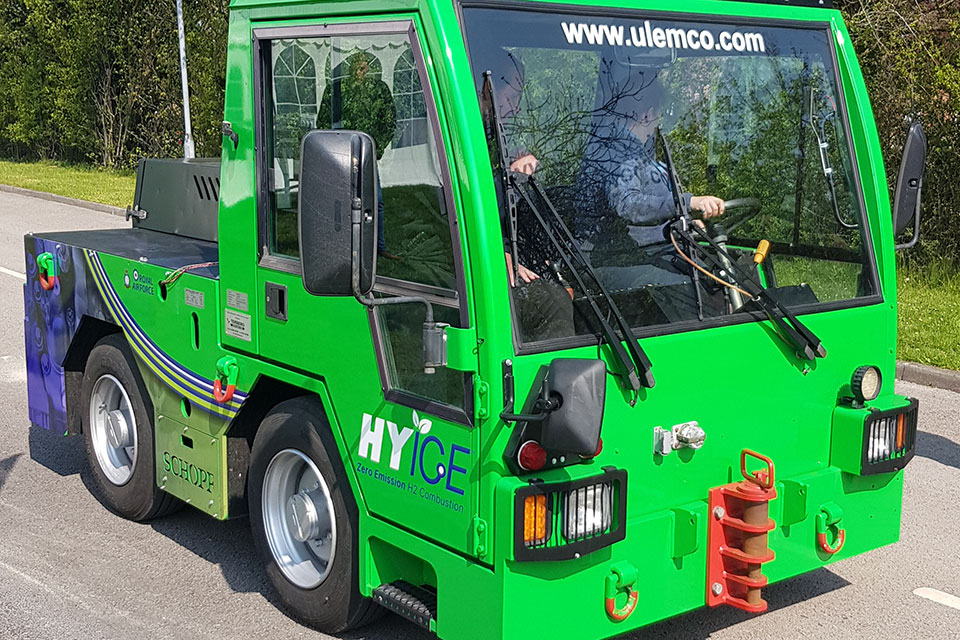
Hydrogen-powered ground vehicles offer a route to cleaner airports
Hydrogen-powered vehicles used on ground operations could help slash carbon emissions and support airports to reach net-zero targets, new research suggests. The Newcastle University research shows that key airport stakeholders have positive attitudes towards hydrogen-powered ground support equipment (GSE). This highlights their environmental, operational, and health benefits, including zero direct emissions at the point of use, less smell and reduced noise, making them a promising option for supporting airport decarbonization.
Published in the Journal of the Air Transport Research Society, the study gathered views from airport operators, car manufacturers, hydrogen suppliers and infrastructure providers. These key airport stakeholders shared their attitudes and operational needs regarding hydrogen-powered GSE.
Overall, airport partners were strongly supportive of hydrogen-powered GSE, seeing it as a clean and practical alternative to diesel. Key benefits highlighted included zero exhaust emissions at the point of use, quieter operation, faster refueling than battery-powered vehicles, and the ability to operate for long periods without recharging.
The research also helped identify barriers to adoption of hydrogen-powered equipment, such as high costs, a lack of refueling infrastructure, uncertainty around safety regulations, and limited public understanding of hydrogen technology.
In addition, stakeholders indicated training as a crucial factor for success. They highlighted the importance of both specialist training for hydrogen-powered vehicles and broader hydrogen safety awareness to build confidence among airport staff and ensure safe operation.
Trial aims to make airport operations sustainable...A UK trial aimed at making ground support for the aviation industry more sustainable has been held in Devon. Vehicles assisting a flight departing Exeter Airport were powered using hydrogen gas on Tuesday in the "UK's first zero-carbon turn" of a commercial aircraft. The airport said it was the first time a Boeing 737 passenger aircraft had been prepared for flight using ground support equipment powered by green hydrogen.
Stephen Wiltshire, managing director of Exeter Airport, said: "We're proud to have hosted this important trial, which reflects our commitment to sustainability and innovation. He added: "The demonstration shows how hydrogen can be integrated into day-to-day airport operations, with lessons we can share across our airport group and the wider sector."
The live demonstration involved a hydrogen-powered baggage tug, pushback tug and ground power unit. The trial was part of an academic study led by Cranfield University.
Prof Anna Smallwood, the university's head of centre for air transport management, said: "This project is an important milestone in understanding how hydrogen can be safely and effectively deployed at airports.
"The insights gained here will directly inform future standards, procedures and innovation as we work toward net-zero aviation."

Study author, Dr. Yanghanzi Zhang, Research Associate, Future Mobility Group, Newcastle University School of Engineering, said, "Hydrogen-powered ground support equipment is not just a future concept—stakeholders see it as a realistic option for airport decarbonization, particularly when supported by the targeted financial incentives and transitional technologies such as hydrogen internal combustion engine vehicles."
Study author, Dr. Shuo Li, Senior Research Associate of Intelligent Transport Systems, Newcastle University School of Engineering, said, "Our research shows that building confidence in hydrogen technology requires more than engineering solutions alone—it also relies on training, clear communication, improved public understanding, and investment in supporting infrastructure."
Airports and supermarket deliveries could become greener and more efficient thanks to a £8 million government competition to support hydrogen-powered transport in the North East, grow the economy and create jobs.
One project led by ULEMCo, receiving a share of the £8 million funding, will develop hydrogen-powered airport ground-based support vehicles, such as tow trucks for aeroplanes and sweepers to clean runways. This will be based at Teesside international airport, which will help the airport reach its goal of being net zero by 2030.
Another of the winning projects led by Element 2 aims to create new hydrogen refuelling stations, helping to provide the infrastructure needed to scale up the use of hydrogen as a fuel. This funding will create 4 new publicly accessible hydrogen refuelling stations, increasing the number of refuelling stations in the UK by 50%. These will be used to fuel a range of vehicles, from airside vehicles to heavy goods vehicles (HGVs), including supermarket delivery trucks.
Today’s announcement also confirms £300,000 delivered directly to colleges in the area to support upskilling the local workforce and foster a specialised skills base and pipeline of talent, further cementing the Tees Valley’s status as the home of hydrogen.
This funding brings the UK closer to decarbonising some of the heavier and more complex vehicles, such as airside operations, which will be essential in reaching net zero. Already used in buses across the country, hydrogen fuel cells create no harmful exhaust emissions. Greater use of hydrogen could help grow the UK economy with a transport system that is resilient to global energy prices, environmentally friendly and could see the creation of thousands of skilled jobs.
Today’s funding also marks the continued growth of the UK’s only hydrogen transport hub, attracting even more innovation, investment and jobs to the Tees Valley. The competition invited ideas on how to overcome some of the challenges of scaling-up hydrogen technology, such as refuelling on a large scale and making the region’s supply chain greener with hydrogen-fuelled vans and HGVs.
Professor Phil Blythe CBE, Professor of Intelligent Transport Systems, Newcastle University, and another of the study authors, added, "I was delighted to lead this research as this is the first time anyone has attempted to quantify the views of a range of partners who would invest in, use and operate such hydrogen-powered vehicles and equipment in an airport setting. I hope it encourages others to consider this option for future decarbonization as the UK has a leading role in some of these technologies."
Liverpool-based ULEMCo led the engineering project. Amanda Lyne, Managing Director of ULEMCo adds, "This research reinforces what we've seen first-hand through projects like ZEHyDA: hydrogen-powered ground vehicles are not a distant aspiration, they are a practical, deployable solution for airports today. By delivering zero exhaust emissions, rapid refueling and the duty cycles airports need, hydrogen can play a critical role in cutting carbon while maintaining operational performance.
"What's now essential is continued collaboration across industry, regulators and operators to scale infrastructure, build skills and give operators the confidence to adopt these technologies at pace."
Provided by Newcastle University


Nenhum comentário:
Postar um comentário