AUTONEWS
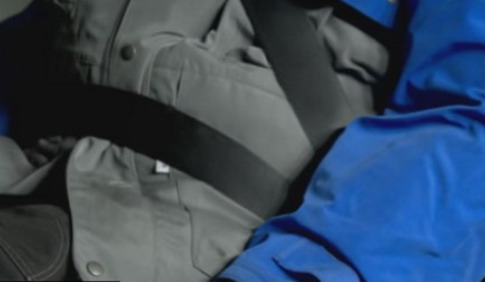
Why adults shouldn't wear thick winter coats in vehicles either
It's known that children shouldn't ride in cars wearing winter coats, and now, according to research by the German Automobile Club (ADAC), adults shouldn't wear thick winter coats in vehicles either.
Seat belts are mandatory and undoubtedly protect against serious injuries in traffic accidents. However, if winter coats are not removed before entering the car, their protective function is reduced, which can lead to serious problems, writes Autonews.
The ADAC conducted a crash test at a speed of 16 km/h, which is the average speed when another vehicle collides with the rear of the car.
Due to winter clothing, seat belts move (they are not positioned directly against the body), they are not in ideal positions and therefore can cause injuries at low speeds.
The lower part of the seatbelt is not fixed at the hip area, but slightly above, and all of this can lead to injuries to the liver, spleen, and other organs.
Therefore, if possible, avoid driving with thick winter coats and use a seatbelt.
Beware of the dangers of bulky sweaters, coats, or fleece clothing in car seats...Winter coats and car seats can be a dangerous combination. Experts from the American Academy of Pediatrics and the NHTSA recommend against using coats or bulky clothing in car seats. Car seat technicians also say not to put anything thicker than a sweatshirt on the child under the car seat's safety belt straps.
Coats, thick sweaters, or fleece clothing PREVENT the car seat's safety belt from fitting snugly on the child. Although the belt may seem snug over a coat, when the coat is compressed by the force of a collision, the belt will not protect the child as it should.
Parents can use hats, gloves, blankets over the car seat straps, lightweight fleece jackets, or there are coats specifically designed for car seats (see below*) to keep the baby warm.
A study by the European Automobile Commission (CEA) in Spain revealed that one in five drivers drives with a coat on in winter, braving the season's low temperatures. With almost 96% of the 1,025 drivers interviewed believing they wear the most appropriate clothing, the fact that 15.12% of them drive with a coat on shows a disconnect between what is recommended and what is considered appropriate.
Therefore, the CEA Foundation indicates that coats are one of the items to be avoided when driving, regardless of the fabric. One important issue is thickness, which creates more space between the body and the seatbelt, potentially causing the restraint system to not function properly and bringing the body too close to the steering wheel. Instead, a thermal tank top could be used, which has a similar effect in warming the body.
The use of scarves also deserves a warning, as it impedes the full movement of the head while driving, potentially preventing, for example, proper observation of the rearview mirrors. Gloves should also be excluded from appropriate driving equipment, as they reduce the driver's sensitivity, for example when handling the steering wheel. As for footwear, boots are not very 'friendly': even if they offer greater comfort, they reduce the driver's sensitivity somewhat.
Autonews



Nenhum comentário:
Postar um comentário