AUTONEWS
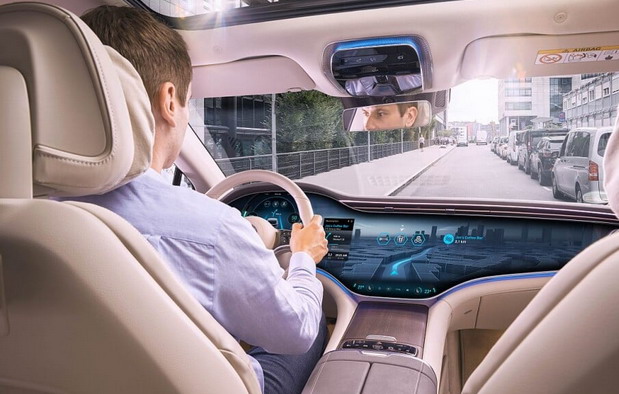
This is how Bosch sees the cockpit of the future
The automotive industry is undergoing a fundamental transformation, with software, and in particular artificial intelligence (AI), becoming a key component of the future driving experience. Bosch is a pioneer in this field and is taking a decisive step forward in introducing AI into the vehicle, transforming the cockpit into an intelligent and proactive companion.
At one of the world's leading electronics trade shows, CES 2026 in Las Vegas, Bosch will present its new platform for expanding artificial intelligence into the car cockpit early next month.
Artificial intelligence continues to play a leading role in tomorrow's technologies, in all sectors, including the automotive industry. AI is becoming a central element not only for assisted driving, but also for the entire in-vehicle experience.
According to Bosch, the evolution of the cockpit represents one of the key steps in the transformation of the car into an increasingly software-defined system. The German company is particularly focused on integrating artificial intelligence to make the interaction between passengers and the vehicle more natural, thanks to systems capable of recognizing habits, preferences and usage situations. The stated goal is to help the driver with a more responsive and consistent interface, without changing the existing hardware architecture.
At the heart of this strategy is the new "AI Extension Platform", an additional computing unit designed to extend the capabilities of existing systems in the cockpit. This solution, based on the NVIDIA DRIVE AGX Orin system-on-a-chip, offers between 150 and 200 TOPS of power, enough to handle complex AI applications directly in the vehicle cabin. This eliminates the need to rely on the "cloud", which consists of computers connected to the car system via a web connection, and the risk of unreliability in the event of low bandwidth.
On the software side, Bosch is using the NVIDIA CUDA ecosystem and various dedicated solutions to offer different manufacturers the integration of different AI models and agents, facilitating the adoption of functions such as advanced voice assistants, visual language models and real-time data processing from sensors in the cabin.
In addition to NVIDIA, another strategic partner of Bosch is Microsoft, through which the German company aims to transform the interior of the car into a kind of mobile office, thanks to the integration with Microsoft 365 applications, visible on the central monitor, which can also be controlled via voice commands. All this, of course, while prioritizing safety while driving.
Various market research institutes predict that the market for infotainment (IVI) solutions in vehicles with artificial intelligence will reach a sales volume of approximately 17 billion euros by 2030. Bosch expects to contribute more than two billion euros in sales with such solutions by the end of the decade and is striving for a leading position among the top three service providers.
Bosch says its new “AI extension platform” allows today’s vehicles to be quickly and easily retrofitted without changes to existing hardware or system architecture. At its core, the platform leverages the powerful “NVIDIA DRIVE AGX Orin system-on-chip” (SoC), which forms the foundation for complex AI applications in the cockpit. It builds on the “NVIDIA CUDA” platform, allowing automakers to integrate their own AI models and agents. Offering 150 to 200 tera operations per second (TOPS) of additional compute power, the compact unit connects via simple power and Ethernet interfaces and is supported by flexible active air or liquid cooling options.
To accelerate the development and deployment of complex AI features, Bosch also utilises NVIDIA’s software suites, including the “NVIDIA NeMo framework” for managing the end-to-end AI lifecycle. This, it says, enables seamless integration of advanced in-cabin applications such as real-time sensor processing and vision-language models (VLMs). In addition, core reasoning and speech capabilities powered by “NVIDIA Nemotron models” deliver contextual understanding, multi-step reasoning, and natural, conversational user interactions. Furthermore, using Microsoft Foundry, Bosch designs and manages the in-vehicle AI, ensuring a scalable, always up-to-date AI assistant experience in the cockpit.
Bosch will demonstrate the AI-powered cockpit and the AI extension platform for the first time at CES 2026 in Las Vegas in January.


Nenhum comentário:
Postar um comentário