BMW
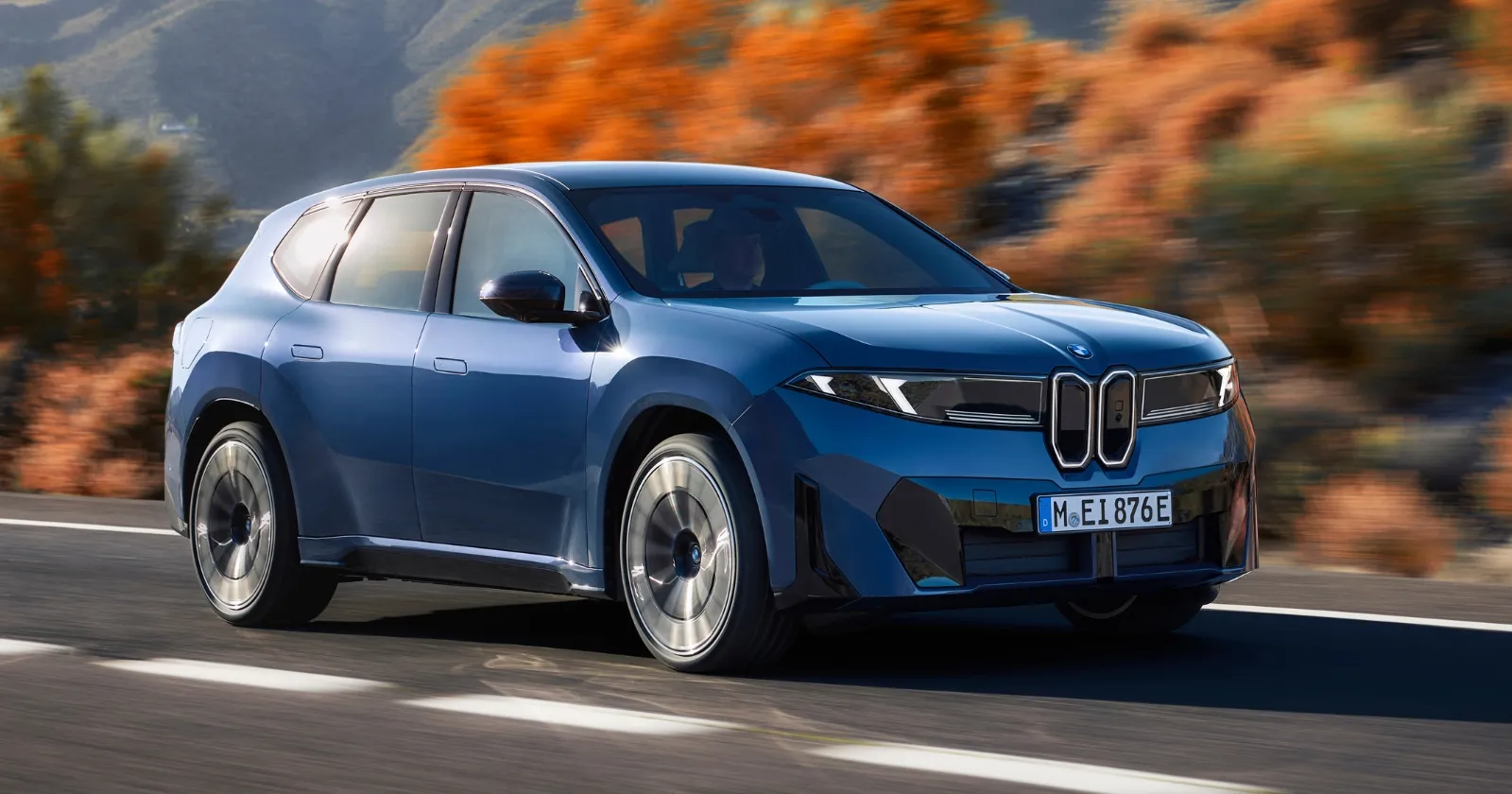
The 1,000 km Challenge: can the BMW iX3 do it on a single charge?
A fully charged BMW iX3 covered 1,000 km from the BMW factory in Debrecen (Hungary) to Munich (Germany) without a single stop for charging. The team arrived at BMW Welt with over 20 km of range remaining.
Although it was not an everyday drive, but a test drive specifically optimized for efficiency, it is a powerful statement about the real capabilities of modern electric vehicles. This video reveals the full story behind this remarkable achievement.
BMW said the iX3 would be the industry benchmark for driving range and charging, and it’s already proving it. As the first vehicle to ride on its new Gen6 platform, the electric SUV is “a massive leap” from BMW’s current EV lineup, with up to 30% more range and faster charging.
To prove it, a BMW team pushed the new iX3 to the limit, driving “an unprecedented” 1,000 km (621 miles) from its Debrecen plant in Hungary, where the iX3 is built, to Munich, Germany, without stopping to charge.
The team arrived at BMW Welt and still had over 20 km (12 miles) of range remaining. The accomplishment is “a powerful statement about the real-world capabilities of modern electric vehicles,” BMW said after the trip.
BMW’s team avoided highways and used as little energy as possible during the journey. After arriving in Vienna with 53% battery charge remaining, the team cut off air conditioning, heating, and radio to reduce energy consumption.
When the iX3 finally reached BMW Welt in Munich, it travelled 1,007.7 km, proving the Neue Klass can drive over 1,000 km (621 miles) in the real world.
The second-generation iX3 didn’t make a single stop along the way. Its 108.7-kWh battery pack with round cells held enough energy for more than 1,000 kilometers (621 miles). To be exact, the electric crossover covered 1007.7 km (626.1 miles) and still had 2% of its charge remaining. BMW could have squeezed out another 12 miles (20 kilometers) before the battery was completely drained.
As you’d expect, BMW prepared the trip to maximize its chances of cracking 1,000 kilometers on a single charge. The iX3 50 xDrive avoided highways, where higher speeds and wind resistance would have hurt efficiency. It also rode on 20-inch M aerodynamic wheels instead of the larger 21- or 22-inch options. As a rule, bigger wheels reduce range, although design can make exceptions to that pattern.
The team also mapped out a route that minimized traffic and stoplights. On top of that, the drivers switched off the heating, cooling, and even the radio. BMW didn’t even want to use the low beams, but it got dark and had no other way. You’ll also notice the kidney grille’s illuminated contour is missing. Still, the iX3 completed the run on public roads, not in a controlled environment like the laboratory-based million-mile 3 Series E30 test from Mobil 1 we mentioned a few days ago.
It’s highly unlikely future iX3 owners will ever cover 1,000 kilometers on a single charge unless they go out of their way to maximize efficiency, as BMW did here as part of a marketing effort. The average speed isn’t mentioned, but since highways were avoided, we can assume it wasn’t high.
In a new experiment, six BMW employees drove the latest BMW iX3 from Debrecen, Hungary, where the vehicle is manufactured, to BMW’s headquarters in Munich, Germany. The journey, spanning over 1,000 km, was carefully planned to maximise efficiency and avoid the need for a charging stop.
To achieve this feat, the team avoided highways, traffic lights, and stop-and-go traffic as much as possible. The route, which was extended to 1,007 km to surpass the 1,000 km milestone, passed through key cities such as Budapest, Vienna, St. Poelten, Steyr, and Landshut, which are the locations significant to the iX3’s development and BMW’s manufacturing network.
Throughout the drive, the team adopted several extreme efficiency measures. They minimised the use of headlights, completely avoided air conditioning and radio, and focused on maintaining momentum, even gliding through roundabouts to reduce energy loss.
Upon reaching Munich, the iX3 still had around 20 km of range remaining, highlighting the vehicle’s potential for long-distance travel when driven with efficiency as the top priority. However, the experiment also highlights the difference between controlled, optimised tests and real-world usage, where drivers are unlikely to forgo basic amenities or strictly adhere to efficiency-focused routes.
One of the most common criticisms of electric vehicles (EVs) compared to internal combustion engine (ICE) cars is the need to stop for charging on long journeys. BMW has attempted to challenge this perception by demonstrating that, under certain conditions, an EV can cover large distances without needing to recharge.
Autonews


Nenhum comentário:
Postar um comentário