AUTONEWS
Europe now wants to deal with petrol cars too
Europe is increasingly determined to eliminate any possibility that manufacturers will continue to offer internal combustion engines after 2035, and even earlier. After putting pressure on diesel, then on PHEV technology, Brussels has now turned its attention to petrol engines.
Europe is trying at all costs to eliminate traditional SUS engines. This demonization and persecution of traditional engines does not seem to give any chance to synthetic fuels or technologies such as hydrogen. In recent years, the European Union commissioners have dealt with various technologies, aiming to derail diesel vehicles first. Now it is the turn to put pressure on petrol cars, according to Autonews.
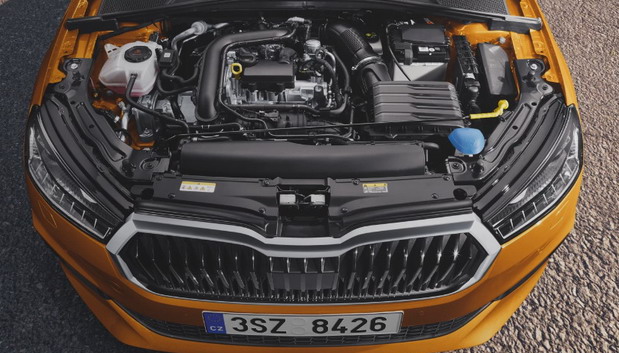
Pressure on manufacturers, Brussels values only electric cars...The experts in the armchairs in Brussels were not guided by analyses from vehicle inspection stations in each country, but by independent studies that they then use to undermine manufacturers and the industry. An analysis by a German research center has found that gasoline cars have worse emissions than diesel cars, but not in terms of CO2, but rather in terms of nitrogen oxide particles. This is due to the direct injection technology of gasoline, which is particularly efficient in terms of fuel consumption and CO2 emissions, but not in other areas.
Manufacturers have standardized on turbocharged gasoline technology because of the significant fuel savings it offers, up to 20 percent in the best cases, especially at low and medium engine speeds. So turbocharged engines have an increase in performance over a wider engine speed range and keep fuel consumption and emissions under control. But the high pressure used to inject gasoline directly into the combustion chambers contributes to the creation of more soot particles.
All of this is bothering Brussels, which wants to eliminate gasoline engines from all combinations and is looking for a solution to do so. So it will push manufacturers to their limits so that they give up on themselves.
There is a possible solution, but manufacturers are rejecting it...However, manufacturers have a solution in implementing a dual injection system. Indirect injection would be used for starting and initial acceleration phases, when emissions are highest - that is, in the low and mid-range of the engine - while direct injection would be used to achieve maximum power at high engine speeds. The problem is that both of these systems are very expensive to install in mass-produced cars, and this, of course, is reflected in the car's selling price.
The two types of injection are perfectly compatible, as demonstrated by special models such as the Toyota GT86 or Audi's now discontinued 2.5-liter five-cylinder engine. Indirect injection does not work at the high pressures of direct injection, because it injects fuel into the intake manifold instead of into the combustion chambers, which results in a more homogeneous air-fuel mixture and lower particulate emissions.
Struggling manufacturers, now focused on general electrification, that is, hybrids and electric vehicles, are reluctant to spend more than necessary. Especially on technology they consider practically obsolete and discarded.
Europe's car companies want the EU's lawmakers to let them revive a kind of car we've all loved but that's now almost extinct: the cheap, simple, petrol minicar.
And it seems they might be getting their opinion heard. This week in her State of the Union Address, EU president Ursula von der Leyen said: "We will propose to work with industry on a new Small Affordable Cars initiative."
Small petrol car...European car companies are increasingly panic-stricken about having to meet the CO2 reduction rules in the EU, and the total phase-out of combustion by 2035. It says there won't be enough buyers and European companies' profits will tumble. The result, in this scenario, would be huge losses of carmaking jobs across the continent, and a wave of imports of cheap Chinese cars.
So in the coming weeks, ACEA, the car-makers' lobbying body, will meet the lawmakers with proposals to allow cheaper, mostly petrol cars. Jean-Philippe Imparato (below), boss of Stellantis in Europe, outlined the argument to journalists at the Munich show this week. He claimed he wasn't just speaking for his company but others too.
"There's a sense of urgency and we need action not talk. The 2030 proposal [for CO2 halved from today's] is no longer reachable. The market for EVs is not there, because the charging stations aren't there and the economic situation is not there."
The "economic situation" means lots of people can't afford new cars at all, especially since just a few years ago there were 40-plus below £15k, and now it's just the Dacia Sandero (pictured above). Manufacturers can't turn a profit on the cheap stuff, partly because of equipment the law insists on. That includes ADAS, safety kit and the coming Euro 7 which includes brake dust. Meanwhile, wages are in a squeeze, so for many people any new car – petrol or electric – is pushed into the category of an impossible luxury.
Imparato says this is reflected in the average age of cars on Europe's roads, which he says is now 12 years old and rising. He adds that a 2010 car emits on average 76g/km more than a current one. So he says the need to cut CO2 could be tackled by getting a lot of the really old stuff off the road, not just by inaccessible EVs.
(In its lifetime, a car produces far more CO2 and consumes far more resource in its use than in its manufacture, so the eco-balance does favour scrapping and recycling rather than letting cars age.)
These new small cars would need special rules to get the price down. Likely proposals include exemption from some of the ADAS equipment. Imparato said while a manufacturer can currently add a bit to the price for such kit, that's only about half what it actually costs at the factory.
As they're city cars they wouldn't need lane keeping and so on, he said. And a 110kmh (68mph) speed limiter is likely.
Which would result in smaller brakes, cooling and so on, meaning the kind of virtuous weight circle many of us crave.
The carmakers might be pushing at an open door. Von der Leyen said: "Millions of Europeans want to buy affordable European cars. Europe should have its own E-car. E for environmental – clean, efficient and lightweight. E for economical – affordable for people. E for European."
But despite Imparato's calls for quick action, new rules for the EU tend to take years of wrangling before they're laid down. Then it would be a couple more years before the cars were developed and finally on sale.
Meanwhile there's still argument about whether the cutoff date for petrol cars should or should not slip back.
Environmental groups, infrastructure makers and the wholly electric car makers are doing their own lobbying. Michael Lohscheller, boss of Polestar (and ex-Vauxhall-Opel chief) said: "The EU’s 2035 target to end sales of new combustion cars gave clarity to industry, direction to investors and certainty to consumers. Weakening it now would signal that Europe can be talked out of its own commitments. That would not only harm the climate. It would harm Europe’s ability to compete."
And Von der Leyen said, even as she mentioned the E-car: "No matter what, the future is electric."



Nenhum comentário:
Postar um comentário