AUDI

Audi Q3 Sportback e-Hybrid: the recipe for success...
Just over a month ago, we had the opportunity to drive the new generation of the Audi Q3 firsthand. It was in Scotland, and on that occasion, we had the chance to test all three engine options. Now, with the launch in Spain already consolidated, it's time to get back behind the wheel. Although nothing has changed since that British experience, in this article we will highlight the impressions conveyed by one version in particular: the e-Hybrid, that is, the plug-in hybrid in the Sportback body.
This combination is far from trivial, given that PHEVs demonstrate strong commercial viability in 2025, positioning themselves as the main plug-in technology in Spain. Meanwhile, the Sportback version of the Q3, since its launch in 2019, has also established itself as the most popular silhouette in the compact SUV segment.
With the third generation, the commitment to electrification remains strong, demonstrating an evolution that could position it as a model to be followed. Thanks to its renewed electrical system, the Q3 e-Hybrid boasts a range of 119 km in fully electric mode, making it one of the best in its class.
This range is achieved thanks to the new battery with a gross capacity of 25.7 kWh, of which 19.7 kWh are net, thus doubling the figures of its predecessor. This is the same battery used in the A3 e-Hybrid, with which the four-ring brand achieves 142 km of range in electric mode, thanks to its lower weight and body design. However, considering that SUVs continue to dominate the market, it is reasonable to expect the Q3 e-Hybrid to outsell its compact sibling.
Another advantage of this new battery is support for fast charging in direct current (DC) up to 50 kW. We understand that this may not seem very useful for everyday use, but if you want greater efficiency after a long trip, or if driving with the electric motor becomes mandatory in cities in the future, it could be advantageous. As the saying goes, prevention is better than cure. In addition, the alternating current (AC) connection has also been improved, reaching 11 kW, compared to the previous limit of 6.6 kW. The only disadvantage we found is the absence of V2L bidirectional charging, unlike some recently launched competitors.
Powerful and efficient...Because efficiency is one of its fundamental pillars. We confirmed this during our driving test on the roads around Jerez, where, driving calmly, the first thing we noticed was that it is possible to travel between 90 and 100 km without activating the combustion engine. Average consumption is around 20 kWh/100 km and performance is quite satisfactory, especially considering that the electric motor develops 116 hp, which may initially seem insufficient to move the car's nearly 1.8 tons.
But that's not quite the case. In electric mode, the driver will travel in peace and quiet, moving with ease, especially in urban and suburban environments. The six-speed S tronic dual-clutch automatic transmission operates with precision, providing a smooth and efficient driving experience.
When the battery runs out, the system smoothly engages the 1.5 TSI 177 hp gasoline engine, slightly interrupting the smooth driving but providing a power boost. In addition, the battery never completely runs out, always maintaining a charge reserve to ensure that the car's full potential is available when needed: 272 hp and a maximum torque of 400 Nm.
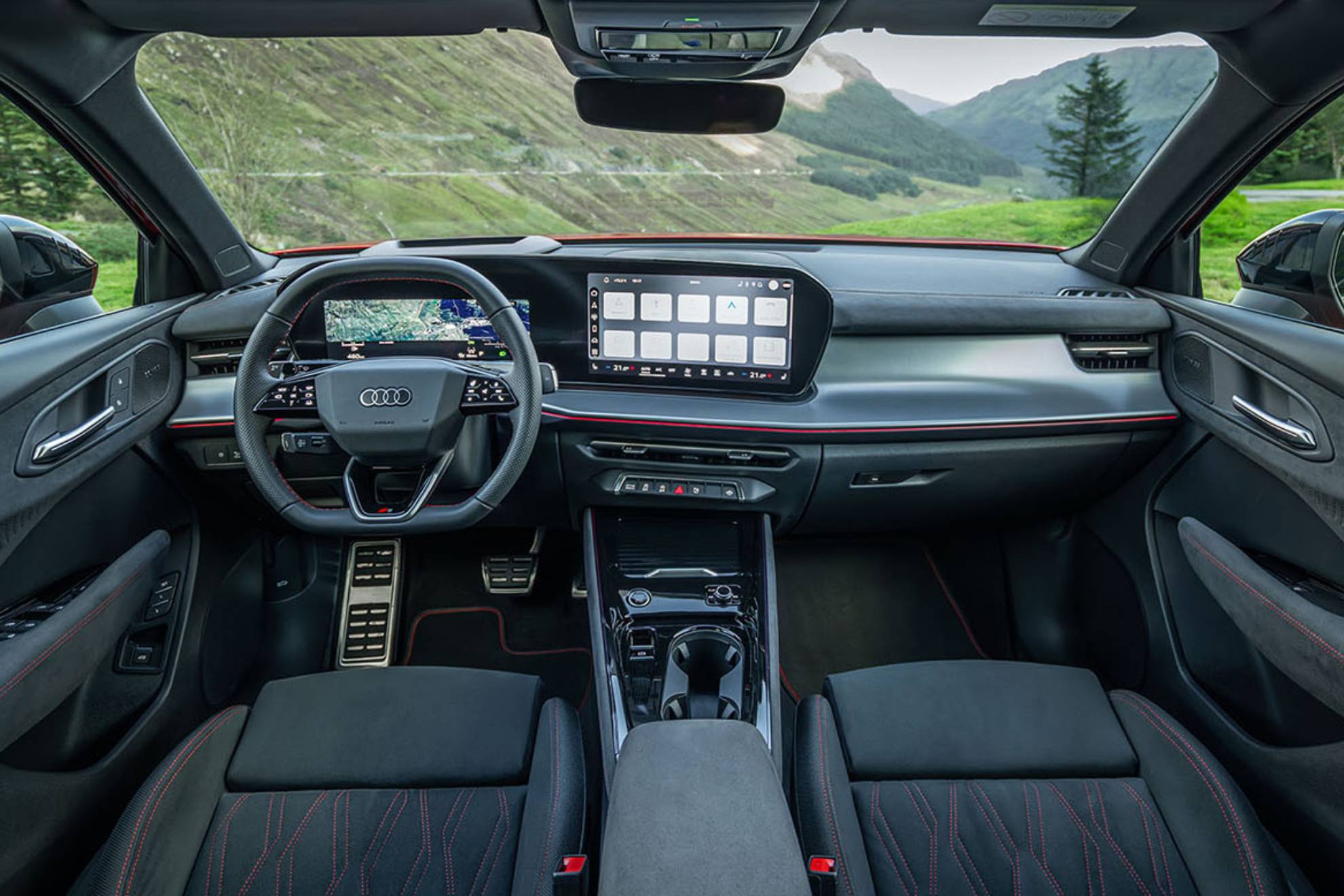
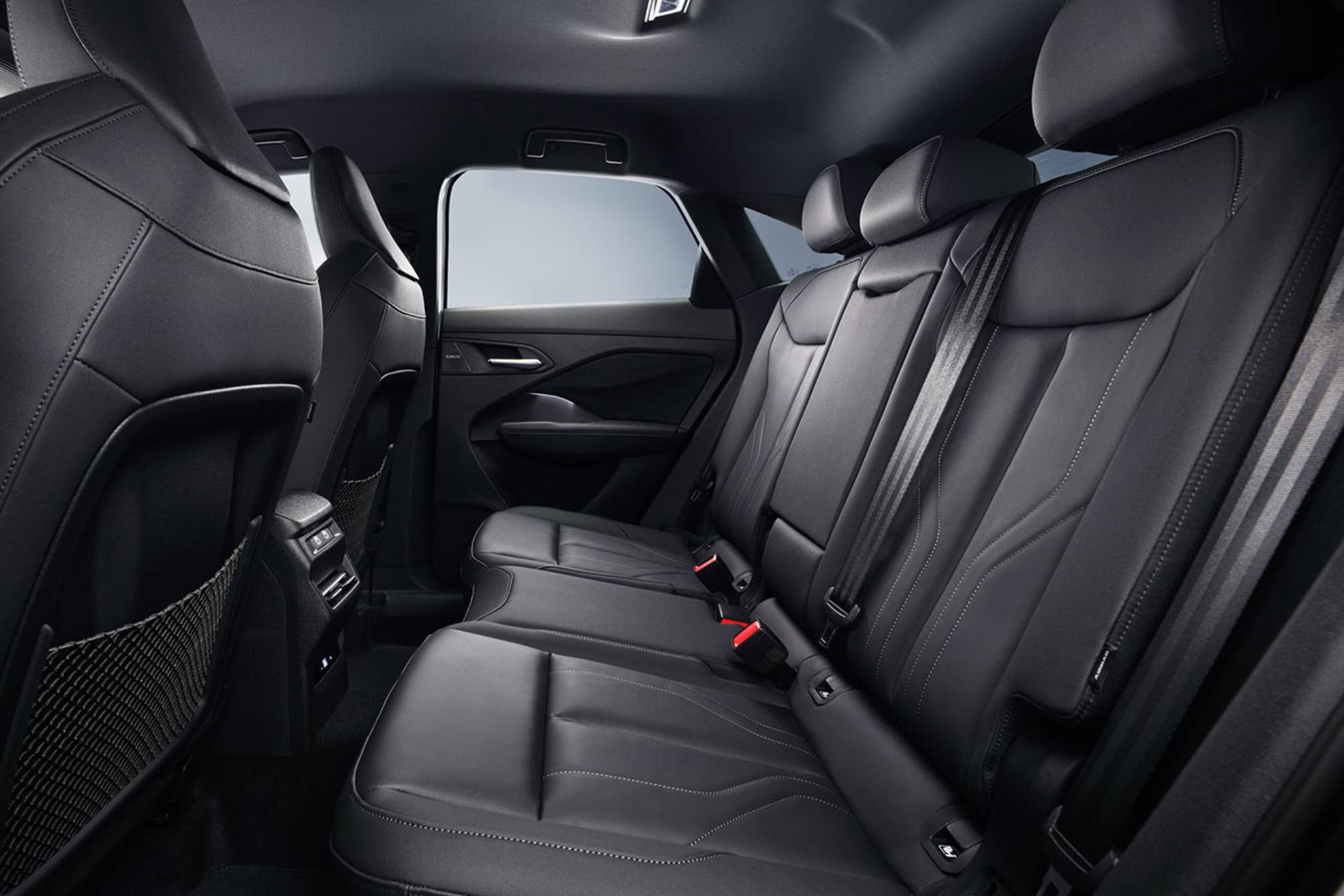
The interior of our test vehicle also featured a much more refined finish, thanks in part to the optional American tulip wood trim, which costs between €210 and €235. All of this is dominated by the central dual OLED screen under a curved frame that enhances the overall visual appeal, the sliding rear seats, and a trunk that, admittedly, in this Q3 Sportback e-Hybrid, offers only 375 liters of luggage space.
This allows it to accelerate from 0 to 100 km/h in 6.8 seconds and reach a top speed of 215 km/h. But be aware that, even without recharging, fuel consumption with a depleted battery can reach around 6.8 l/100 km, which is approximately the same value we obtained with the 150 hp eTSI.
On the open road, the new Q3 e-Hybrid boasts a perfect balance between agility and comfort, although, to be fair, this is achieved thanks to the new evolved suspension with dual-valve damping control, available as an option and which, as we verified on occasion in Scotland, continuously reacts to the characteristics of the road surface and the driving situation, taking into account parameters such as steering, braking and acceleration.
While driving, you can notice how well it absorbs road imperfections, adapting equally well to any of the available driving modes, which range from a sportier program to a balanced one.
And although we weren't able to test it in all its glory this time, it's worth mentioning again the new lighting features. This third generation of the Q3 debuts the new Matrix LED headlights with micro-LED technology, which not only increase the light beam at night, but also offer customizable light signatures, projecting information directly onto the road to improve visibility and nighttime safety.
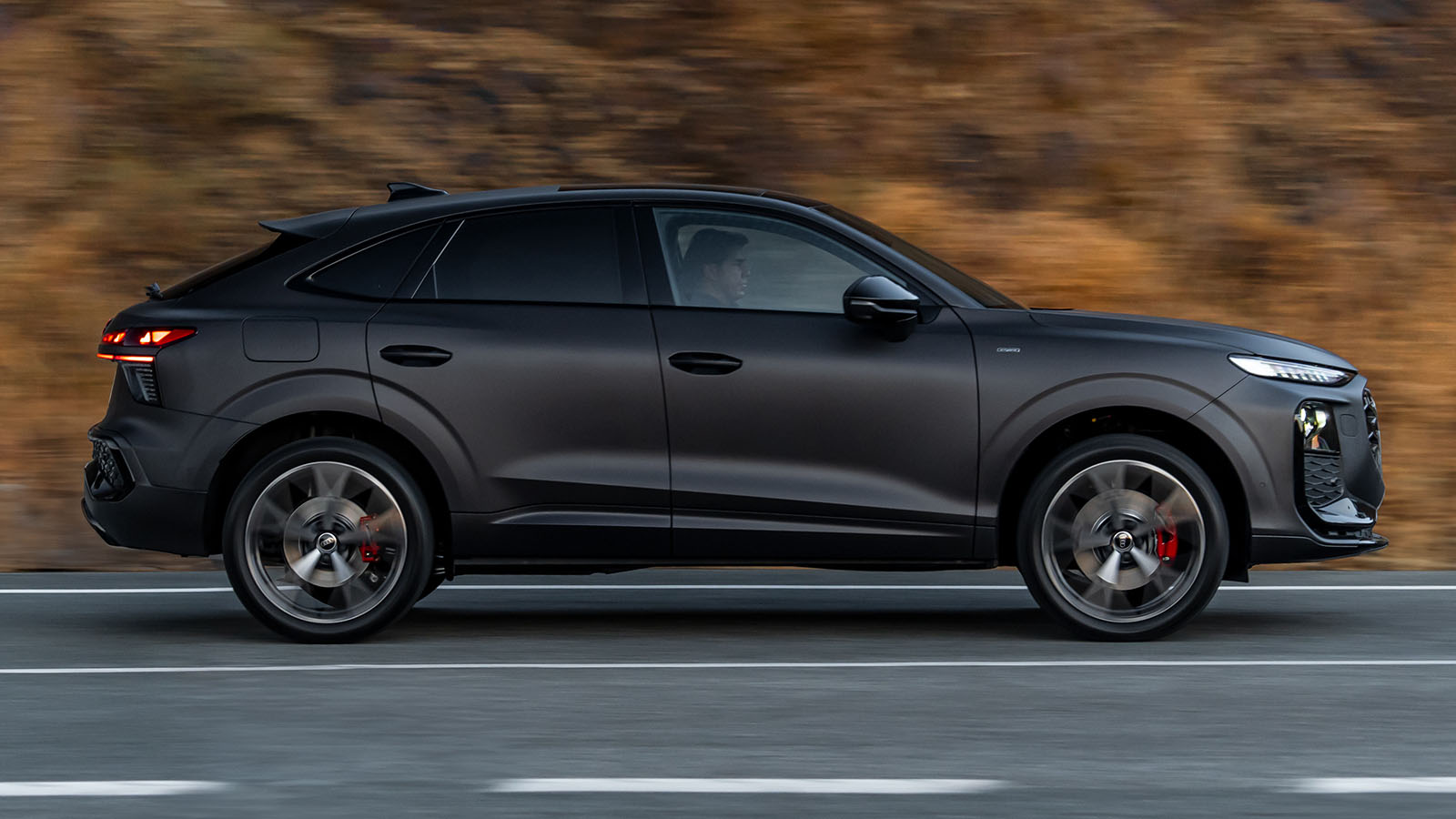
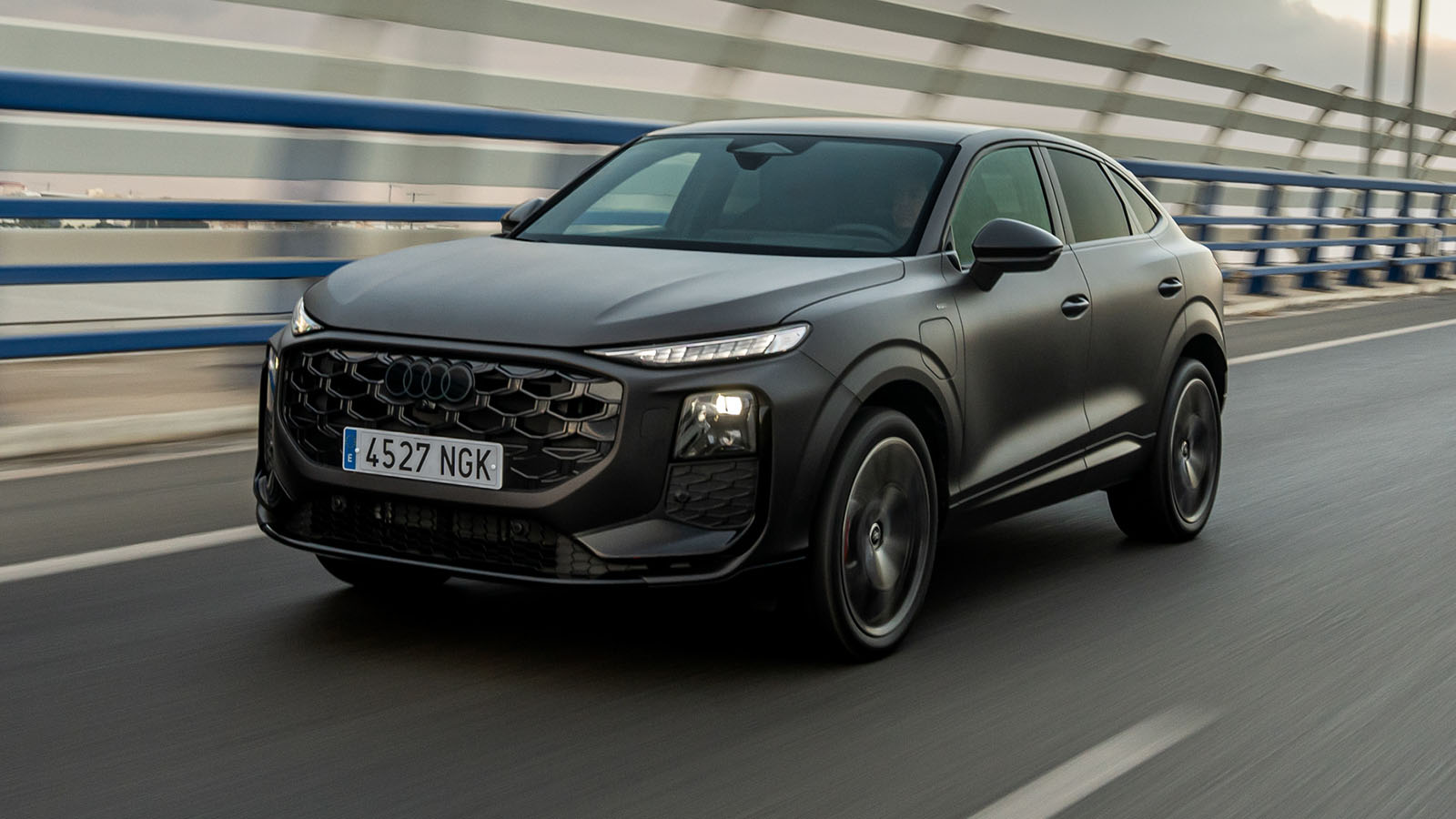
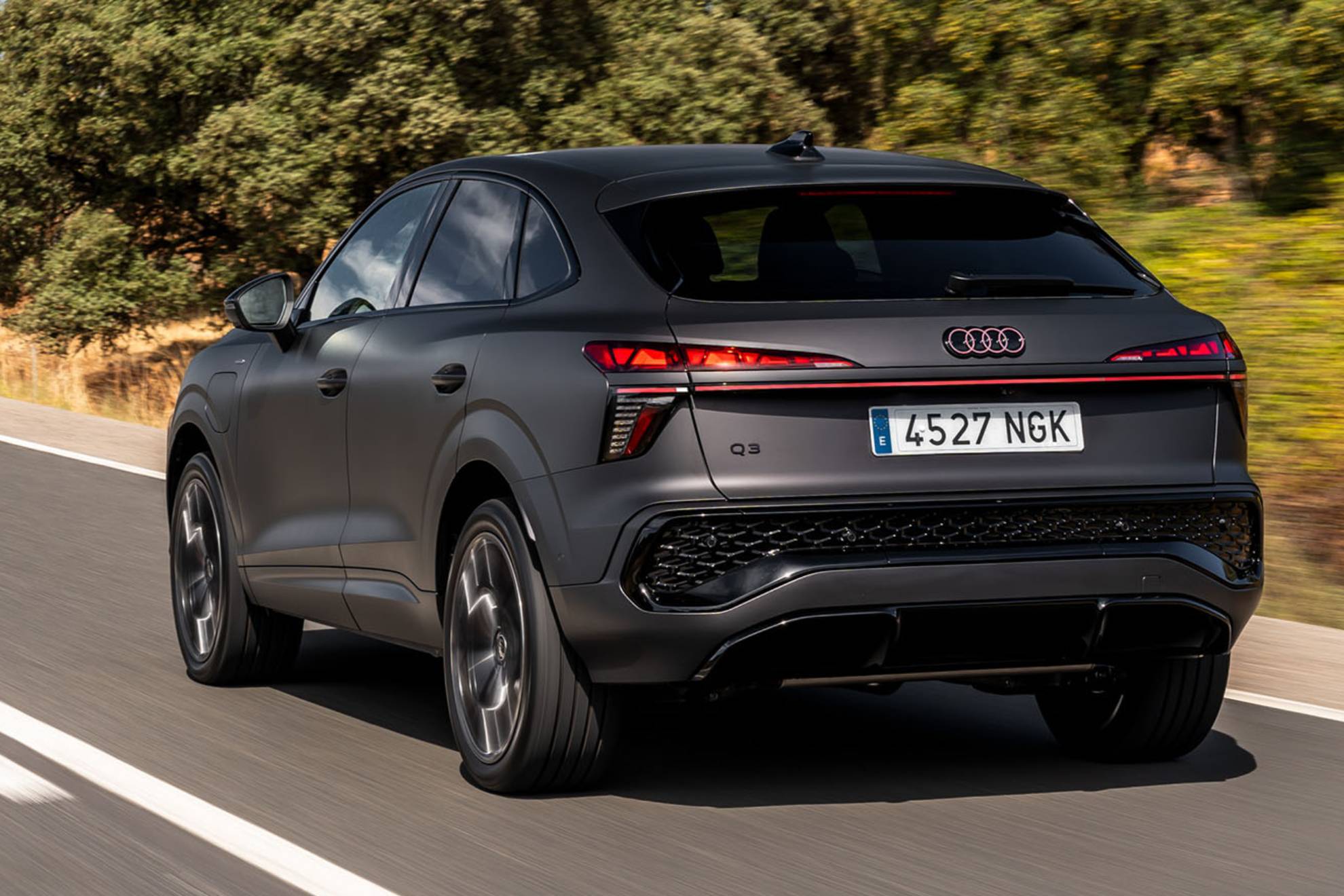
More expensive, but better equipped... As for the rest, there's little to add to what we've already covered in our first impressions of Scotland, with the possible exception of the matte paint called "wood brown" that you can see in the images, which gives a sporty touch to the Sportback's body (be careful with automatic car washes, as it cannot be used with rollers) and which has an additional cost of 1,730 and 1,945 euros, depending on the manual version.
The interior of our test vehicle also featured a much more refined finish, thanks in part to the optional American tulip wood trim, which costs between €210 and €235. All of this is dominated by the central dual OLED screen under a curved frame that enhances the overall visual appeal, the sliding rear seats, and a trunk that, admittedly, in this Q3 Sportback e-Hybrid, offers only 375 liters of luggage space.
With a starting price of €56,120 for the e-Hybrid version and an additional €1,900 for the Sportback version, the new Q3 represents a price increase compared to the previous generation, but this is justified by its improved equipment, technology, and electric performance. Furthermore, it is eligible for maximum government incentives for its plug-in hybrid system, making it more affordable.
Autonews


Nenhum comentário:
Postar um comentário