SUZUKI
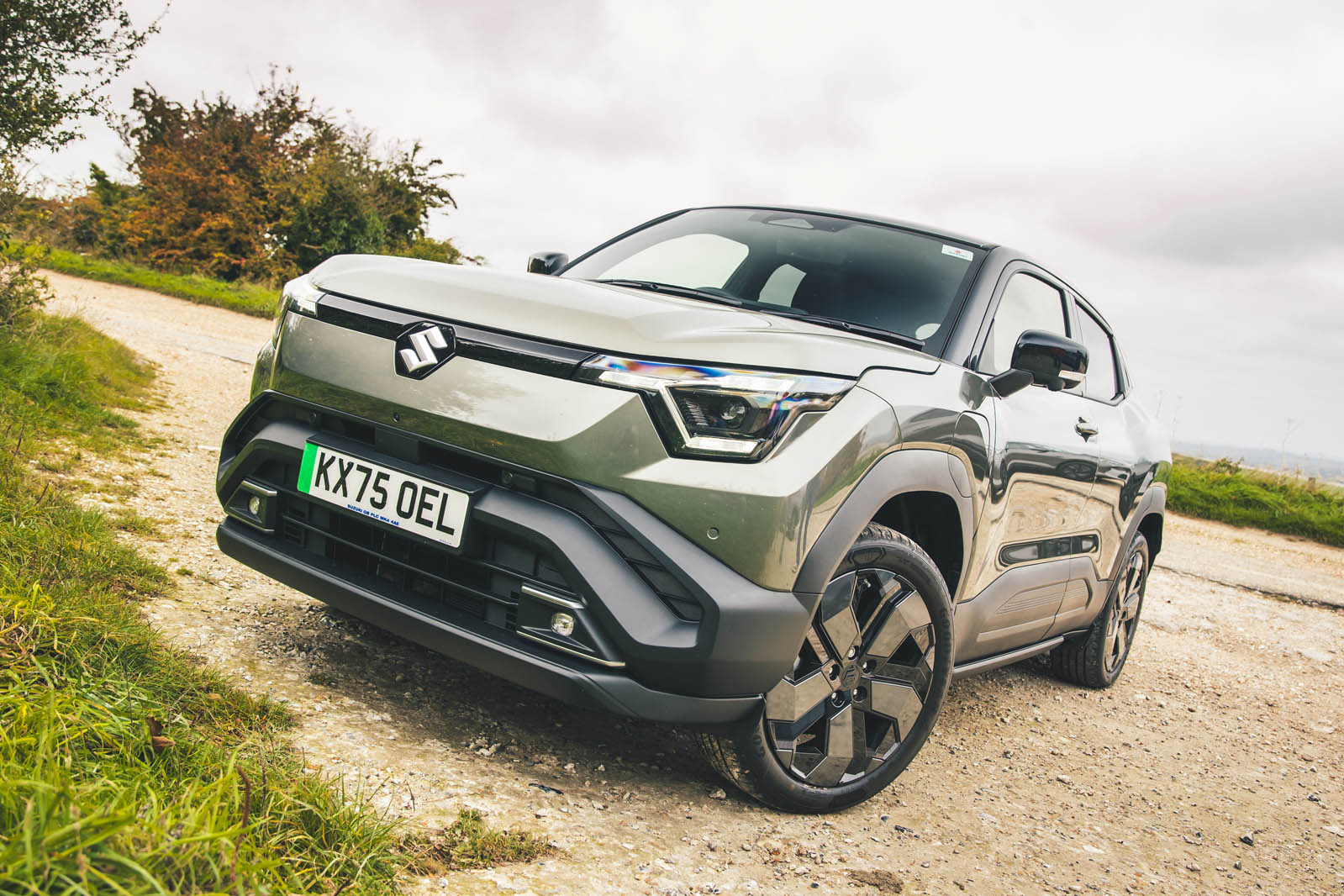
Suzuki eVitara review
The noted manufacturer of affordable, compact, efficient cars has had to effectively stop selling some of its cars, not because people didn’t want to buy them but because it was going to be fined otherwise. Is a 60mpg, sub-one-tonne Swift really worse for the environment than a three-tonne SUV? Debatable at best.
Be that as it may, it does seem like an oversight not to have an electric car in your 2025 model line-up, so rather than sulking, it has now come up with exactly that: the Suzuki eVitara.
Toyota and Suzuki have an agreement to share models and engineering, which has previously produced Suzuki-badged Toyotas such as the Swace (a Corolla) and the Across (a RAV4). Now Suzuki has led the project to develop a joint small electric SUV.
The company has taken its sweet time and has had to use an architecture that’s loosely derived from the one it uses for its piston cars. On the face of it, though, the new eVitara shares little more with its ICE counterpart than a name.
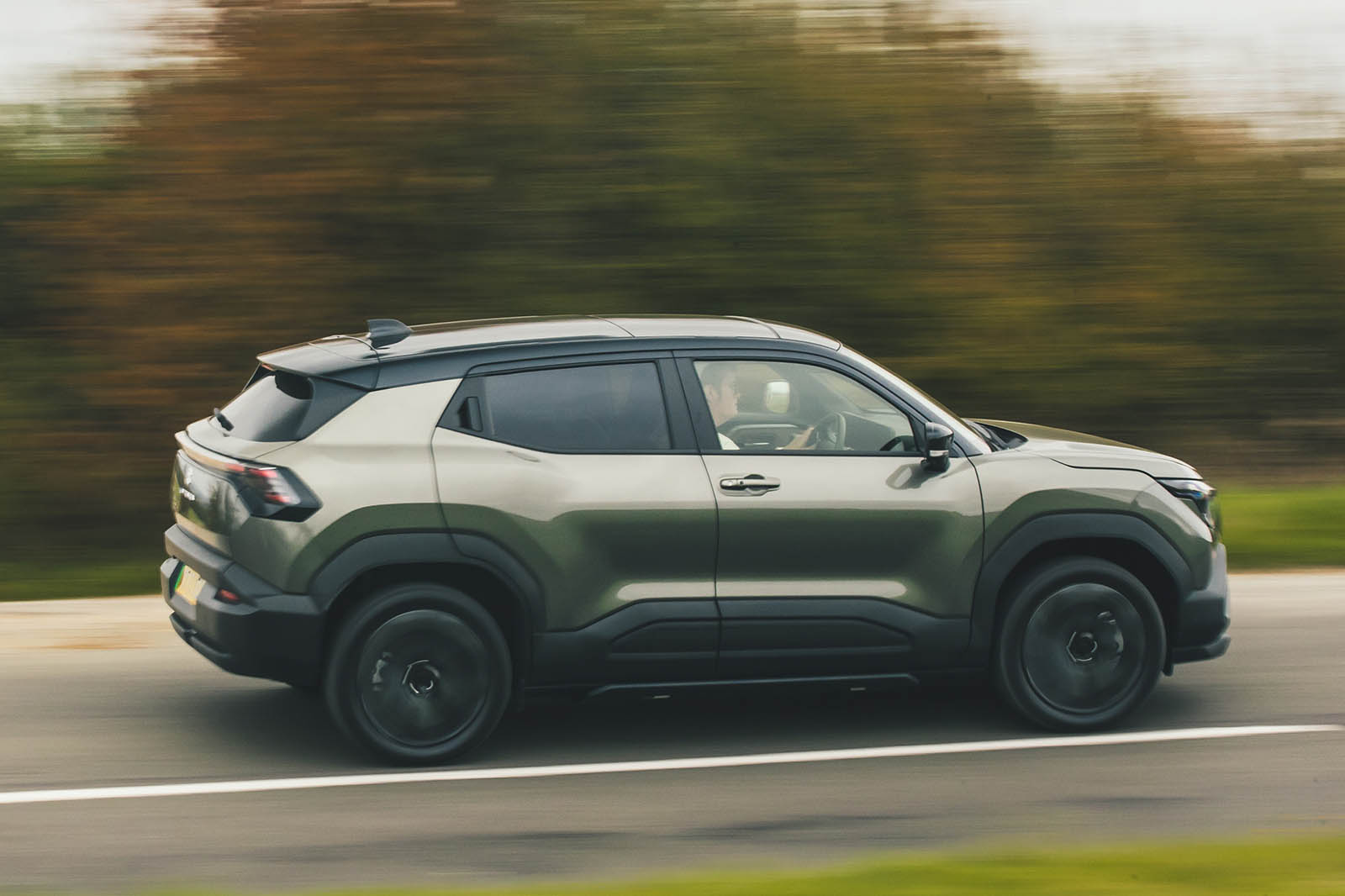
At 4275mm in length, it’s 100mm longer than the Vitara, which puts it among the Ford Puma Gen-E and Renault 4, potentially even the Kia EV3 and the Renault Megane E-Tech.
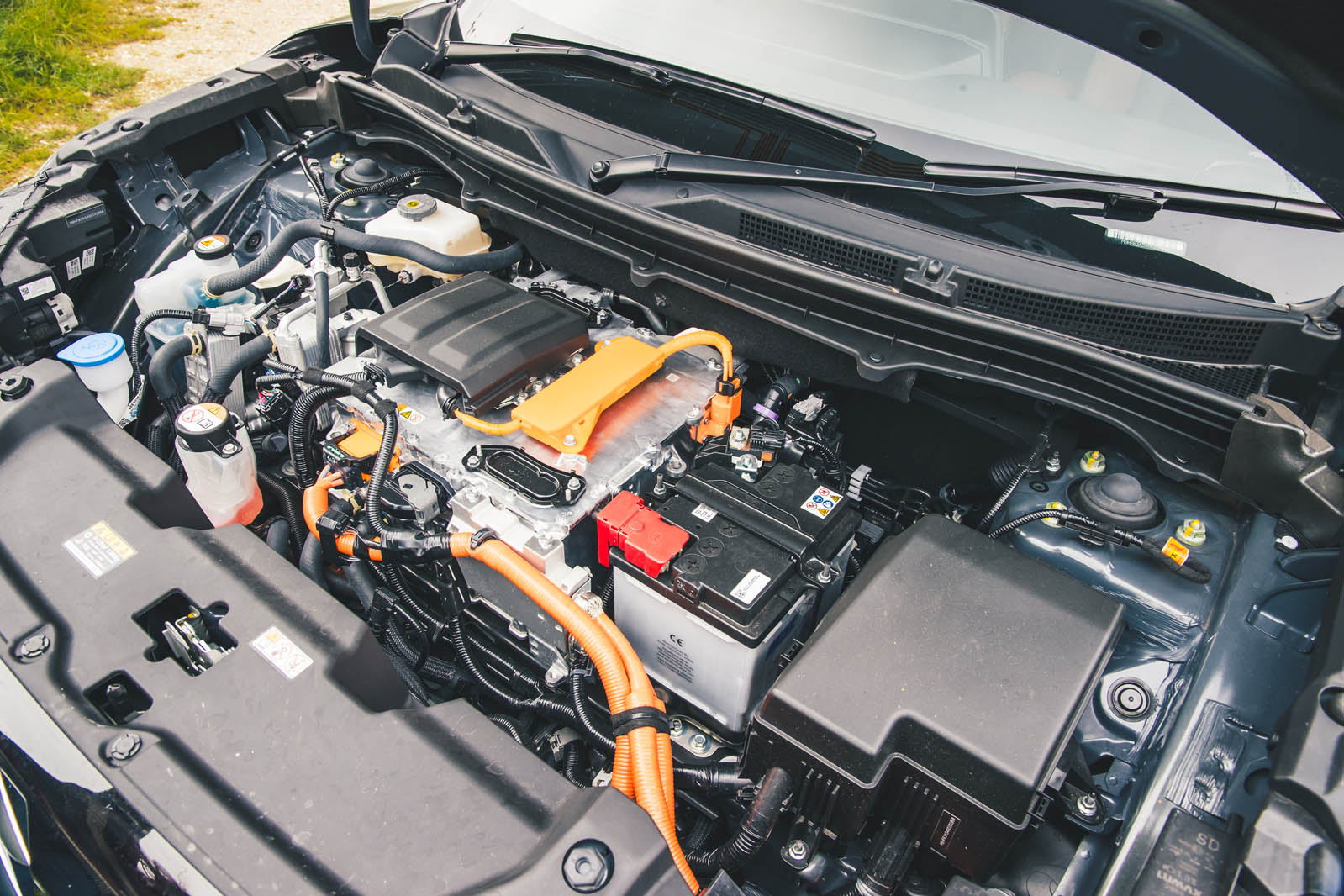
The technical run-down is pretty standard: it’s the usual skateboard platform deal with a choice of two battery sizes: 49kWh or 61kWh. Suzuki hasn’t released figures for the usable capacities, but given that it’s using LFP cells, the safety buffer ought to be minimal. The small battery comes with a 142bhp front motor, the 61kWh battery with a 172bhp motor.
In typical Suzuki tradition, the eVitara is also available with four-wheel drive, by way of an additional 64bhp motor on the rear axle of the long-range model, for a total of 181bhp.
The entry-level eVitara has 214 miles of range, but Suzuki expects most people to go for the single-motor 61kWh model, which musters 266 miles. Those range figures straddle the Puma Gen-E and Renault 4, but the eVitara uses a bigger battery than those cars to achieve similar range, which doesn't bode well for efficiency, which is traditionally a strength of Suzuki's ICE cars.
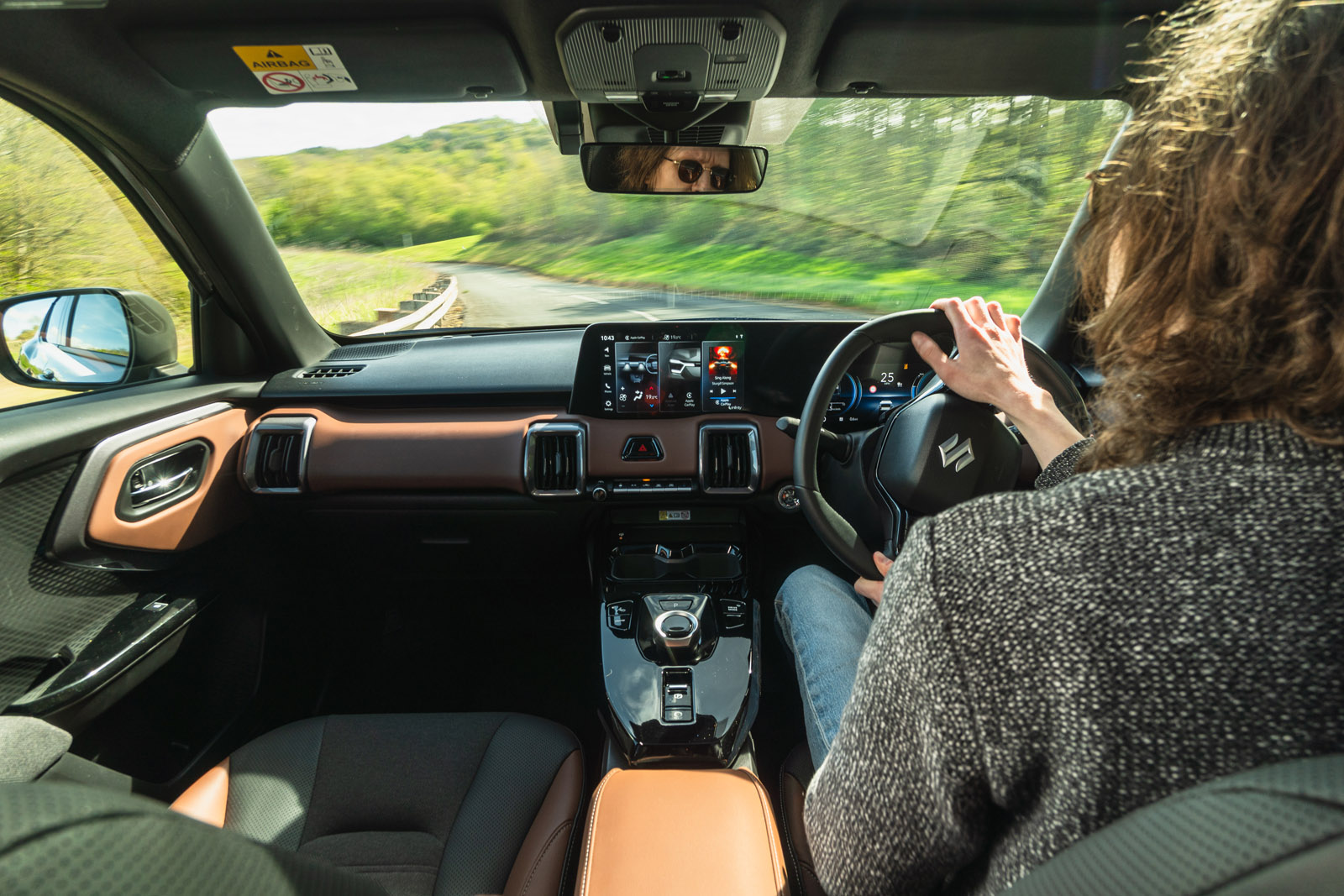
The interior is attractive enough, if not exactly upmarket. There’s a splash of colour in some versions and soft-touch materials cover the places that matter, but the design originality of some rivals is absent, and Suzuki has also started tapping into the seemingly endless well of scratch-prone gloss black plastic.
Despite the seats being oddly narrow, the driving position and comfort are excellent thanks to a very wide range of adjustment. Cabin storage is decent, with big door bins and cupholders, a space under the centre console and a wireless phone charging pad. There are no particularly clever solutions, though.
Space in the back and the boot are tight compared with slightly bigger alternatives like a Kia EV3, but just about acceptable relative to the Puma and the 4. The sliding rear bench makes it flexible: with it in the rearmost position, there's more legroom than in those rivals, but the boot is tiny (244 litres). Slide it forwards, and the boot expands to 310 litres, which is still down on even the Renault.
Where the eVitara really falls down is tech. You might not think you care because you just dial up Apple CarPlay or Android Auto (both are available and wireless), but compared with existing Suzukis, the eVitara has also shed a lot of physical controls. The infotainment system is completely new to Suzuki, and it looks attractive enough and works fairly logically. However, it responds painfully slowly, which gets annoying really quickly, since you need the touchscreen to disable the lane keeping assistance and overspeed warning and to use some of the climate controls. Requiring five taps of some very small buttons on a very laggy screen to adjust the heated seats is not acceptable.
With 172bhp, the eVitara is usefully quicker than Stellantis EVs like the Jeep Avenger and Peugeot e2008, and driveability is well-resolved too. The accelerator is progressive, whatever regen mode you’ve picked. There are a couple to choose from in a touchscreen menu plus a ‘one-pedal’ mode that’s activated with a button in the centre console. Annoyingly, the latter doesn’t bring the car to a complete stop, which makes it rather pointless. Luckily, the brake pedal (a by-wire set-up) is firm and progressive.
While the dual-motor, four-wheel-drive version adds only 9bhp, its torque uplift is more significant: 84lb ft. As a result, it shaves 1.3sec off the 0-62mph time. Nice to have, but it's not essential, because the FWD car has enough performance for its mission as a sensible EV.
We did notice that at motorway speed and with a lower state of charge, performance drops off noticeably. It's not problematic, but that sort of thing isn’t usually the case anymore with modern EVs.
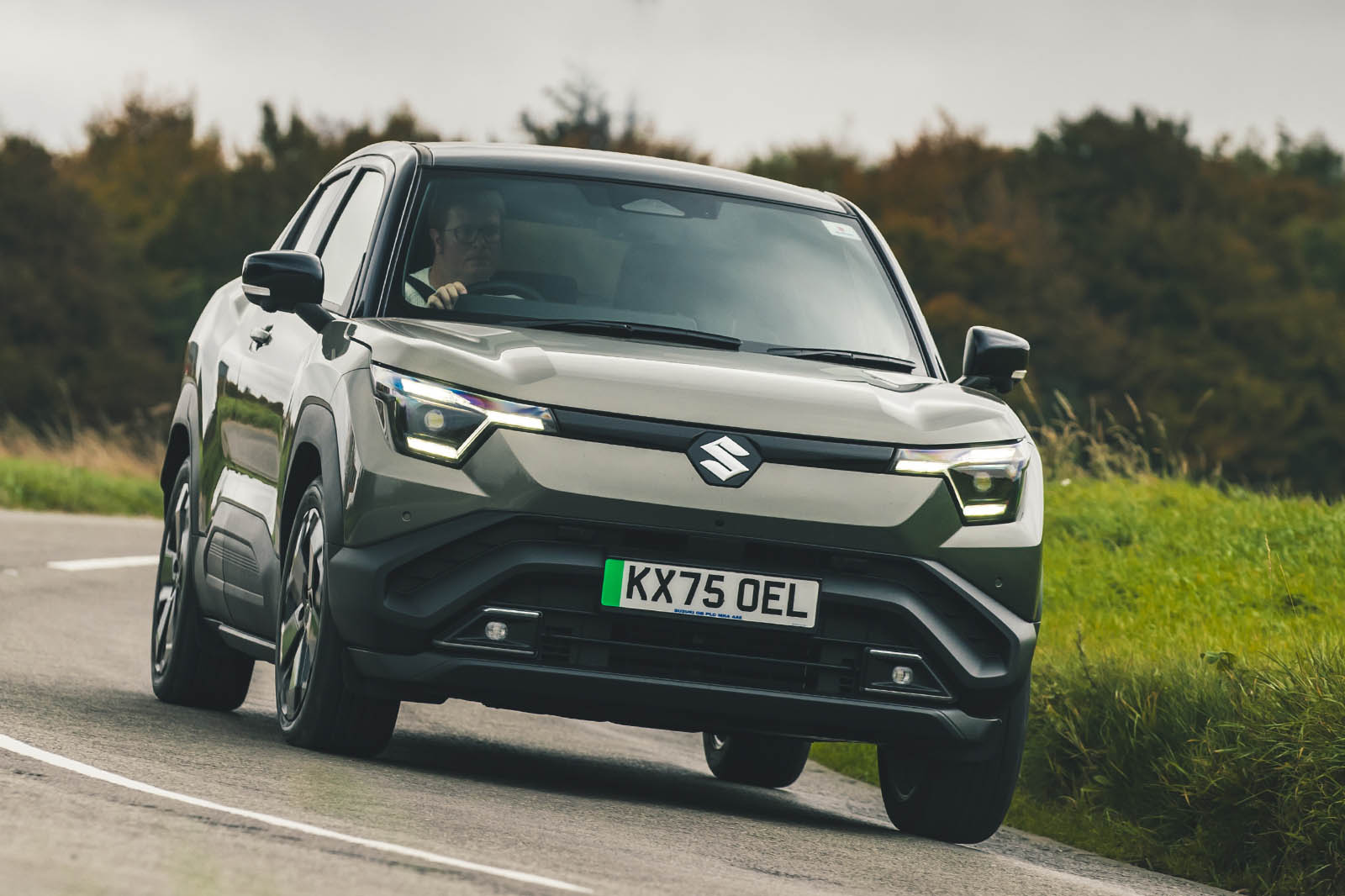
Although this is a Suzuki development, it feels remarkably Toyota-y. All the controls are progressive and intuitive, to the point where you just don’t think about them.
The suspension is on the softer side, and while it can feel a little underdamped at times, it’s mostly very absorptive and irons out bumps big and small, gradual and sharp. You’re not short of grip or turn-in response either. In fact, the handling balance is surprisingly pointy.
I tried both the front-wheel-drive and Allgrip-e versions of the 61kWh car, and on dry roads, there’s next to no difference. The 4WD version has marginally heavier steering and the traction control (which is conservative but smooth) has a bit less work to do when you peel out of a junction. The only reason to buy the Allgrip-e model is if you’re going to be driving in very slippery conditions a lot.
Driver assistance features are an issue, though. Everything is fitted as standard, so even the entry-level Motion trim gets adaptive cruise control with lane following, blindspot monitoring and front and rear parking sensors. The adaptive cruise is pretty smooth, but the lane keep assist is overly aggressive and the overspeed warning is typically annoying. Turning off the latter requires you to wrangle the unwilling touchscreen. The eVitara has a prominent camera pod on the steering column for the driver monitoring, but the system seems well calibrated.
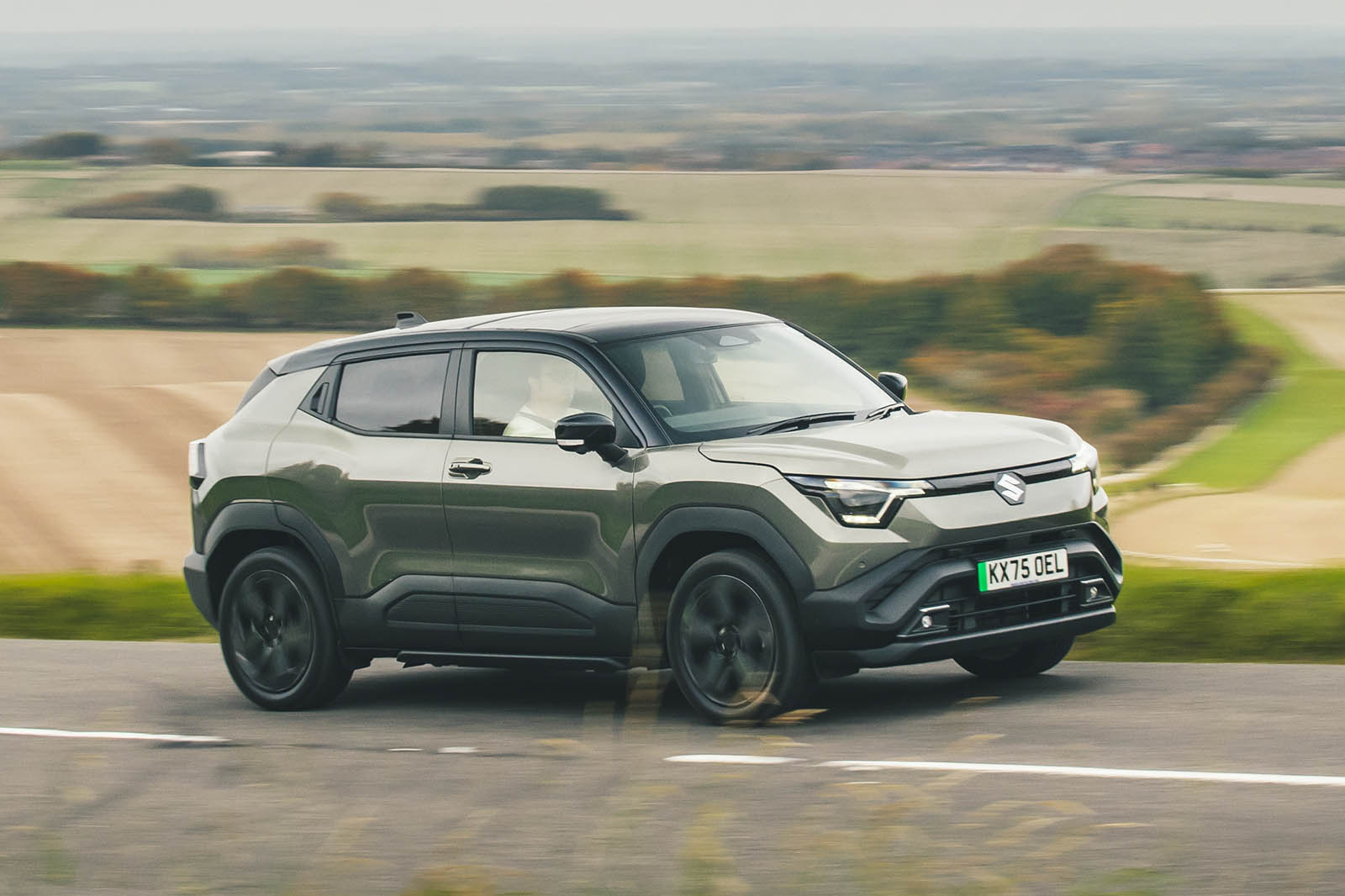
Overall, them, the eVitara is a pleasant enough car. It drives with more maturity than you might expect from a car of this size. Push it and there's even a modest amount of fun to be had. It's comfortable and reasonably practical.
But it has two big weaknesses. The touchscreen has quite a lot to do, yet is painfully slow. The EV drivetrain feels like it's two generations behind. It's priced in line with the Puma Gen-E and Renault 4, but given those weaknesses, it should be cheaper for it to really make sense.
Autonews


Nenhum comentário:
Postar um comentário