LANCIA
Ypsilon HF Elettrica Test Drive: the authentic lancia spirit, but with battery power
When Lancia's return was announced, motorsport fans' imaginations undoubtedly turned to the legendary Delta and its racing versions, which had become an icon of the World Rally Championship.
The reality, however, was different. The new Lancia sought to continue the premium positioning of its previous generation, with an almost obligatory commitment to electrification (also in line with Stellantis's strategy as the "parent" group).
But heritage is powerful, and in this new phase of Lancia's evolution, passion hasn't been completely abandoned. There's a move closer to the world of rallying (although, for now, with a Ypsilon Rally4), and the iconic HF initials have been revived, identifying our protagonist: the Ypsilon HF Electric.
It may not seem like much, but it's the model in the current lineup that best preserves the Lancia spirit that remains in the imagination of many drivers and enthusiasts. Judging by the looks our test car received, it at least stands out.
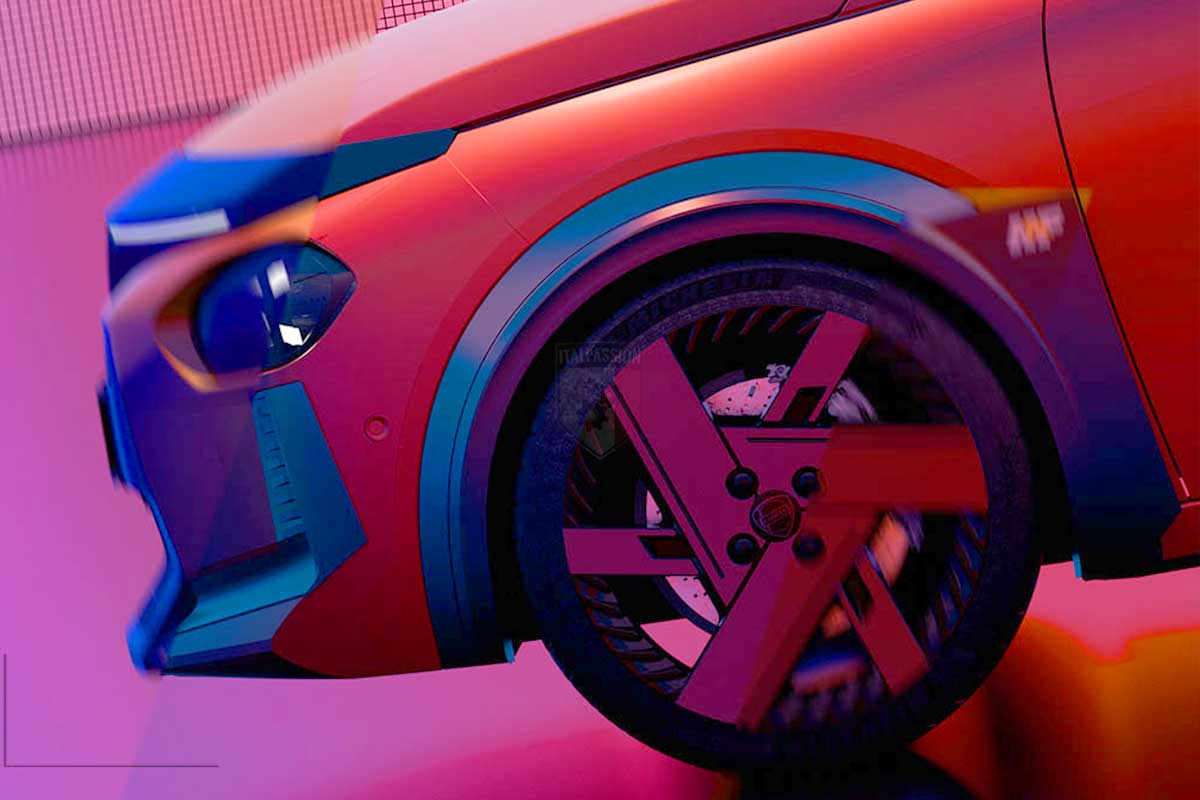
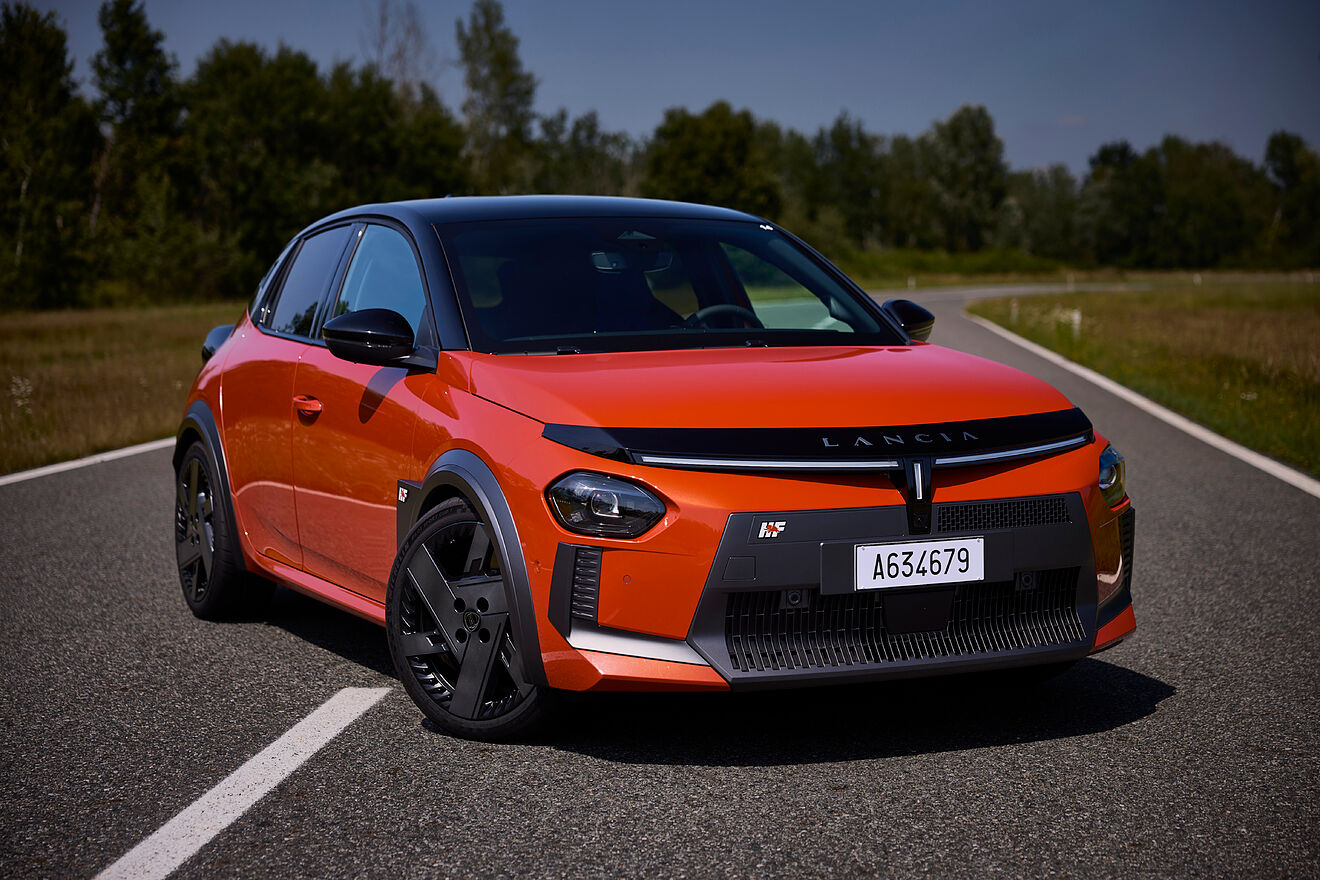
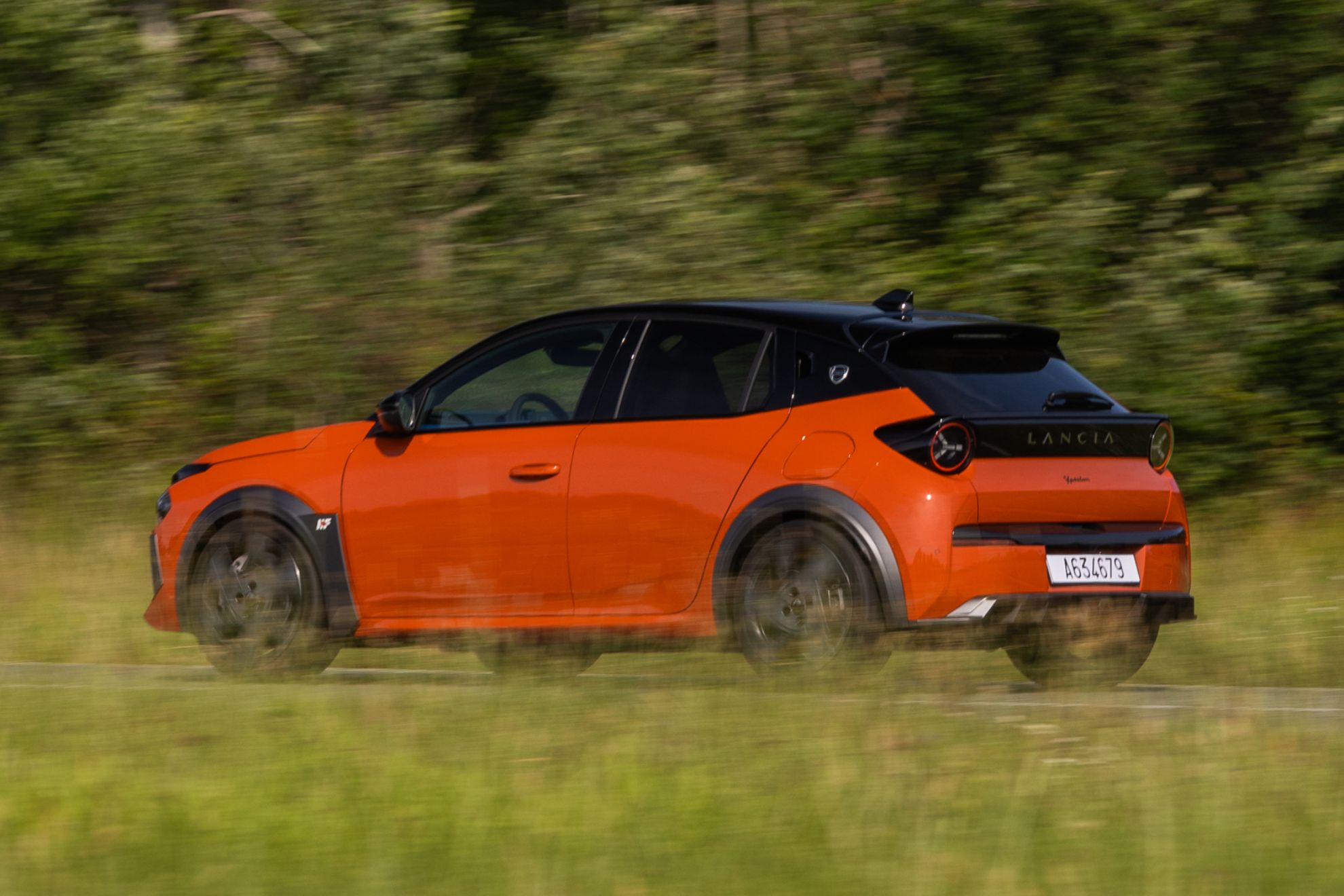
With some aggressive details, this Ypsilon HF honors the legacy established by Cesare Fiorio in the 1960s with Squadra Corse, which would pave the way for a brilliant rally career. Its front end is a bit sportier, but it's the spoilers behind the wheels (mounted on black wheels with a very attractive retro look) and, above all, the rear diffuser that define its character.
Inside, Lancia did what it could to give a racing feel to a cabin that was actually designed for something quite different. It achieves this—in part—with sportier seats (almost as comfortable as those in the gasoline-powered Ypsilon) and neoprene-like upholstery (a bright light blue in our test unit) that extends across the main areas of the dashboard. The steering wheel also gets an HF detail on the lower spoke. In terms of equipment, the Ypsilon HF includes 18-inch wheels, sports seats, a dedicated rear diffuser, a multimedia system with two 10.25-inch screens, air conditioning, keyless entry and starting, and a more powerful on-board charger (11 kW instead of 7) with V2L functionality that allows you to power external devices. Its price is 42,805 euros, excluding taxes.
The Lancia Ypsilon HF shares its mechanics with the Abarth 600e and Alfa Romeo Junior Veloce, both built on the same platform (the Stellantis CMP). The electric motor mounted under the front hood delivers 281 hp, transmitted to the front wheels via a Torsen-type mechanical self-locking differential (with gears, rather than clutches), which, as we've seen, significantly contributes to its effective dynamic performance.
The suspension, significantly revised, has been stiffened and lowered by two centimeters. The brakes are also different from other Lancia Ypsilons: the front features larger-diameter discs (355 mm) gripped by four-piston calipers.
The battery, housed in the floor, has a capacity of 54 kWh (51 kWh net) and promises an average range of 370 km. However, if you exploit the car's remarkable performance, its range drops dramatically: consider where to recharge before setting off. As for charging, 11 kW of alternating current and just 100 kW of direct current are accepted.

But the true sporty soul of the electric Ypsilon HF lies in its chassis. Its suspension has been significantly radicalized compared to the standard configuration (the hybrid Ypsilon we recently tested was nothing like this HF): nothing less than shorter springs, thicker stabilizers, and wider track is the recipe chosen by the Italian engineers. Well... perhaps Lancia overdid it a bit with the chassis' rigidity and dryness, which faithfully replicates the smallest irregularities in the asphalt... and turns potholes into jolts that might be too harsh for passengers who aren't certified rally drivers.
Or perhaps we're still not used to this combination of a racing chassis like this (be careful, because, for example, the steering doesn't feel as improved, although it doesn't feel slow) with the quiet, rumbling sweetness of electric propulsion. A limited-slip front differential helps ensure traction and trajectory when exiting corners.
Here, Lancia uses a 280-horsepower electric motor, enough to propel the Ypsilon with great agility and, undoubtedly, to give it a sportier character than the hybrid. Its performance is good (especially with that 5.6-second 0-100 km/h acceleration), but, like all electric vehicles (and especially those that define themselves as "sporty"), something is still missing.
We have three very distinct driving modes (Sport, Normal, and Eco), plus a B mode to increase regeneration during deceleration. But even this HF lacks paddle shifters to address this... and, in the process, shift our focus to a sportier experience.
Its certified range is 373 kilometers (494 in the city). In our test, the on-board computer reduced this expectation to around 325 kilometers after a full charge (with a maximum power of 100 kW, which isn't exactly fast), and after just under a week with it, we'd say you should drive a little over 200 kilometers (and that's assuming efficient drivers) as a safety margin. And that's always in urban and suburban environments, without veering off the highway.
But for some reason, all these sentiments don't quite add up. In fact, this Ypsilon HF falls into that "category" of recent electric models (probably alongside the Renault 5, one of its rivals) about which we've all thought the same thing: "If only they made models with combustion engines..." Right?
Autonews



Nenhum comentário:
Postar um comentário