BMW
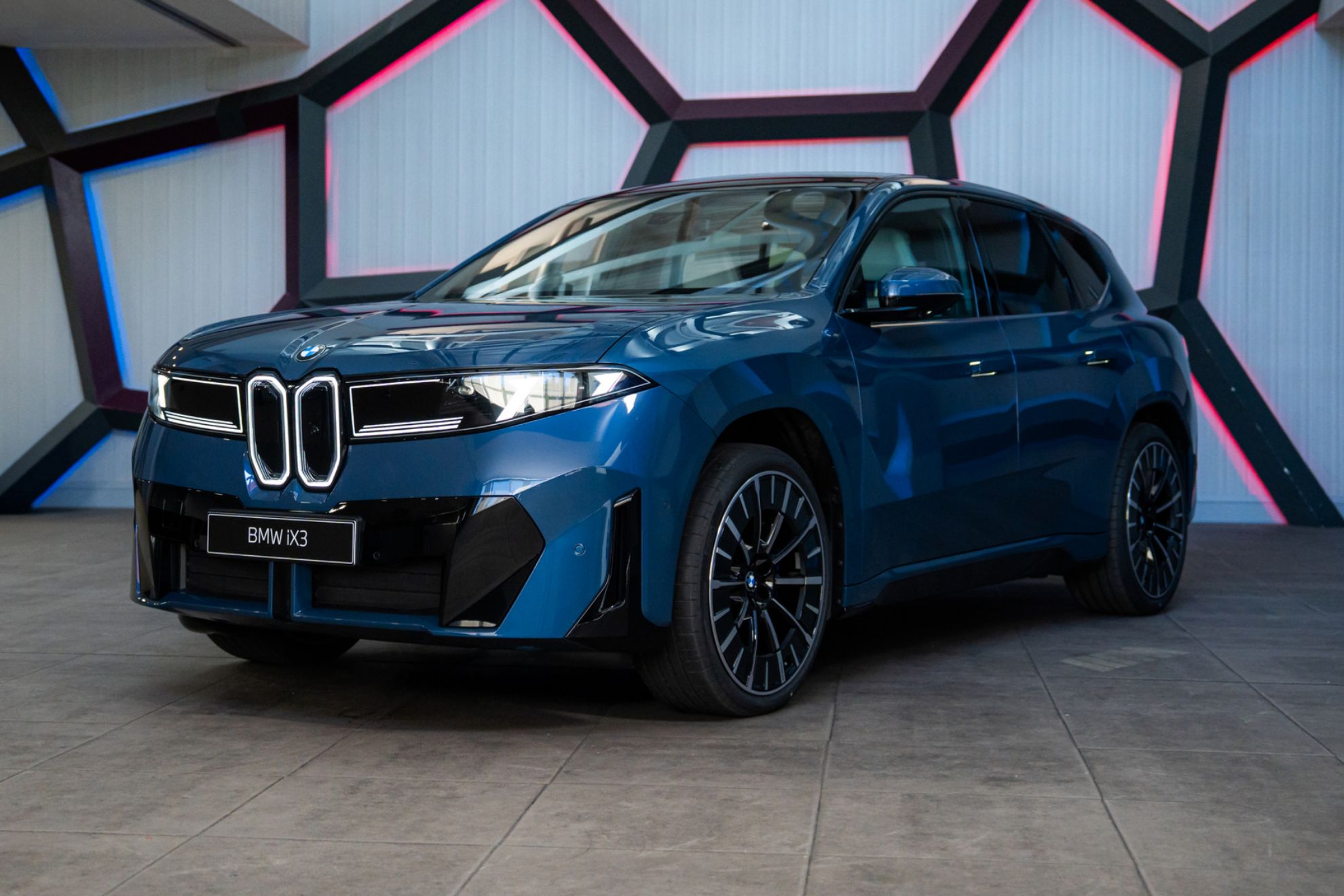
BMW iX3: the new electric SUV with 805 km of range
The early autumn heat permeates the Retamares Golf Club in Alalpardo, in the northern region of the Community of Madrid. Barely a sound can be heard: a few birds, the distant sound of a swing cutting through the air...Inside a room with high ceilings, an almost solemn silence reigns. There sits the new BMW iX3, the first model in the Neue Klasse family. We've come to witness a kind of silent and intimate meeting (journalists pass by one by one) about a revolutionary car that BMW will bring to dealerships in March 2026 and whose price has already been announced: 69,900 euros.
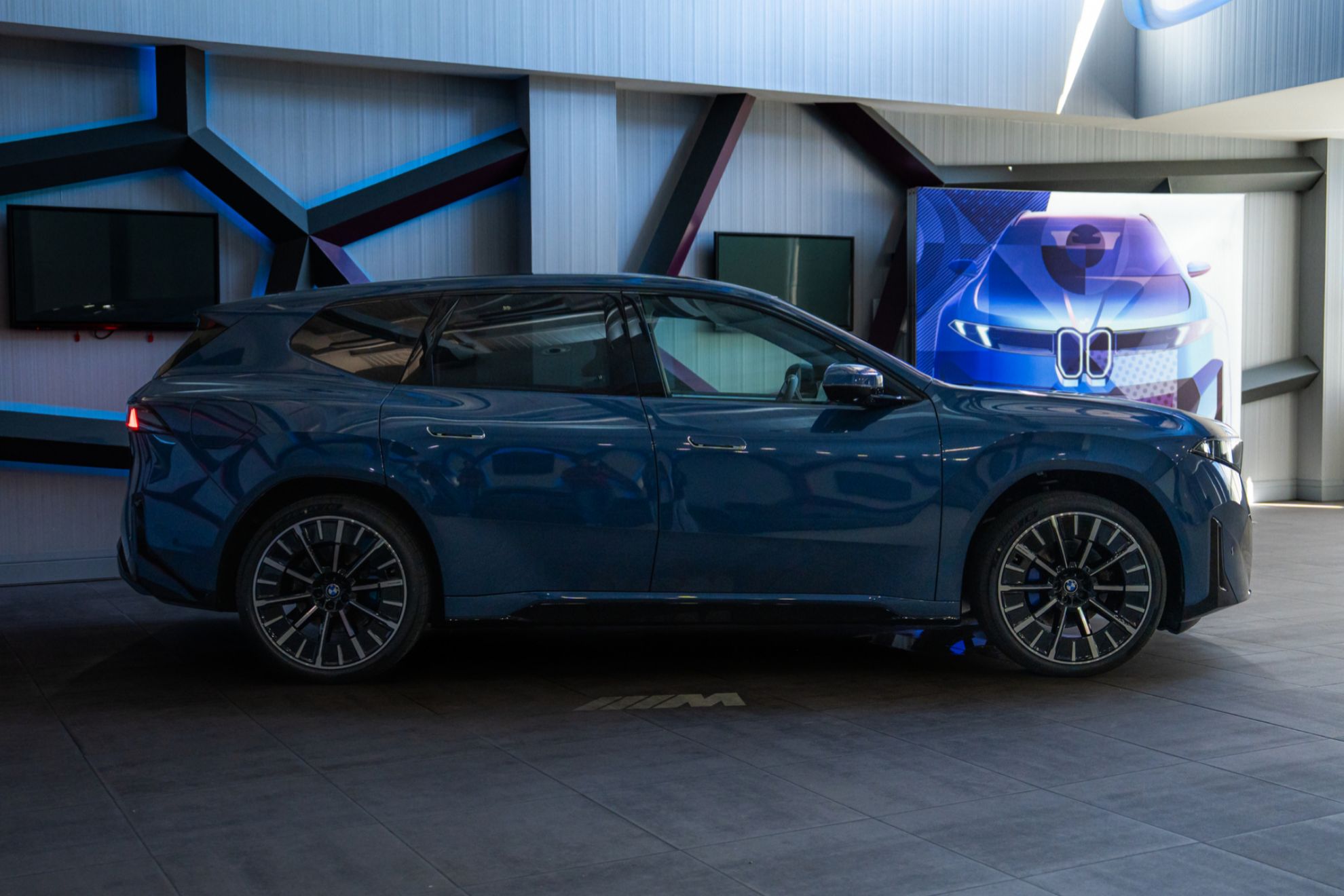
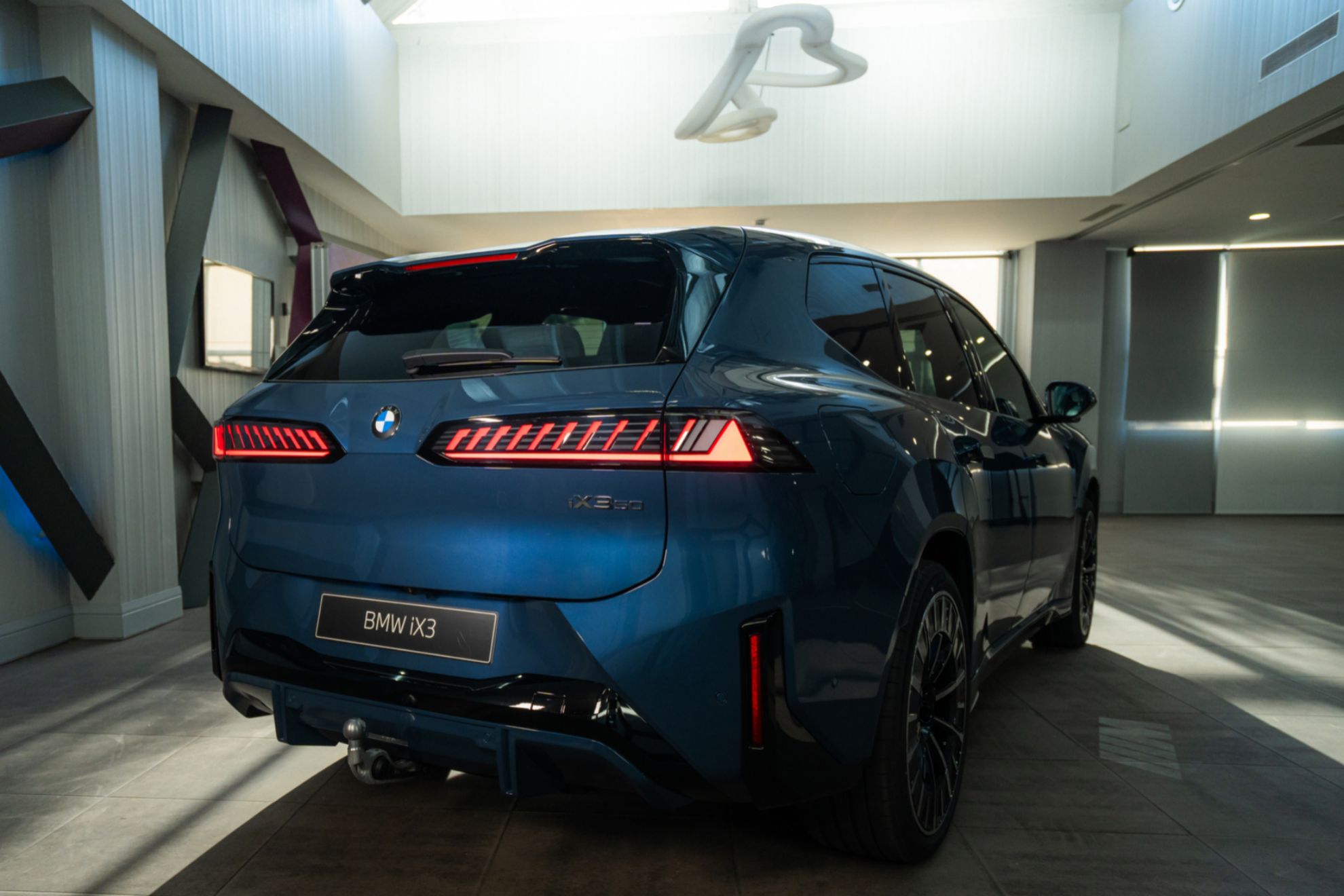
The new electric SUV measures 4.75 meters long, 1.92 meters wide, and 1.64 meters high, with a 2.89 meter wheelbase. It's roughly the size of an X3 and ready to compete with the Tesla Model Y or the Audi Q6 e-tron, albeit with a design that won't be confused with either, judging by the folds that bathe its silhouette. My gaze first goes to the front kidneys, vertical, illuminated, and of a size that reminds me of those used on BMWs in the 1990s. Then to the headlights, which appear to display two turn signals on each side, making it easy to recognize when looking at it in the rearview mirror. There's no trace of chrome, and only black accents. And as we walk around its perimeter, passing flush door handles that unfold theatrically, we stop at a rear end that boasts very good headlights that cover almost the entire width of the car.
0.24 drag coefficient...The iX3's 0.24 drag coefficient demonstrates that BMW has worked on the body's fluidity to fight for efficiency with a solid weapon. And the 20-inch wheels also play a role, confirming that behind the aesthetic sobriety lies a remarkable technical effort.
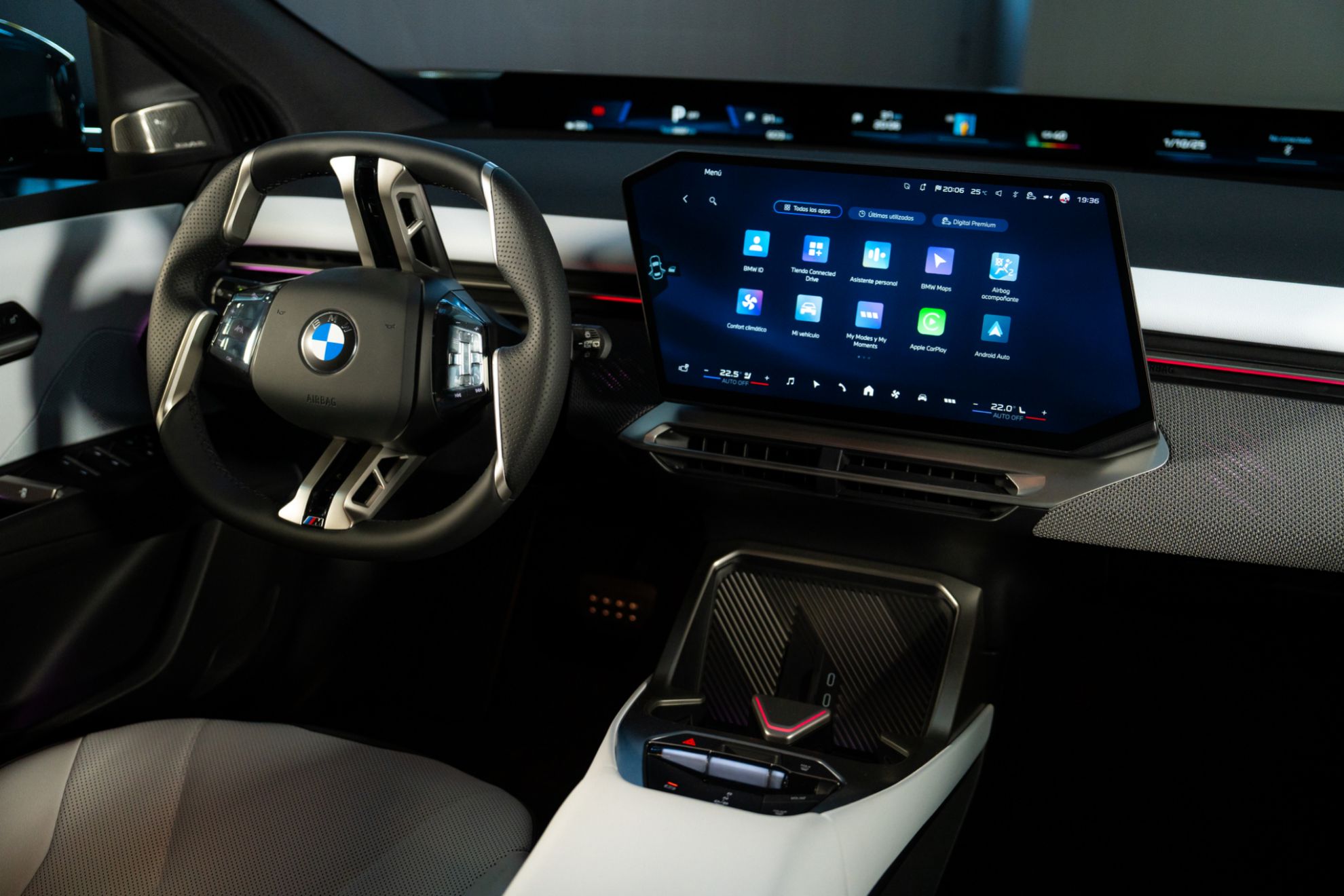
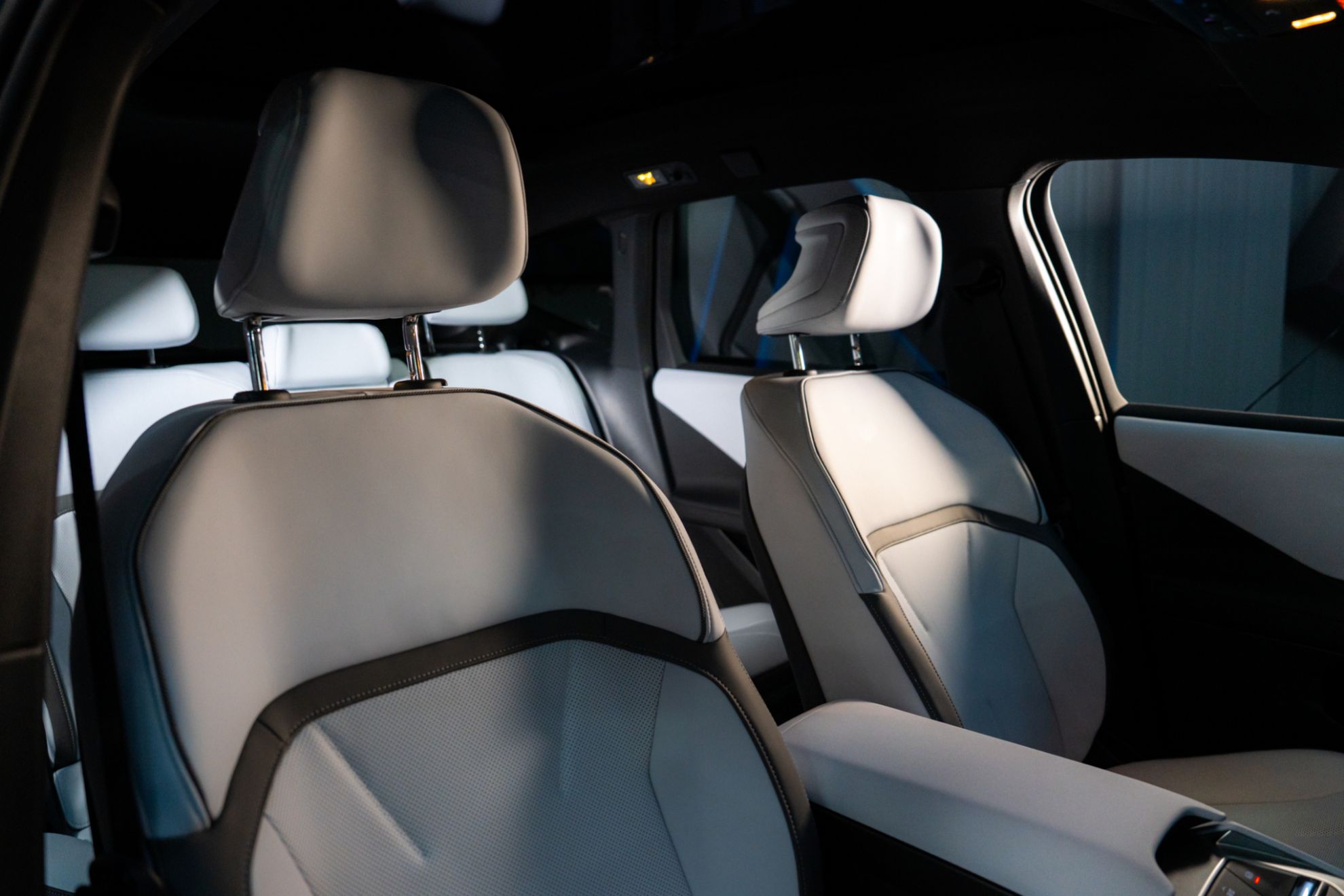
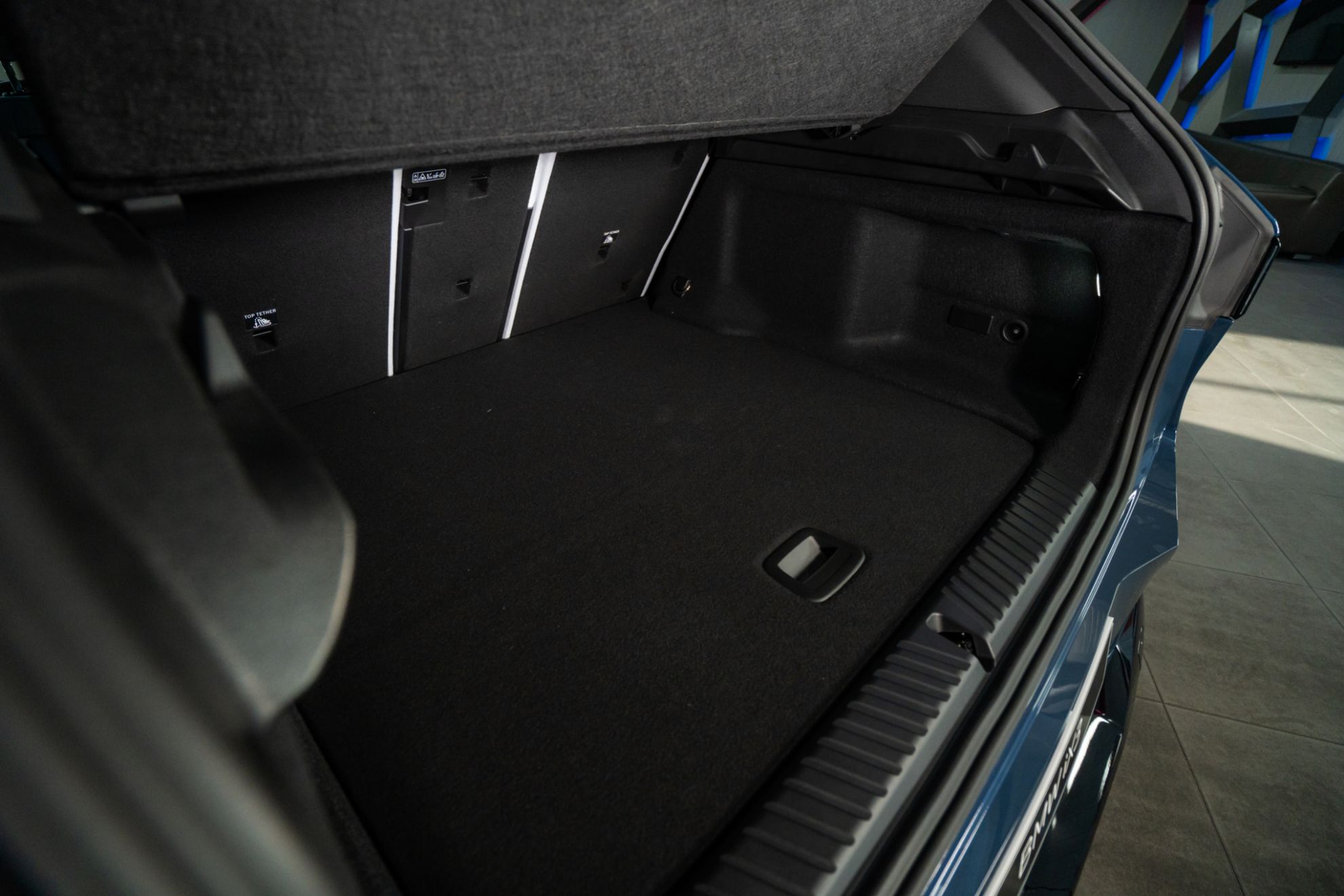
Inside, the first impression is one of spaciousness. A quick glance reveals that the dashboard extends to seem to embrace the doors. It also reveals that the seats, surprisingly simple in their design, are as comfortable as one would expect in an SUV of this caliber. And the rear-seat space takes full advantage of the electric drive (there is no central floor tunnel) and the long wheelbase. You immediately understand that this is a car for families who want a long-range electric car without sacrificing capacity, a notion corroborated by the 520-liter trunk, complemented by a 58-liter front trunk (or frunk), which will be useful for charging cables.
But it's not its width that surprises most, but its screens, because here technology dominates the scene. The star is the BMW Panoramic iDrive, a strip located just above the instrument panel that spans the entire width of the cabin. We'd already seen it in pictures; we already knew that to the left of it we could see all the essential information (speed, fuel consumption, range, etc.) and that the center and right were reserved for other configurable information. But we still had to discover how easy its graphical reading was (it's above the steering wheel) and how natural it was to find the information there, rather than in front of the steering wheel or on the central screen. And the conclusion was so positive that in the end we ended up wondering why it hadn't been invented sooner.
Of course, the central screen is huge, measuring 17.9 inches in this case, and with a slightly trapezoidal shape that at first didn't convince us...until the quality of its graphics made us realize that the shape was just a joke. Otherwise, the dashboard design is clean, without clutter or clutter, and is complemented by a fairly small steering wheel that, surprisingly, has not two or three spokes, but four; this is a consequence of not having to search for information inside it.
A very fluid assistant...We know, although we weren't able to test it, that the phone can serve as a key thanks to Digital Key Plus. We also weren't able to test how the personal assistant, according to BMW, responds more fluidly than ever. And if we had all the time in the world, we could have tested how configurable the interior is in terms of information and settings. But we'll have time to see that at the car's live presentation.
Beyond what's visible, the electronic architecture marks a huge leap forward with the four high-performance zone computers, which BMW calls "superbrains." They concentrate functions with twenty times greater computing power than the previous generation. This suggests regular over-the-air updates and the possibility of significantly expanding the car's driving capabilities. The Highway and City Assistant, which will be available depending on the market, or the "symbiotic" brakes, capable of achieving smoother transitions than previously known between regeneration and conventional braking, are just the beginning of this capability. But the Parking Assistant and Intelligent Energy Control will also demonstrate the potential of this architecture, designed to grow over time.
Only one version...Mechanically, the iX3 combines a motor on the rear axle and another on the front, delivering 469 hp with all-wheel drive in this IX3 50 version, which, at least for now, will be the only one available. In practice, the brand promises agile handling for its size, but also smoothness on long journeys. And the power should be more than potent, considering it accelerates from 0 to 100 km/h in 4.9 seconds, an extraordinary figure that contrasts with the more "conservative" top speed of 210 km/h.
The IX3's "pantry" is a sixth-generation battery with cylindrical cells 20% denser than prismatic ones. It integrates an 800-volt system and is a structural part of the body, which adds points in terms of rigidity and weight savings (even so, it weighs 2.3 tons). Thanks to it, the BMW iX3 achieves an impressive range of 805 kilometers in the WLTP cycle, a figure that places it alongside the longest-range electric vehicles in the world.
372 km in 10 minutes...The charging process is also impressive, supporting power up to 400 kW, which would allow us to travel 372 kilometers in just ten minutes if we had a supercharger available. But, as a technical preview and as proof that future charging times will be similar to those we use for refueling, it's there.
For the home, BMW will offer two wallbox options: Professional and Plus, adapted to different types of installations. The car also includes the Plug & Charge function, which allows users to manage up to ten different charging provider contracts without the need for manual authentication. All of this is designed to simplify daily life and facilitate travel without worrying about compatibility.
As an additional detail, although expected in such an advanced car, it features bidirectional charging to charge devices (scooters, electric bikes, etc.), serve as a power source for the home, or even return energy to the grid. Everything the IX3 has shown us, whether in terms of design or technology, is the first step toward a horizon of 40 models or updates that the Bavarian brand plans to introduce by 2027. At BMW, they say it's the modern equivalent of the 1500, which in the 1960s laid the foundation for what we see today as a contemporary BMW. But with the addition of electrification, of course.
And with this reflection, and the feeling of having glimpsed a future we enjoy, we had to suddenly return to the present, abandoning the car and the living room and letting another colleague take our place. Outside, the birds continue their song, and the distant sound of a golf ball continues to reach our ears. We could even say that time seems to have stopped.
Autonews


Nenhum comentário:
Postar um comentário