AUTONEWS
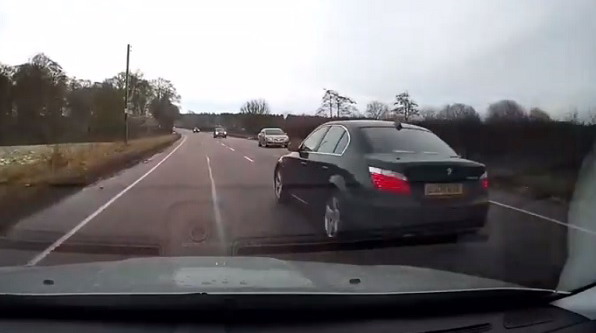
Study finds most drivers drive aggressively
They report engaging in dangerous behaviors such as speeding, tailgating, and cutting off other drivers. They also report being the target of other drivers’ anger. The more drivers are exposed to aggressive behavior on the road, the more likely they are to drive aggressively themselves, according to a study published by the AAA (American Association for Highway Safety).
What else did the study show?
“Driving can be a stressful experience because of the behavior of others on the road and how you react in different situations,” said David Young, president and CEO of the AAA.
“Our study shows that various forms of aggressive driving are common for almost all drivers—and that many drive aggressively themselves,” he explained.
The research and analysis for the technical report, “Aggressive Driving and Road Rage 2025,” included a review of the professional literature and interviews with academic experts. This involved eight focus groups with drivers, as well as a survey conducted on a nationally representative sample of more than 3,000 drivers. It measured attitudes towards and participation in aggressive driving.
Some of the key findings of the study:
* 92% of drivers reported aggressive behavior that endangers others, such as speeding or “cutting” other vehicles.
* Also, 11% admitted to violent acts, such as intentionally hitting another vehicle or directly confronting another driver.
* Drivers who were more exposed to aggressive driving were more likely to drive aggressively themselves.
* Drivers of sports cars, large trucks and motorcycles are often perceived as more aggressive.
* Some drivers reported feeling more powerful and dominant when driving these types of vehicles.
The study is an update of research originally conducted by the AAA Foundation in 2016. The new study found that some behaviors have become more common, while others have declined.
Honking, “sticking,” yelling…The practice of “cutting off” another vehicle has increased by 67%, and honking in anger has increased by 47%, while driving too close to another vehicle (called “sticking”) has decreased by 24%, and yelling at other drivers has decreased by 17%.
The researchers said that the most effective way to reduce aggressive driving and road rage – and to increase safety – is to encourage good road manners.
“Simple actions – such as using your turn signals, letting others in, and greeting each other in a friendly manner – can help defuse tense situations and create a safer, more civilized environment for all road users,” the study said.
How to avoid road rage...The National Highway Traffic Safety Administration has offered a series of tips for drivers who encounter angry or aggressive road users. Or who notice themselves reacting aggressively.
If you encounter an aggressive driver, stay calm and don't engage in a confrontation, let them pass and keep your distance. Call the police or head to a public place.
To control road rage: take a breath before reacting and ignore them. And avoid aggressive drivers.
"This research also concludes that traffic culture and manners can be a protective factor against aggressive driving," Young added.
"Let's change our driving culture to achieve a vision of safe mobility for all road users," Young advises.
How aggressive driving is defined:
"Aggressive driving" can cover a wide spectrum of behaviors, and not all of them carry the same level of risk. Examples include:
Minor annoyances: Honking the horn out of frustration or making rude gestures.
Dangerous actions: Speeding, running red lights, tailgating, or cutting off other drivers.
Violent acts: Intentionally bumping another car, confronting another driver, or attempting to force a driver off the road.
Key findings on aggressive driving behaviors...The AAA study found that the most common aggressive behaviors reported by drivers included:
-Speeding up at a yellow light: 82% of drivers admitted to doing this.
-Passing on the right: 68% of drivers reported this behavior.
-Honking to show annoyance: 66% admitted to this.
-Driving 15 mph or more over the freeway speed limit: 58% of drivers did this.
-While less common, more severe and violent acts were also reported, with 11% of drivers admitting to intentionally bumping or confronting another driver.
Factors contributing to aggressive driving:
-Research has identified several reasons for aggressive driving, including:
-Stress and impatience: Drivers may feel pressure to get to their destination faster.
Tit for tat: When exposed to aggressive behavior from other drivers, people are more likely to respond in kind, creating a cycle of aggression.
A feeling of anonymity: Drivers can feel insulated and anonymous inside their vehicles, making them more likely to engage in behavior they wouldn't in a face-to-face setting.
Certain vehicles: Drivers of certain vehicle types, like sports cars, pickup trucks, and motorcycles, are sometimes perceived as more aggressive.



Nenhum comentário:
Postar um comentário