RENAULT
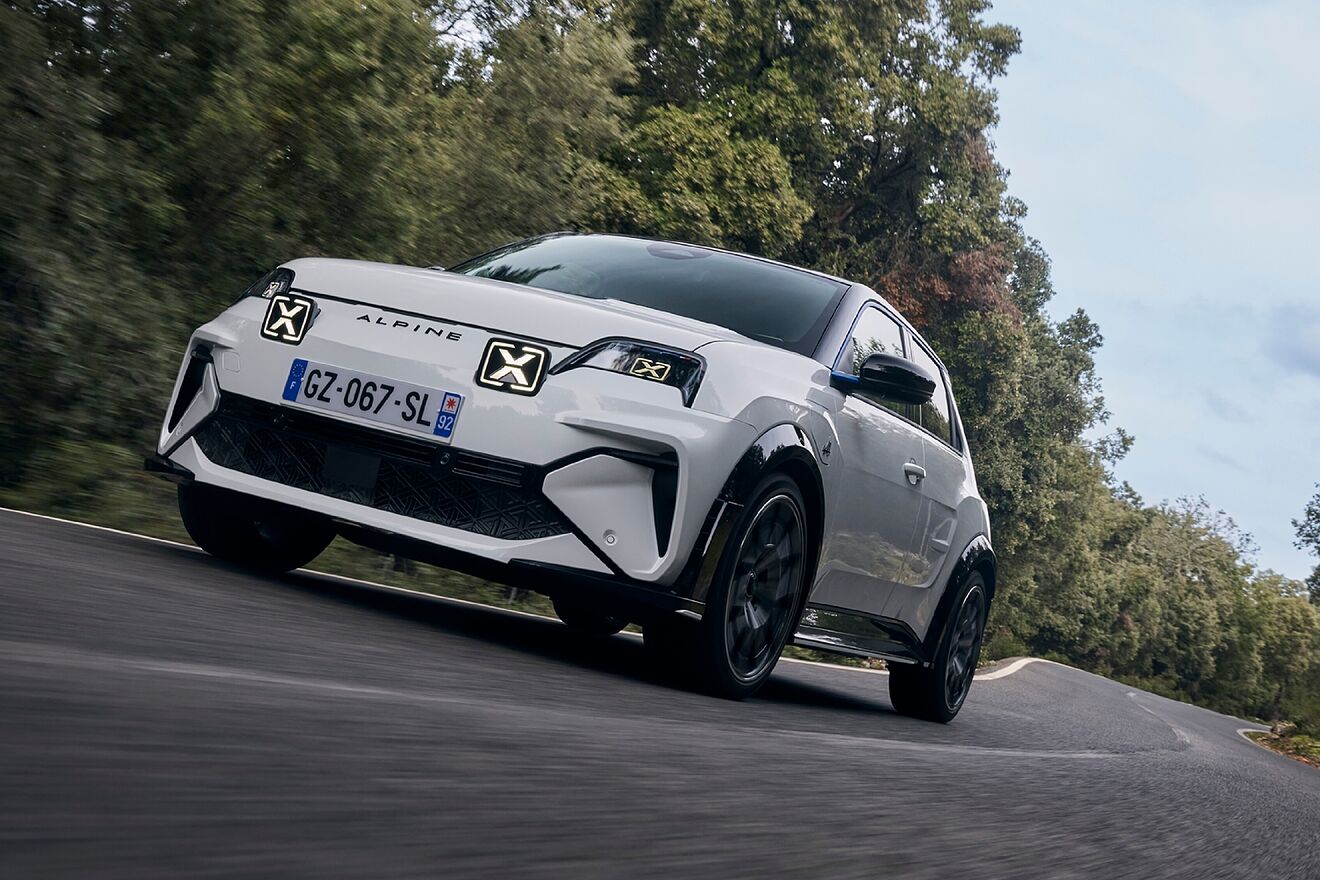
Alpine A290 GTS, 218 HP: the Renault 5's cousin
They're practically the same car...but they're also different. The Alpine A290 is the Zumosol's cousin to the Renault 5, revived as an electric car. They're the handsome brother and the muscular brother, twins, but separated at birth (the A290's fine-tuning was much more thorough) and aimed at drivers with different personalities.
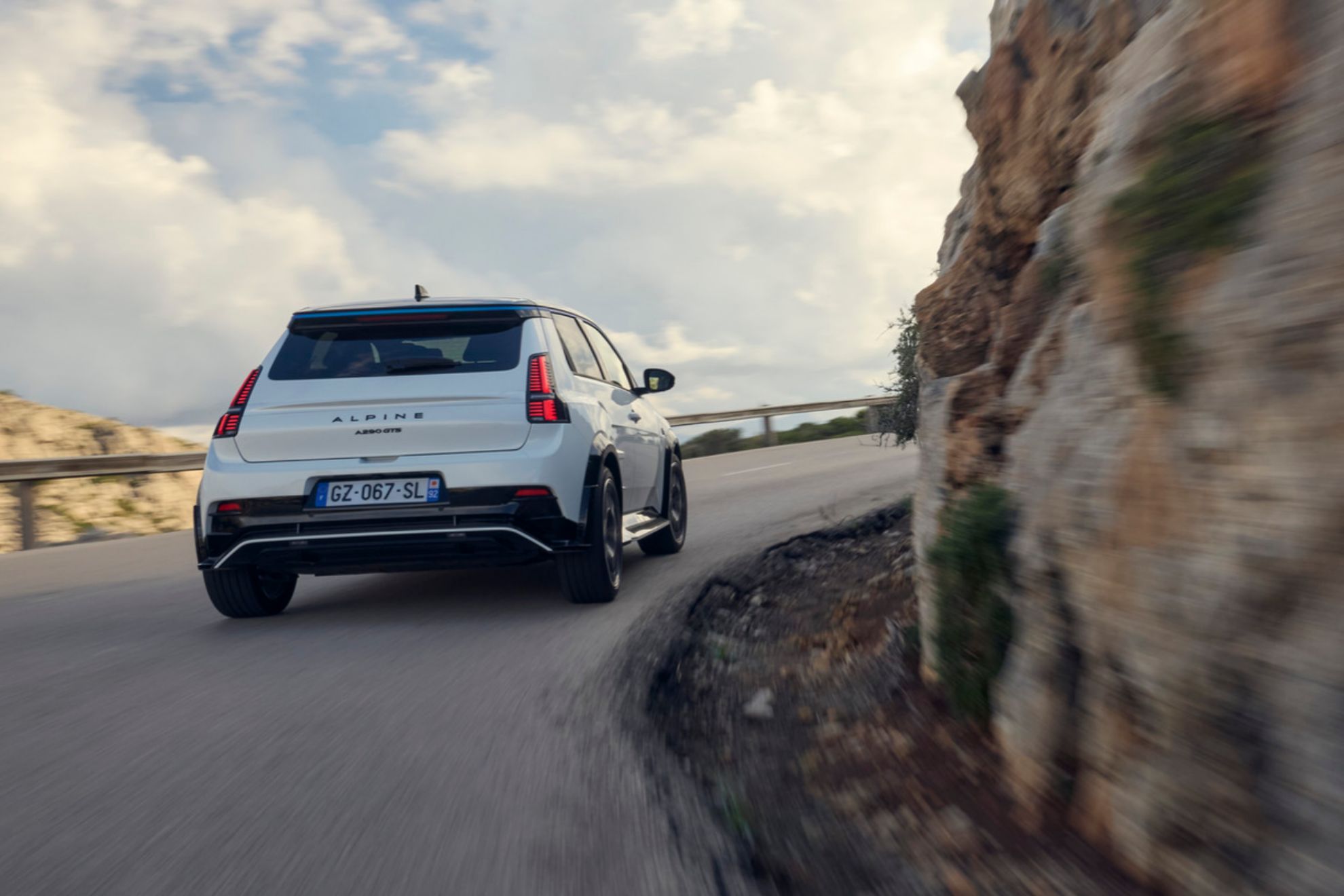
While the standard R5 is a stunning car, the Alpine A290—its sporty version, like the little-lauded R5 Alpine of the 1970s—is a car that impresses. It's not as "explicit" as the Renault 5 Turbo 3E, but it stands out from the crowd at first glance.
Serious enthusiasts will recognize the headlights of classic Alpine rally cars, with the X as the daytime running light signature, also present on the auxiliary lights (purely aesthetic), which define the front view. On the side, there are much more aggressive skirts (painted black) and specific creases on the rear fenders, which are slightly widened and also define the rear view. Our test unit in white looked spectacular... but the classic blue is also impressive.
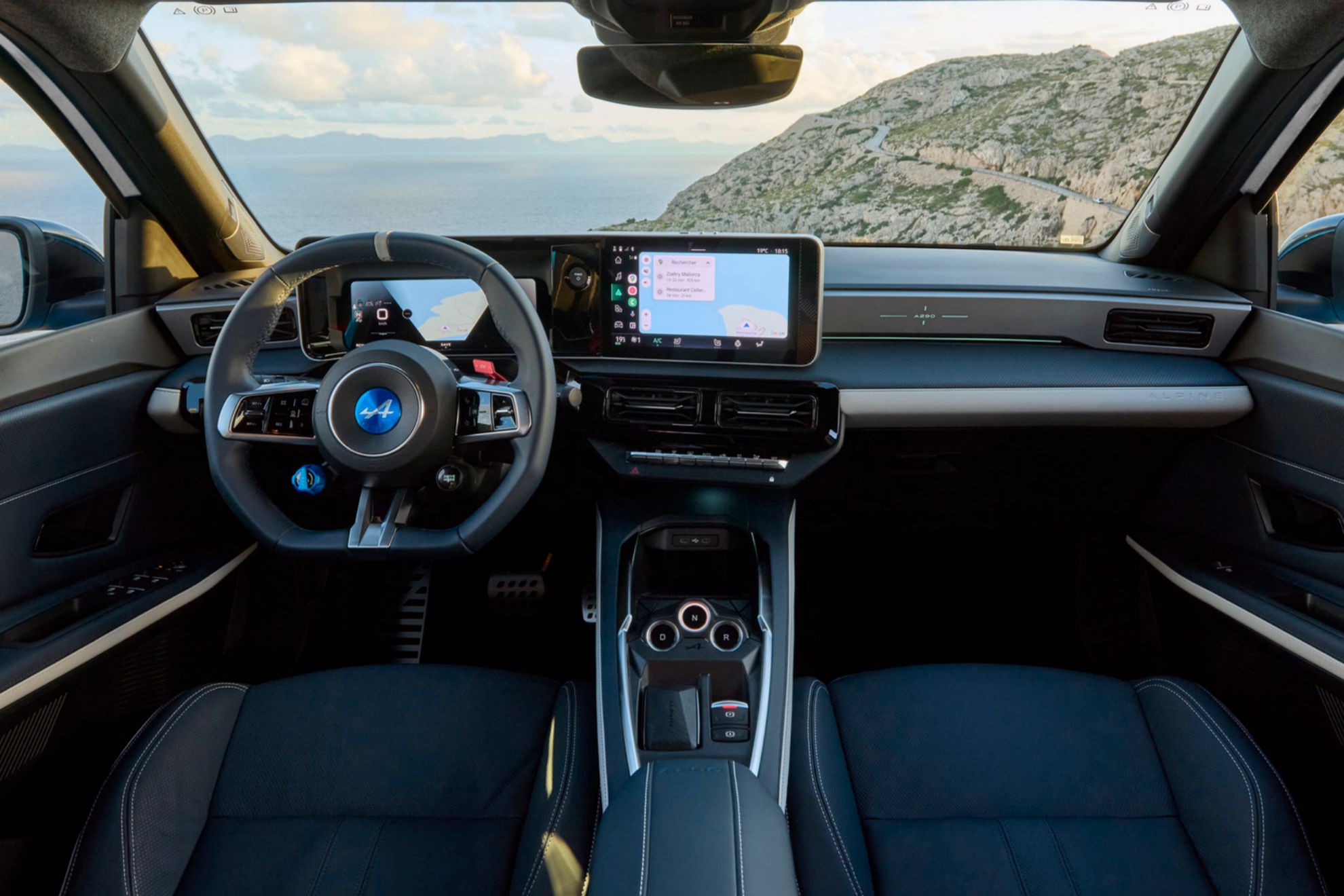
Inside, the layout is quite different from the Renault 5, although it maintains the two-screen configuration (the 10.25-inch instrument panel plus the 10.1-inch central monitor). But everything else is different: starting with the Formula 1-inspired steering wheel, which features specific controls like the overtake button, which releases full engine power for ten seconds, and the recharge switch, which allows you to adjust regenerative braking between four levels.
The dashboard design in the passenger and seat areas is different from that of its Renault sibling (we liked the Alpine less). This is also evident in the center console, which in this robust version restores the three buttons (D, R, and N) for gear shifting, instead of the steering wheel controls used in the R5. A third button selects the driving modes (Normal, Sport, Save (the equivalent of Eco), and Personal (Individual) and the 'games' the R5 doesn't have, offering something extra to the driving experience thanks to onboard telemetry. This provides information on additional dynamic parameters (such as G-forces, fast lap times, and lane guidance if track data is available), as well as efficiency tips.
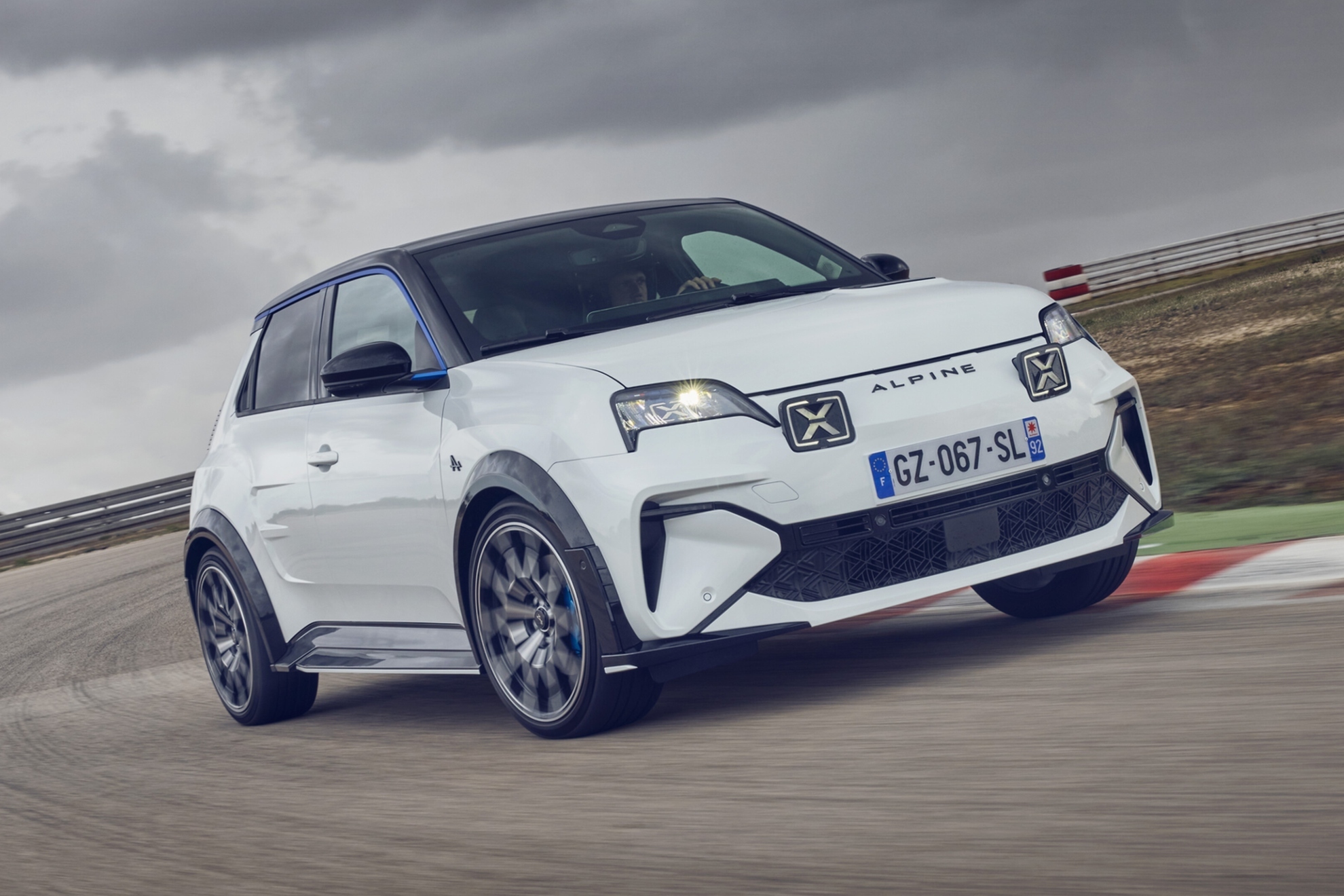
Extra power... With such a striking appearance, it was logical to expect the Alpine A290 GTS to offer something more than the top-of-the-line Renault 5. And indeed: the sporty model jumps from the diamond-shaped model's 150 hp to the Alpine GTS's 218 hp (the entry-level version has 177). Of course, the battery has the same 52 kWh as the more equipped R5s, with the charging capacities—100 and 11 kW—remaining unchanged (although all Alpine versions offer fast charging, of course).
Its approved electric range is 361 kilometers, the same as the Alpine A290 GTS can achieve on a single battery (compared to 420 kilometers for the diamond-hood version). But in both cases, official figures are one thing and real numbers are another. In our test, we concluded that the "safe range" for this version is 300 kilometers, which can be achieved comfortably if we drive carefully and take advantage of its idle charging capabilities (there are four levels that can be adjusted using the gearshift paddles). But our trips were quite favorable, half urban and half extra-urban.
But with the Alpine, it's not about numbers: it's about sensations. Anyone considering buying one will demand, in addition to a sporty appearance (which we've already seen it undoubtedly delivers), an exhilarating drive that's within the realm of what an electric car can offer, which—today, at least in our opinion—is still limited.
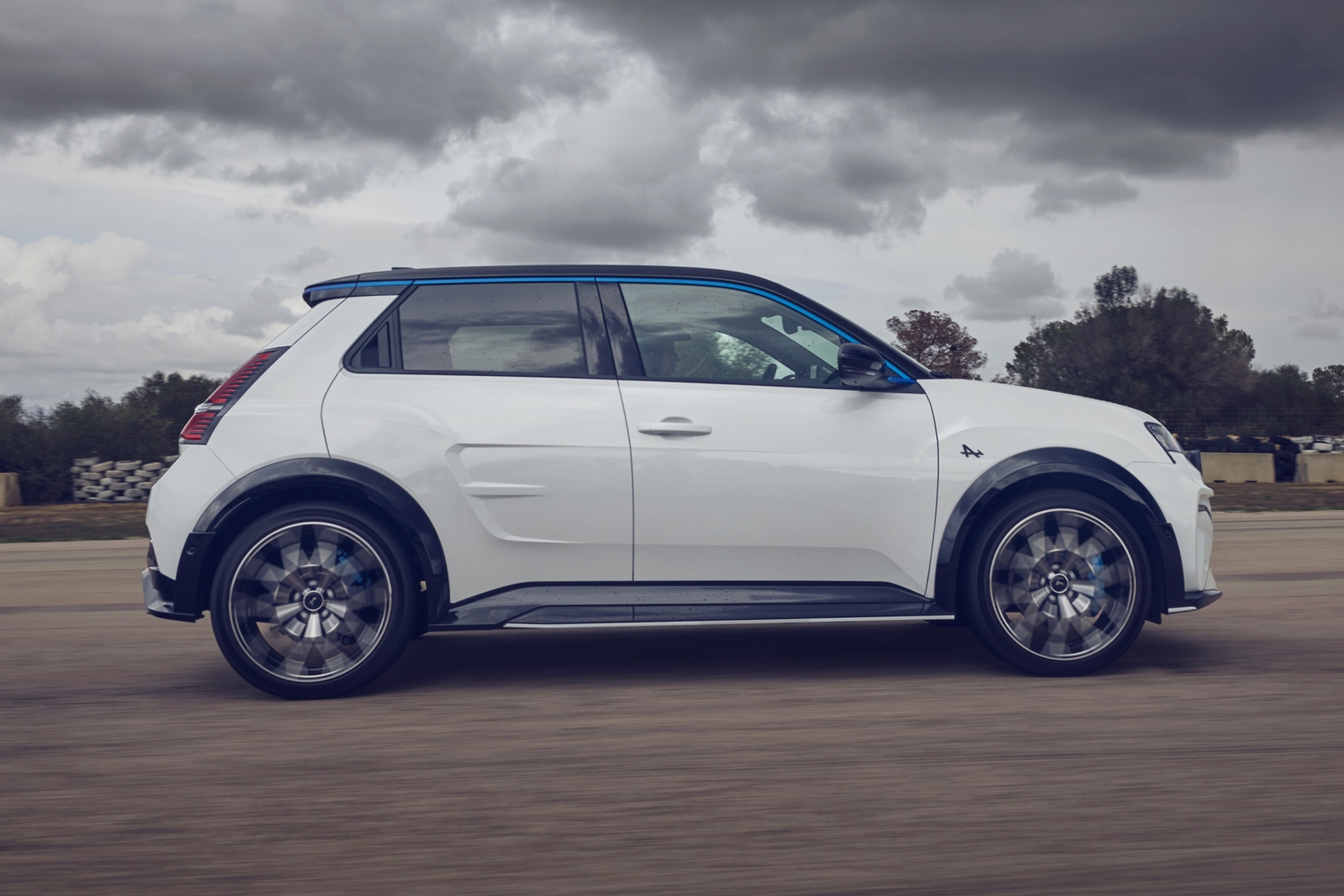
We started from the fact that the Renault 5's dynamics were already one of its virtues (thanks mainly to a weight that, while not light for its size, is at least manageable, and to a multi-link rear axle), so it was difficult for Alpine to improve it and make it noticeable at first glance. Logically, it's faster (although only activating overtake requires pressure on the seat) and also has better handling. It's a bit stiffer, but without becoming uncomfortable over potholes or speed bumps, has excellent steering feel, and the brakes respond quickly, making it, overall, more precise than the Renault 5.
Of course, on a track—and with the same power—we could achieve tenths of a second with the A290 GTS, but for an average driver, the dynamic leap isn't that great. The sensations it conveys also don't compare to those of the gasoline-powered Alpine A110, which was the (impossible, in our opinion) goal that the brand's CEO, Philippe Krief, conveyed to us over a year ago during the model's development tests in the Arctic. But it's certainly a laudable goal to pursue...
All of this doesn't mean it's not a fun car. In fact, it's one of the electric cars that makes us smile the most behind the wheel (not only because of its appearance, reminiscent of a French SUV from the last century), but mainly because, at just 1,500 kilograms, its weight isn't as cumbersome as that of other large electric cars. The top-of-the-line Alpine A290 GTS costs €44,700 in Spain, which is €10,000 more than the most equipped Renault 5. Among the features it includes are the beautiful 19-inch wheels with Michelin Sport 5S tires, Google's connected services (very useful), a heated steering wheel wrapped in nappa leather, a heat pump, a sports suspension, and spaceship-style sounds to alert overly curious pedestrians (we can also have them fill the cabin, but they're very faint).
Is it worth the premium over the Renault? The answer is complicated. It's true that it makes more of an impact than the R5 (and therefore offers a lot of exclusivity), and it's true that it drives a little better, but in our opinion, the differences are more evident in aesthetics than in dynamics.
Photos taken by Sony Vlog Camera ZV-1 II
Autonews


Nenhum comentário:
Postar um comentário