AUDI
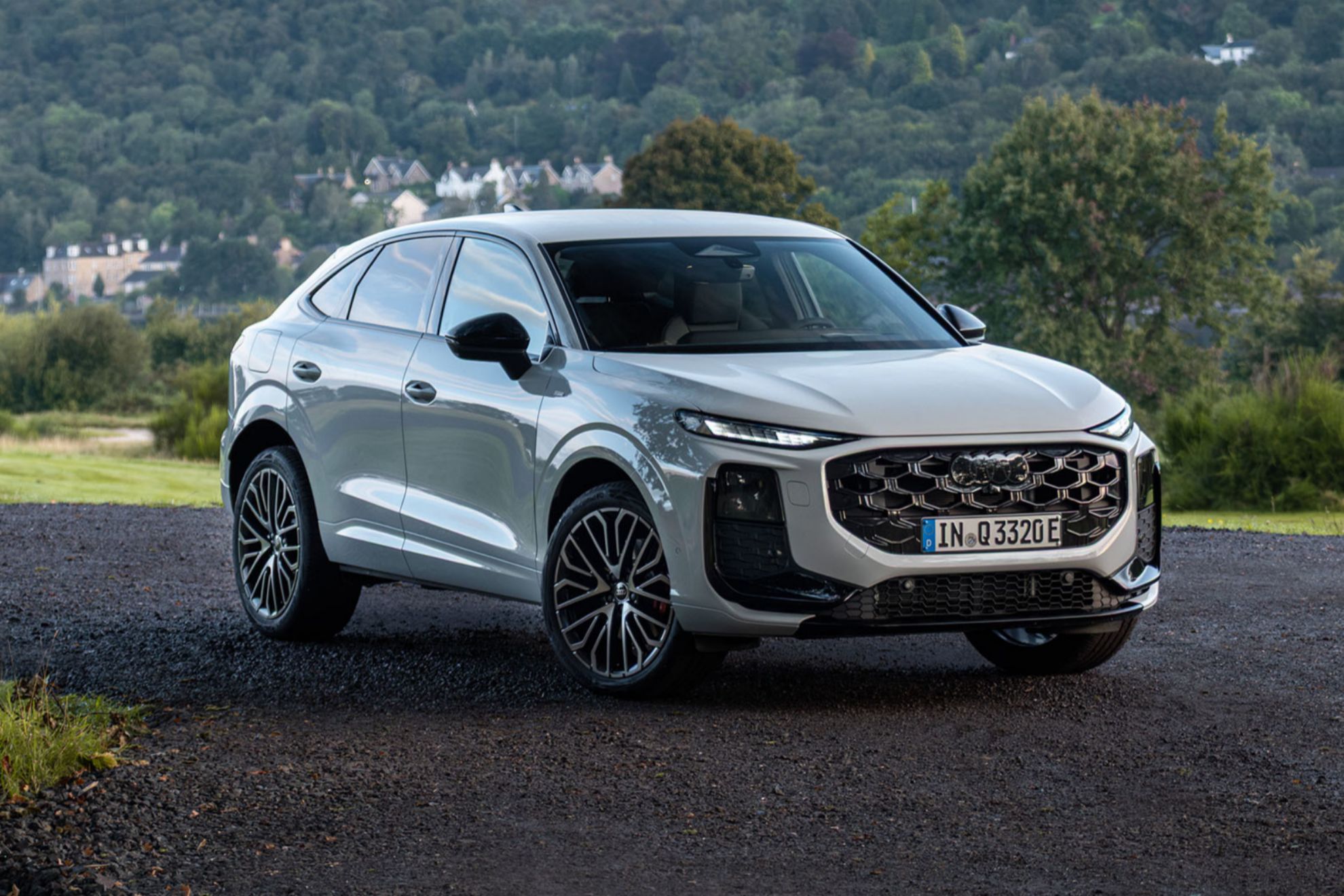
2025 Audi Q3: In its third generation, the model arrives without losing its aura of versatility and innovation
While many continue to associate Audi with a sedan brand, the reality is that in this new century, the best-selling models bearing the Audi Q logo have been those belonging to the Q family, with special attention to both the Q5 and the star of these lines: the Q3. A car that now reaches its third generation, enveloped in a comprehensive overhaul, without losing the aura of versatility and innovation with which it was born almost fifteen years ago. After being revealed a few weeks ago and also including a sportier Sportback version (the model's sales champion since its arrival), we can now test it in an incomparable setting: the green Scottish meadows, with their endless landscapes, changeable climates, and roads that alternate between wild and demanding, to see if this key model for Audi has reached its overall maturity.
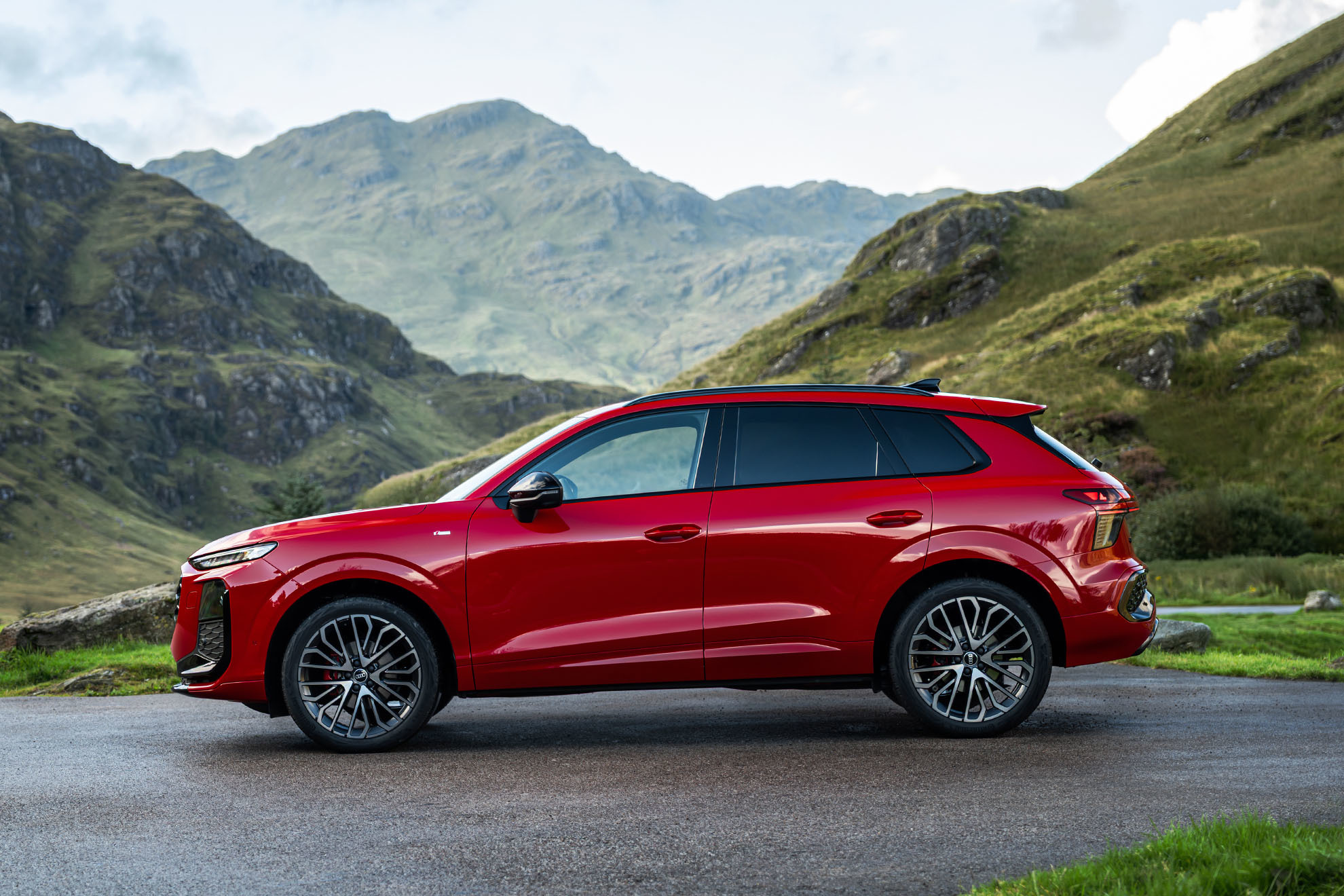
To answer directly, the first thing we can say is that yes, it has matured. The overall feeling is that it has evolved over its predecessor, from the steering feel to the throttle response (emphasized by the electrical system we'll detail later), including, invaluably, the suspension. German engineers optimized it to increase stability and agility.
While most models we drove featured the more sophisticated dual-valve damper control (with independent rebound and compression damping), the new Q3 can also be ordered with a standard steel spring damper or a firmer sport damper. However, it is with this adjustable damper that the car reacts more effectively to both the road surface and driving style, taking into account parameters such as steering, braking, and acceleration.
Transferred to daily use, the driver will experience a car with improved handling in almost all circumstances, with less pitch when changing direction and even the ability to drive with a touch (or two) more enthusiasm, as the brakes have also been optimized. While the default mode is Balance (formerly known as Auto) after each start, we can switch to Dynamic mode for a purer feel, Efficiency mode for further fuel consumption adjustments, and, if you're feeling adventurous, select Offroad Plus on the all-wheel-drive quattro versions.
During this first test in the UK, Audi offered us the opportunity to drive the 150 hp versions, both gasoline and diesel, to which it added the PHEV e-Hybrid. As was the case during our Q5 test, the choice between traditional fuels is complex, going beyond the user's individual needs, where the central elements are fuel consumption, cost per kilometer, and, of course, their location, as the former boasts the ECO label thanks to its micro-hybrid network and cylinder deactivation system.
And that's the big news...Because anyone who wants to talk about kilowatts will have to look at the Q3 e-Hybrid, which was fitted with the Sportback body style during this test drive. We're talking about a notable improvement over its predecessor, in which, while the electric motor's output remains at 85 kW (116 hp) and 330 Nm, the combustion engine is now the 1.5 TSI that delivers 177 hp and 250 Nm, for a combined output of 272 hp and 400 Nm of torque.
However, the main change is the new high-voltage battery with a gross capacity of 25.7 kWh (19.7 kWh net), which doubles the previous capacity while maintaining virtually the same dimensions and weight. Combined with modules that now have a charging capacity of 73 Ah instead of 37, the electric range increases to 119 km in the SUV and, interestingly, 118 km in the Sportback. Furthermore, it now also supports direct current fast charging with a power of up to 50 kW, requiring less than 30 minutes to go from 10% to 80%.
The TDI's noise and harshness might tip the scales in favor of the gasoline, or perhaps the increasingly restrictive regulations, but the reality is that, in terms of thrust and potential, with those 360 Nm of torque available from 1,600 rpm, the diesel remains a perfect option, with the downside of not being able to offer, like its bigger brother, the mild hybrid system. This technology, in the case of the gasoline, doesn't carry the "plus" label, thus ruling out electric driving.

The use of this micro-LED technology produces significantly improved illumination and ensures very sharp contrast on the road. It can also reflect certain messages on the road. In this case, we're talking about the active Lane Change Assist alert, as well as traffic information, specifically an ice crystal icon to warn of possible icy conditions on the road.
We had the opportunity to test it at ignition on a nighttime route, and what was particularly surprising was not only how the light beam increased in length but also in width when we decided to change lanes. Likewise, the projection of these pixels went from being mere visual entertainment to an active safety feature, as demonstrated by the two lines marking the center of the lane and even by an arrow alerting us that we were approaching the edge of the road.
In daily use, we were able to go up to two days without turning on the combustion engine. Considering the average 50 km traveled by a Spanish driver, we exceeded 100 km in this trip (reaching 103 km). This is aided by both the route planner and the efficiency program, which advise and guide us towards the most economical driving experience possible. In terms of handling, there's no noticeable loss due to being a heavier car, and even with the electric motor, the Q3 moves easily. It's when the gasoline engine is turned on that, logically, any concerns about poor performance disappear, and although there is a slight delay in acceleration, it's not significant enough to undermine confidence.
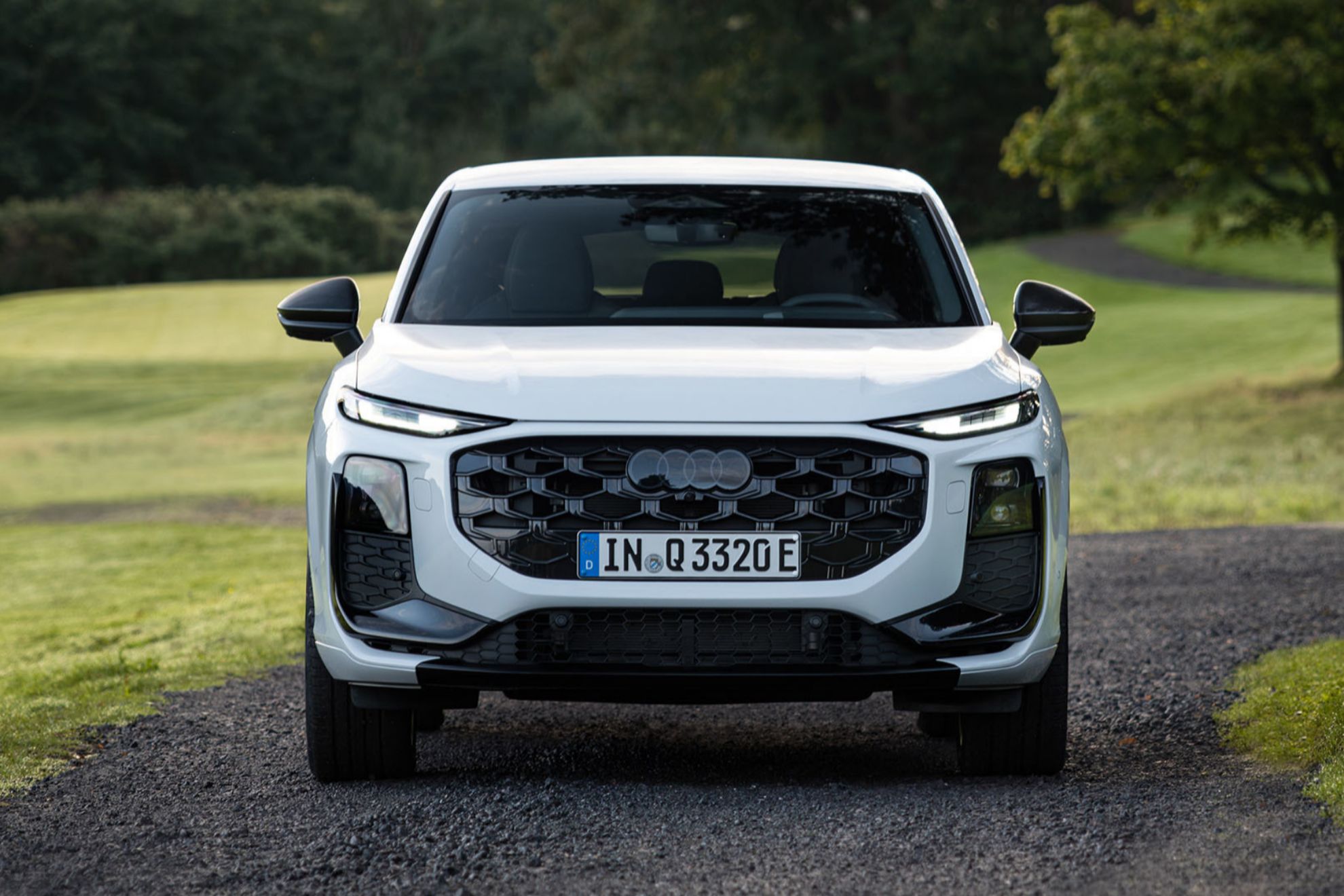
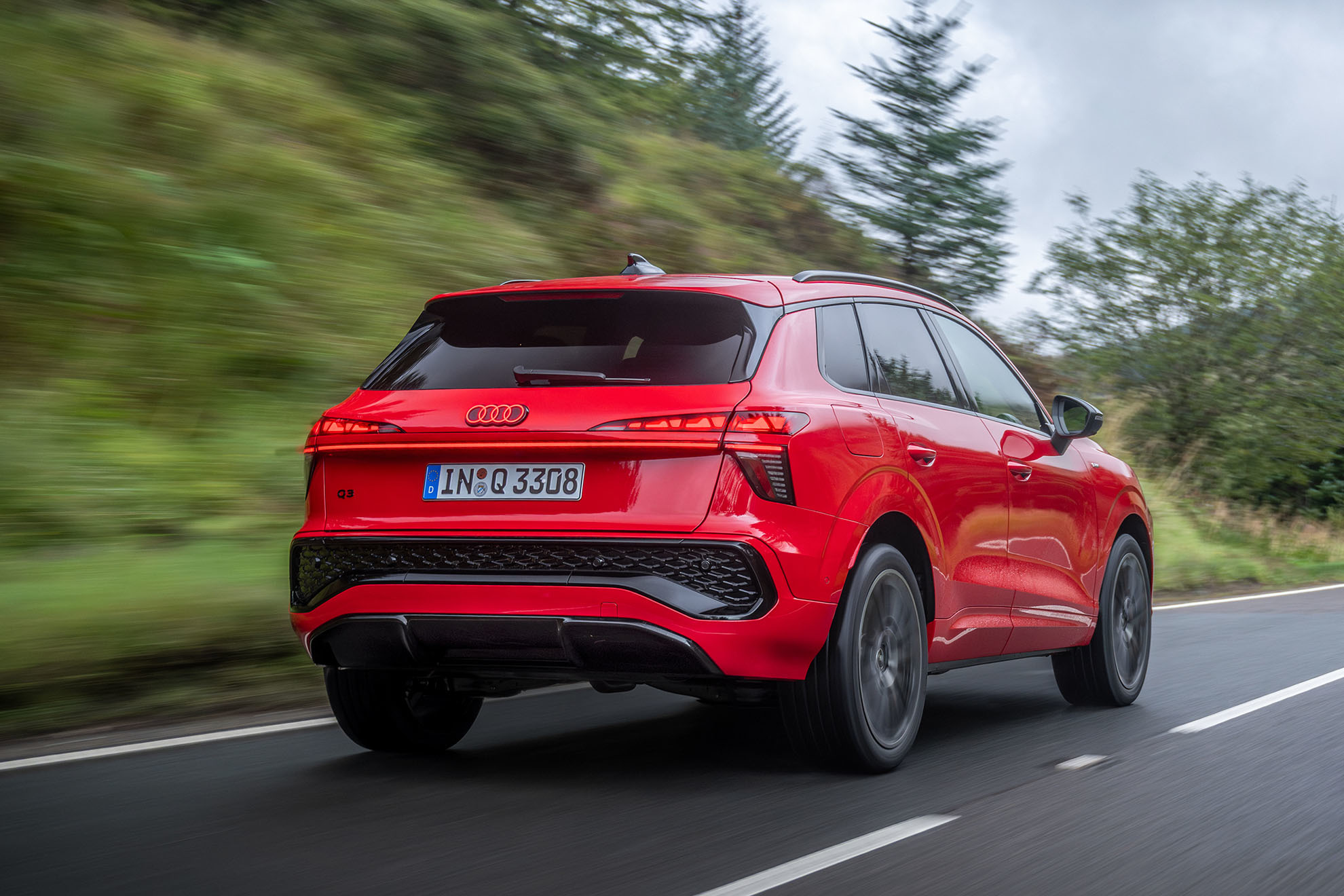
All of this is brought together in a design that, as we explained earlier, has been redefined. Aesthetically, the Q3 appears much more powerful, more mature again, with a front end that, both in person and in the rearview mirror, exudes dynamism (very reminiscent of the Q6), reinforced by a rear end with segmented lighting that, in our opinion, is much better integrated with the Sportback and will certainly remain the most popular body style of this third generation.
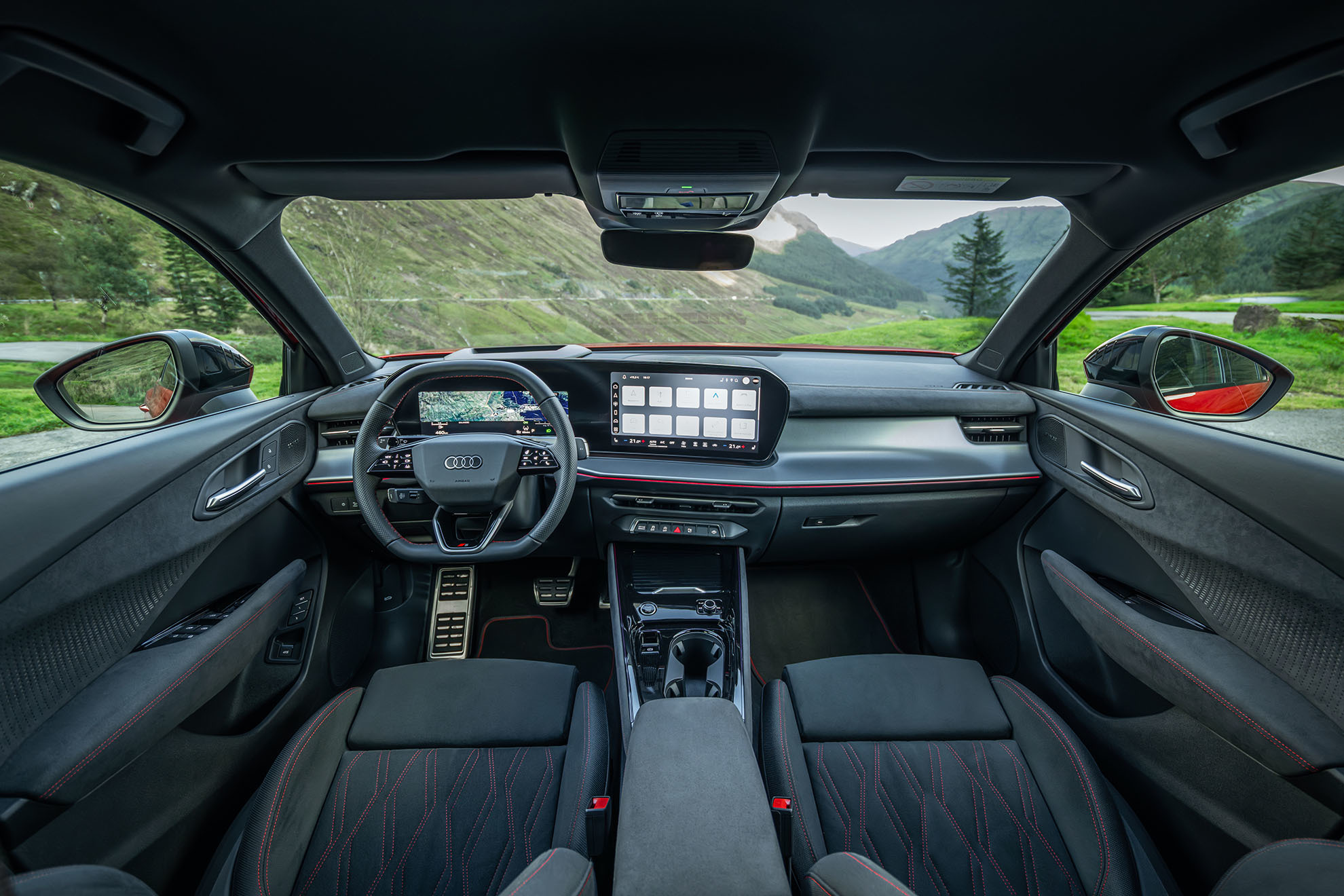
Inside, we find the layout already characteristic of the latest Audi, with a curved screen that combines the 11.9-inch digital instrument panel, now much more customizable, with the 12.8-inch central monitor facing the driver, along with a head-up display projected onto the windshield with extensive information. In terms of roominess, both Q3s improve on the previous generation: more space, a longitudinally adjustable rear seat, a reclining backrest, and a cargo volume that starts at 488 liters or reaches 575 liters in the most forward position (up to 1,386 liters with the seats folded).
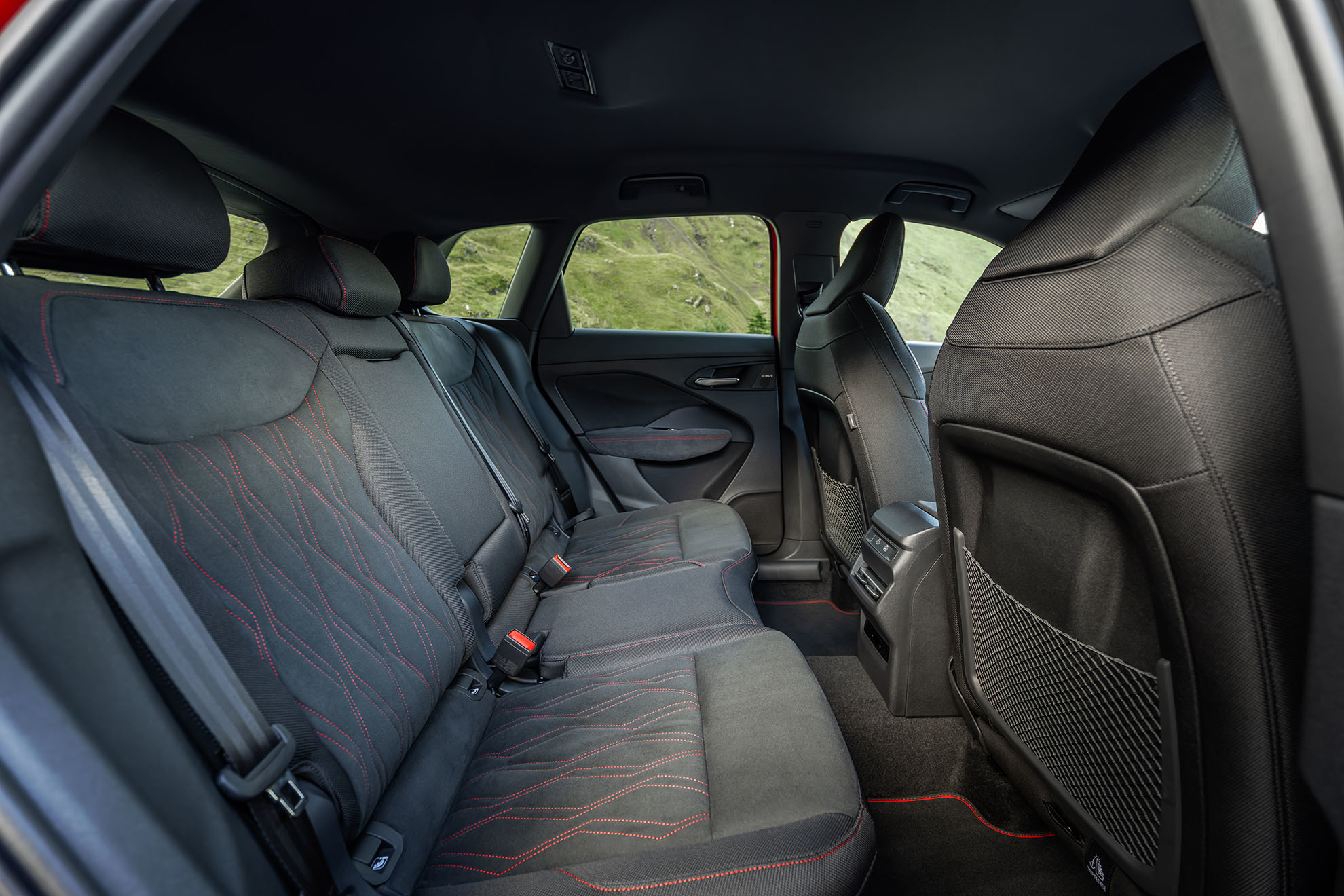
Precious materials, wheels up to 20 inches, sport seats, and 11 body colors complete a package that, as we say, has matured. However, the lighting technology deserves special mention, in which Audi continues to be a benchmark. The rear bumper not only uses OLED technology, but the front light clusters feature the first digital Matrix LED headlights for the model and the brand, with The micro-LED module, which replaces the previous DMD module.
Audi Q3 and Q3 Sportback Price...In short, talking about the Q3 is, in essence, talking about a model that was as successful in the past (over 2 million units sold) as it is innovative in the present and future. A more robust design, a more technologically advanced interior, and extremely high efficiency, accompanied by much more agile dynamics, are some of its main attributes.
The battle continues with its longtime rivals, with the assurance that few Chinese models can offer this level of detail or technology. But, like any premium brand, innovation comes at a price, and in the case of this Q3, prices start at €46,590 for the SUV and €48,490 for the Q3 Sportback, while the e-Hybrid versions start at €56,090 and €57,990, respectively.
Autonews



Nenhum comentário:
Postar um comentário