AUTONEWS
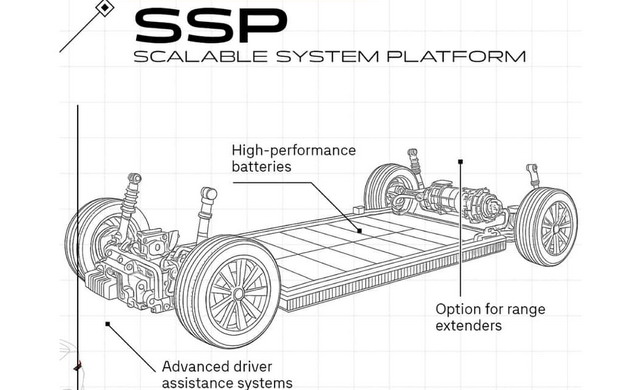
VW's new electric vehicle platform will also be able to accommodate SUS engines
However, internal combustion engines will not drive the wheels. It has been a little over four years since Volkswagen announced the SSP, a comprehensive architecture for electric vehicles.
The Scalable Systems Platform, according to initial plans, should have been ready for series production by now, but its arrival has been delayed until the end of this decade. In numerous reports in the German media, the failure has been attributed to the software division Cariad. However, the German car conglomerate is now ready to discuss the SSP, and here is a surprise.
Although the SSP is primarily an electric platform, it will be able to accommodate internal combustion engines. The VW group plans to use them for the purpose of extending autonomy, with conventional engines acting solely as generators to charge the batteries. Like the BMW i3, the rotary engine in the Mazda MX-30 and the upcoming Ramcharger, these units are not mechanically connected to the wheels. Nissan's e-Power technology follows a similar principle: the gasoline engine powers the battery, not the drivetrain.
Volkswagen has previously hinted at its interest in range-extending technology. The newly formed Scout brand will launch a pickup truck and SUV that will be equipped with SUS generators. In China, the ID. Era concept was recently unveiled, which is a precursor to a three-row SUV developed in cooperation with SAIC, and also features a gasoline engine generator.
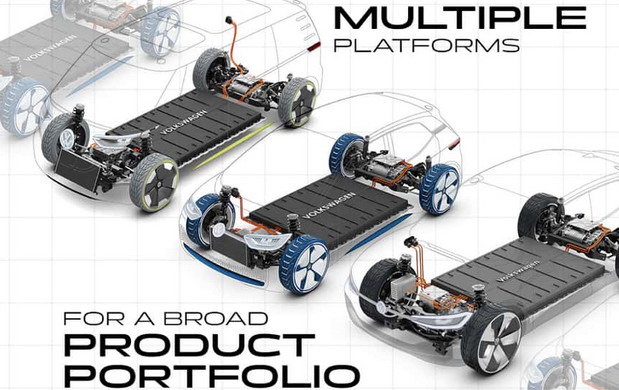
The SSP represents a major initiative for VW. It will serve as the basis for a number of models across different brands, and will eventually replace all existing electric platforms. The teaser shows five different body styles, from a city hatchback to a large SUV. According to available information, there will be a total of eight derivatives, covering all market segments. The next generation of electric cars based on the SSP is expected to start appearing on the scene starting in 2026, likely debuting in China, before arriving in Europe a year later.
We may not even have the technology in Europe, as Volkswagen boss Thomas Schaefer believes plug-in hybrids are a more viable option. He said range extenders are expensive to build, while today's PHEVs already offer decent all-electric range and fast charging. According to Schaefer, offering both solutions would not be economically viable.
One of the most significant models to use the SSP architecture will be the ninth-generation Golf, which will of course be all-electric. It is due to arrive by the end of the decade and will coexist with the conventionally powered Mk8 for a few years. VW could keep the current Golf on offer until the mid-2030s. The electric Golf will be built in Wolfsburg, while production of the conventional models will move to the Puebla plant in Mexico in 2027.
With the final specifications for the SSP finalized, VW Group boss Oliver Blume said: “We aim to be a global technology driver for the automotive industry. The SSP will play a key role in this. We have reached an important milestone in the development of our electric platform of the future. Implementation is now underway.”
Autonews



Nenhum comentário:
Postar um comentário