AUTONEWS
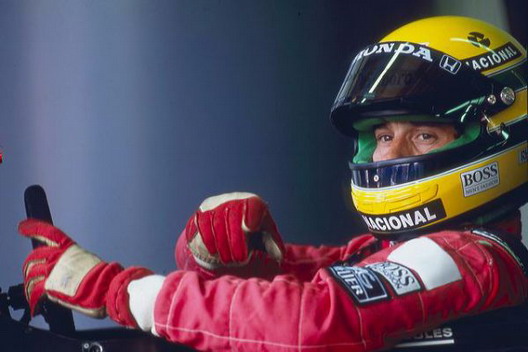
Ayrton Senna – life, death, legend
Ayrton Senna, one of the greatest Formula 1 drivers of all time, tragically died on May 1, 1994, while driving for the San Marino Grand Prix. On the Imola track, in a Williams car, at a speed of more than 200 kilometers per hour, he hit the wall on the Tamburello curve. Senna was known not only for his courage and humanity, but also for the unusual helmet that set him apart from other drivers.
Ayrton Senna's helmet, yellow with green, blue and black stripes, has become one of the most recognizable symbols of Formula 1. The design, inspired by the colors of the Brazilian flag, was made by Sid Mosca, one of the most famous artists in the world of motor racing, reminds RTS.
Sid once described Senna as a boy who was already different from other drivers in his courage and desire for better results.
"Ayrton came to me, like any other child, when he was still driving karts. Even then, you could tell he was different from other drivers – he was braver and always wanted better results," said Sid Mosca.
With slight changes in the shade of yellow, occasional black stripes that replaced dark blue and sponsor stickers, Senna wore such a helmet for most of his career, and in Formula 1 for a full 10 years, from 1984 until his terrifying death in 1994.
Senna also injured his head during the impact at Imola, and was taken from the track by helicopter to the Maggiore Clinic in Bologna, where doctors pronounced him dead.
The exact cause of the accident was never determined. An investigation was conducted, and club owner Frank Williams, technical director Patrick Head and coordinator Adrian Nevey later ended up in court, but were acquitted of safety lapses.
It is still not known why and how one of the best drivers in Formula 1 lost control of his car. It is assumed that the fatal factor was the reduced rotation of the steering rack, which Senna had warned the leaders of the elite automobile competition about.
The path of a champion... Ayrton Senna da Silva was born in 1960 in São Paulo. As a young man, he stood out for his athletic abilities, and he developed a passion for cars from early childhood. South America was small for him - at the age of 17 he became the champion of the South American karting championship. The next step in his career was to move to Europe, where he won the British Formula Ford 1600 title, and in 1983, after winning Formula 3, he reached the highest level – Formula 1.
He competed in karting until 1981, and then moved to Europe, specifically to London, where he competed in the British Formula Ford 1600, where he became champion in his debut season.
A triumph in Formula 3 in 1983 took Senna to the elite ranks of formula competitions.
The designer of Senna's helmet, Mosca, pointed out that he designed the protective equipment before the World Karting Championship in Le Mans.
Senna went to France with three other colleagues from Brazil in 1978 to compete for the world karting title. Of the four drivers, according to Mosca, two stood out - Ayrton Senna and Mario Sergio de Carvalho.
The father of Senna's colleague Carvalho asked Mosca to create a helmet design for the Brazilian drivers to represent their country at Le Mans in a short time.
Although the time limit of four days was too short for a creative endeavor, Mosca successfully completed the job. He found the ideal solution in the flag of his native country. Gold, forest and dark blue sky! Yellow, green and dark blue were the combinations for the design!
Senna was already known as the team's most talented driver and was, according to Mosca, his inspiration for the design idea. The two horizontal lines coming out of the helmet's opening emphasized what distinguished Senna - speed and concentration.
Senna never won the World Karting Championship, but he certainly liked Mosca's design.
Driven by the desire to stand out in the part of recognition on the track, when he overcomes the curves at high speed, Senna decided to continue driving in Formula 1 with the now iconic helmet.
During his time competing in the elite Formula division, the Brazilian won three world championship titles – in 1988, 1990 and 1991.
The birth of a legend... In the strongest car competition in the world, Ayrton Senna made his debut in 1984, driving for the British team Tolman. In his first year of competing in Formula 1, Senna caused a sensation in Monte Carlo.
Namely, in the race for the Monaco Grand Prix, he started from 13th position, and on a track that is known for making overtaking almost impossible, Senna managed to overtake all the drivers in front of him with the help of rain.
On the 31st lap, he also overtook the leading Alain Prost. However, the organizers abandoned the race because the track was too wet.
Formula One rules required that the standings from the previous round be used to determine the final driver standings – Senna finished second. The race marked the birth of a legend – Ayrton Senna, but also the beginning of a rivalry between him and Prost that is considered the greatest in Formula One history.
Because of his driving on wet tracks, the Brazilian was nicknamed "Rain Man".
He won 40 Grand Prix races in his career, and also climbed the podium 39 times, while starting from pole position 65 times.
In December 2009, the renowned British magazine Autosport declared Senna the best driver of all time, the Brazilian leaving Michael Schumacher, Fangio, Alain Prost and other greats of this sport behind him.

What made him different?... Ayrton Senna was not only distinguished by his excellent drives and results. It is true that he stood out from other drivers with an attractive and unusual racing style. Overtaking and attacking on parts of the track where others were much more cautious became his trademark over time. And it seems as if he had a need to constantly push the boundaries by driving on the edge of risk.
"It's worth taking risks, because of the feeling when you cross the finish line first," Senna believed.
At the peak of his popularity, Senna was loved in his homeland as much as the country's greatest footballers, such as Pele, Romario or Zico, although his life story was quite different from the path of the aforementioned athletes, as Senna came from a financially well-off family.
However, throughout his career he fought against the establishment. He was a rebel with a reason, as he constantly demanded better conditions for all Formula 1 drivers. Unfortunately, it was only after his death that Formula 1 made significant changes when it came to driver safety in the car.
Senna, but also the death of Roland Ratzenberger the day before in qualifying in Imola, had a great impact on improving driver safety conditions.
The then president of the Automobile Federation, Max Mosley, introduced a series of changes, such as, for example, limiting the speed in the pits to 80 kilometers per hour, and stricter standards for the manufacture of helmets were introduced.
An urgent program of using computer analysis was also undertaken, which identified risky corners on the tracks. A procedure was also introduced in the part of testing the attachment of tires to the car, as well as changes to the cabin space itself.
Since then, a minimum of four medical vehicles have been required on the tracks.
After the tragic events of 1994, the FIA inexhaustibly continued with a rigorous research and development program for safety. This, one could say, is Senna's legacy to younger colleagues, and at the same time a warning to those in power - because human life has no price.
Senna's generosity is also evidenced by the qualifying race in Belgium in 1992, when he helped his colleague Eric Coma.
The Frenchman's tire burst while driving, causing him to hit the wall of the track. Shortly after, Senna came up behind him, who was not thinking about how to get around his colleague, but how to help him.
The Brazilian stopped the car and ran to help his injured colleague. Coma once pointed out that Senna saved his life with that move.
Only after Senna's death was it revealed that he had given materially to humanitarian organizations. His sister Vivian founded the Ayrton Senna Foundation, which helps underprivileged children in Brazil, most often in the field of education.
Ayrton Senna changed the lives of people in Brazil, at least often their morning habits, when they woke up to watch the last laps of some of the numerous races in which he triumphed.
Artists' Day in Brazil is celebrated on May 5, the same day that Senna was laid to rest, three million people saw him off.
Mundoquatrorodas


Nenhum comentário:
Postar um comentário