AUTONEWS
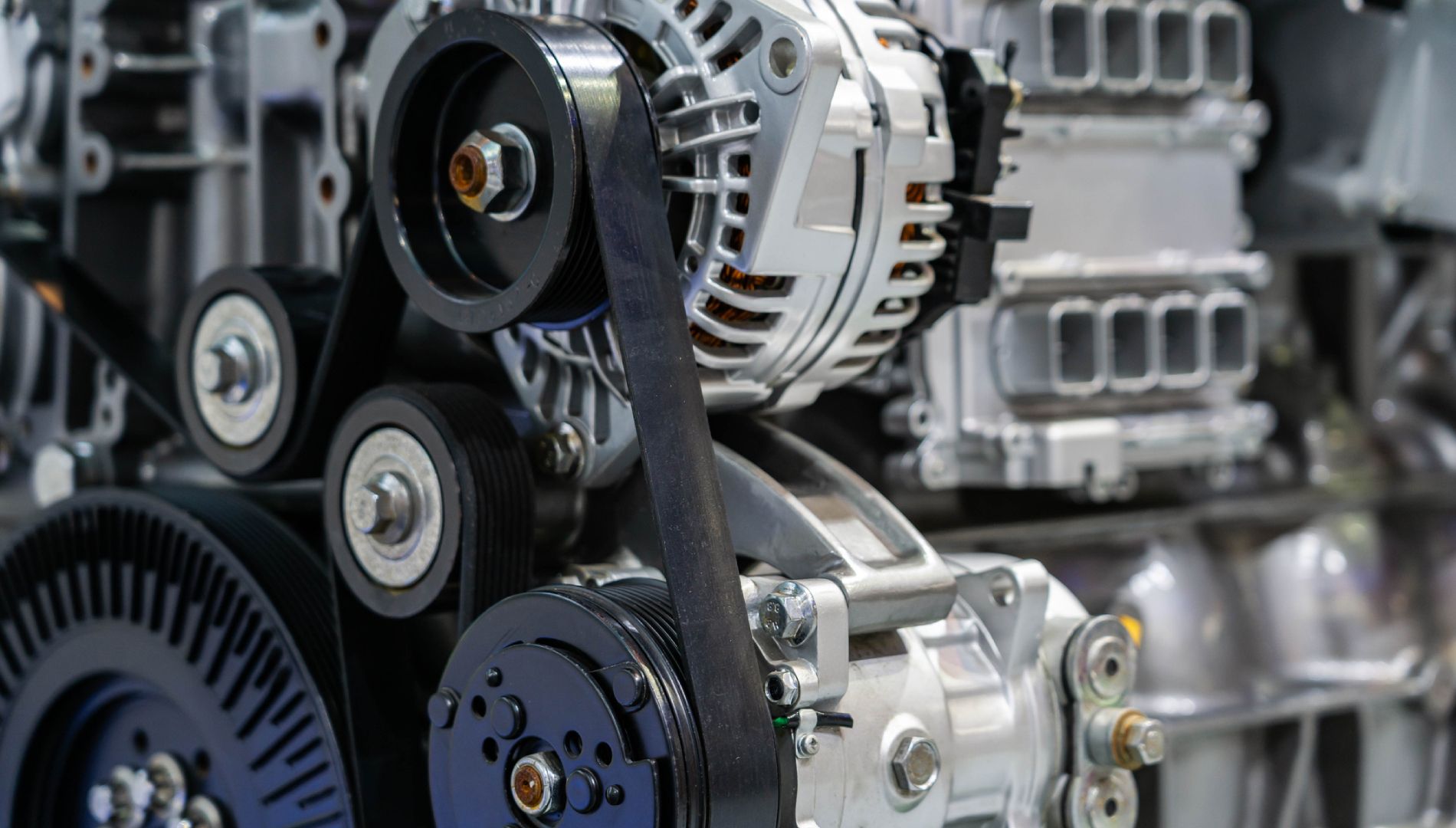
Unfortunately for many drivers, timing belts have become a central part of their lives, although others have previously suffered breakdowns due to chains. In both cases, their function in a gasoline or diesel engine is to drive the camshaft in the four-stroke cycle of the crankshaft. This ensures that the valves can open or close at the right time, so that the engine functions optimally. At this point, which solution is better for a car? Let's analyze it.
What are the main advantages of a timing belt?...We'll start this article with belts. First of all, they allow for quieter operation than chains and require simpler tensioner pulleys. They also don't require lubrication and, in terms of design, allow for greater freedom. They can integrate oil and water pumps, as well as, in the case of double-sided timing belts, balance shaft drives. Given their characteristics, they are especially suitable for small gasoline and diesel engines, preferably with in-line cylinders. However, V-shaped engines also feature this device in brands such as Audi, Porsche, and Ferrari, as Auto Motor und Sport reports.
What are the main advantages of a timing chain?...On the other hand, chains are often considered "maintenance-free" because, in theory, they last as long as the engine, which is not the case with belts. Despite this, it's also a good idea to check their tensioners, guide rails, and sprockets, especially once we reach six figures on the odometer. This part is suitable for V-shaped engines and can sometimes also drive other units such as the oil pump or injection pump.
How long do timing chains and belts last?...Even small deviations in timing could mean that the engine is no longer performing optimally. Therefore, the timing belt or chain must always remain stable. Taking this into account, and as I mentioned before, chains should be maintenance-free, as they are considered to have a useful life of between 250,000 and 300,000 kilometers.
However, there are many more doubts about the longevity of belts, as the rubber they are made of ages over time, even in cars that are used less. For this reason, manufacturers always indicate a replacement rate in years and kilometers, although since their launch, there have been cases where this has been reduced, as BMW did starting in the 1990s.

Chains also suffer breakdowns...Despite the great commotion created by the numerous breakdowns occurring in engines with oil-bathed belts, it's important to remember that chains also break, something important to keep in mind if you're currently looking for a used car. Our colleagues at Auto Motor und Sport focus on cars from the 2000s, such as the 1.2 TSI or 1.4 TSI widely used in all Volkswagen Group brands. Specifically, those used between 2006 and 2008 failed due to stretching, just after the end of the warranty period, at approximately 60,000 kilometers.
Premium brands aren't immune to these problems either, such as Audi, which incorporated the TSI issues into its smaller models. Added to this is Mercedes, whose M 271 engine was prone to premature elongation, especially if the owner had forgotten to change the oil or regularly drove short distances. Also in the V6 M272 and its evolution, the V8 M273 (2005), they used a poorly hardened material that, by the mileage of 60,000 to 140,000 kilometers, the teeth were so worn that the chain would jump. At the end of 2006, the company fixed the problem. And we add BMW to this list, specifically in the 1 Series and 3 Series with engines ranging in displacement from 1.6 to 2.0 liters. Specifically, these are the N43, N45, and N47.
We now return to the general-purpose models, which include the Gamma family from both Hyundai and Kia. Their four-cylinder engine, ranging from 1.4 to 1.6 liters (from 2006 onwards), has caused problems with its timing chain in models such as the i20, i30, Rio, and Cee'd.
How much does it cost to replace a timing belt or chain?...As drivers, we should be alert to any unusual noises in our cars. If you detect a rattling noise when starting or stopping the engine, lasting more than a few seconds, it would be highly recommended to make an appointment at your local garage.
Once there, taking into account that prices vary by location, a timing chain replacement could cost around €800, although if the engine has to be removed because it's located in the rear, it could cost double that. Regarding belts, the most common replacement, they cost around €250 for a Volkswagen Polo, although if the level of complexity increases, it could rise to €1,000. Not to mention that if the engine also needs to be removed, the cost will increase even more. Although it will always be cheaper than having to replace the entire block.
Mundoquatrorodas


Nenhum comentário:
Postar um comentário