AUTONEWS
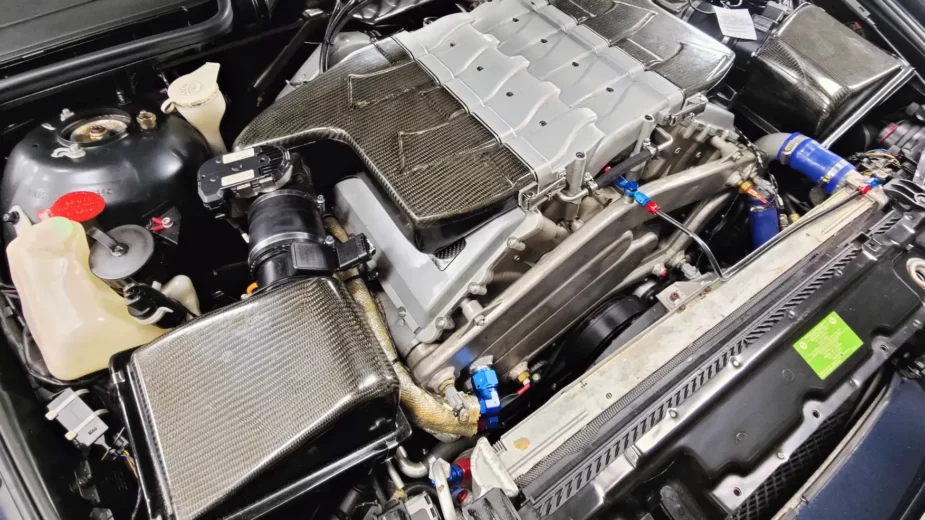
The story of the BMW M5 E39 with a Volkswagen W10 engine
Have you ever heard of a W10 engine? We know about the Bugatti W16, the W12 used by several Bentleys, Volkswagens and Audis, the Passat's W8 and even prototypes equipped with a W18. But we've never heard of a W10. Until now.
Well, it seems that Volkswagen also developed a W10 engine at the beginning of this century and it would probably be something that should only be known internally.
However, a German Volkswagen mechanic named Ari recently shared images of parts of this W10 on his Instagram account, which started a kind of "treasure hunt" to find out more about such a mysterious and unusual engine.
The Drive was also intrigued and contacted Ari to find out more about the provenance of this W10. Ari said he bought the engine in 2011 from a client of his who said he kept it to prevent it from being destroyed in Wolfsburg (Volkswagen's headquarters). From what Ari was able to find out, the engine he bought is just one of three Volkswagen W10s in existence.
Now that he has (parts of) one of these units, the goal is to put it into operation. However, Ari came across the lack of information about this W10, leading to his post on Instagram and help for anyone who knew something more about this engine.
The Drive also "dug" for more information and ended up getting much more than they could have ever imagined: surprisingly, they discovered a BMW M5 E39 equipped with this W10... and it's for sale — we'll get to that later... To understand how we arrived at such an unusual configuration as a W10, we have to go back to 1991 and the launch of Volkswagen's first VR6. This block ended up being the basis for the Volkswagen Group's iconic “W” engines, which are the result of joining two “VR” blocks together via the crankshaft. For example, the W12 was the result of joining two VR6s.
The first VR6 started with a 3.2 l capacity and a few years later Volkswagen would derive a smaller VR5 from it with a 2.3 l capacity. Many of you will certainly remember it in cars such as the Volkswagen Bora or the SEAT Toledo.
This unit ended up having a short lifespan (from 1997 to 2006), but what has now been discovered is that it served as the basis for the development of the W10, with the two VR5 blocks forming an angle of 72º between them. However, despite being the starting point, the VR5 and the W10 are quite different, even in the material for the block: iron and aluminium, respectively. However, if Ari's goal is to get his W10 up and running, and given the modular nature of these engines, it's very likely that he'll be able to use components from other "VR" or "W" blocks to complete it.
One of the W10s is...in a BMW M5 E39...Perhaps what Ari and The Drive didn't imagine is that of the supposed three W10s in existence, one of them appears to be 100% functional and lives in the engine compartment of a BMW M5 E39 (!) — how did it get there? And the best part... This M5 W10 is for sale.
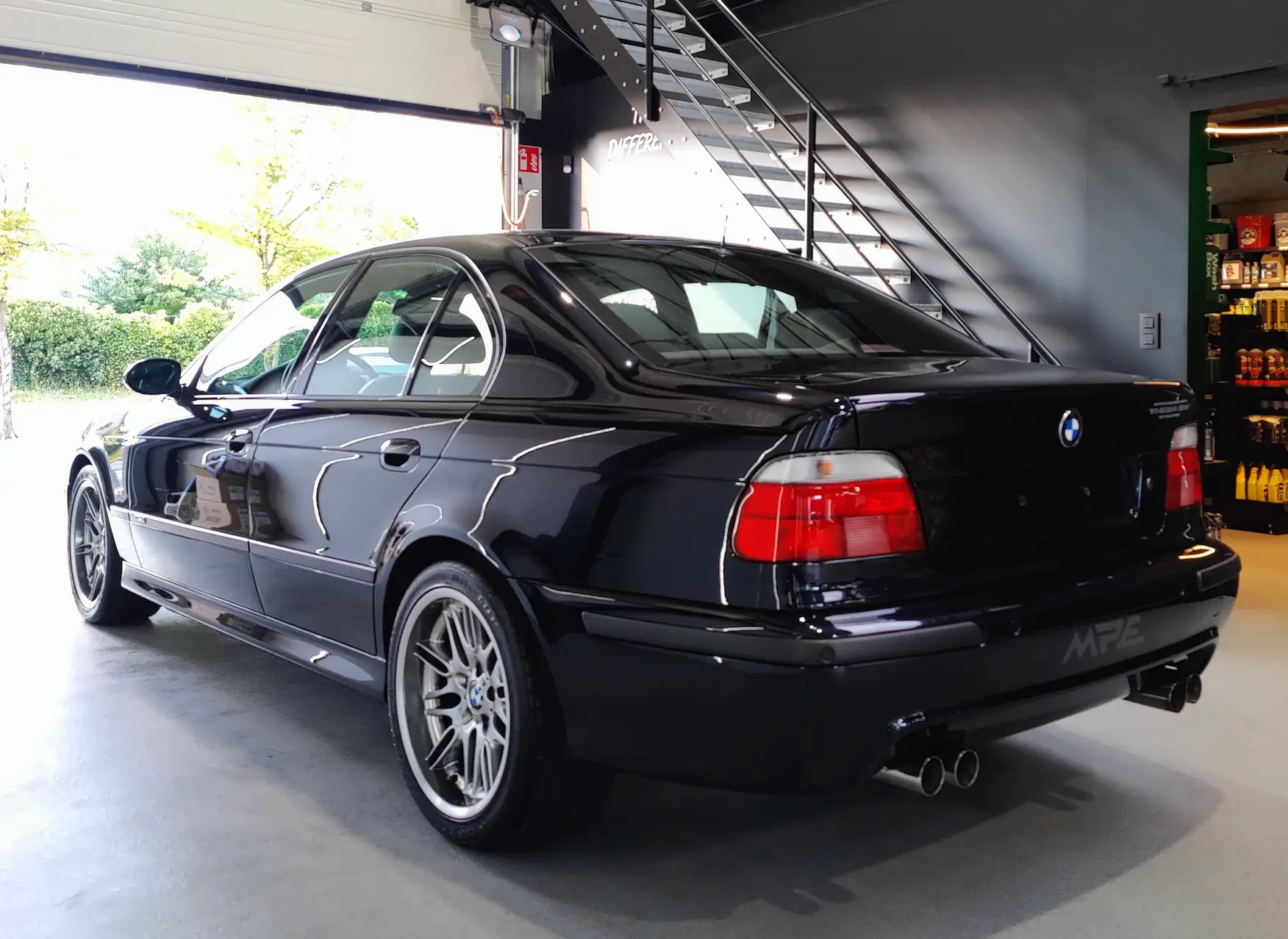
The M5 was "discovered" at GDM Motors, a German-Belgian GT racing team, which is in possession of this test prototype. The only BMW M5 W10 in existence is for sale, but there is no price tag attached.
How did Volkswagen's W10 end up in a BMW M5 E39? The answer seems to be as simple as the fact that the Volkswagen Group, at the time led by the all-powerful Ferdinand Piëch — the “father” of W engines — could not find a suitable vehicle within the group to test this new W10.
While it may come as a surprise that they went to the competition to find a car that could serve as a “test mule” for the W10, it is perhaps no surprise that they chose an M5 E39, a reference at the time and for many still the best M5 ever.
According to what GDM Motors says, the marriage between the W10 and the BMW M5 worked so well that Ferdinand Piëch took over the “test mule” and made it his everyday car…
V8 vs W10... We recall that the BMW M5 E39 was originally equipped with a 4.9 naturally aspirated V8 with 400 hp — 10 cylinders in an M5, only in the next generation, the E60.
According to the GDM Motors announcement, the W10 produces between 450 hp and 500 hp and has a torque of 550 Nm — figures higher than those of the 4.9 V8. It does not mention the displacement of the block, but Ari estimates that his W10 should have around five liters.
As in the BMW M5 E39, the transmission to the rear wheels is done by a six-speed manual gearbox. GDM Motors also says that the car weighs 1836 kg, about 40 kg more than the original model. This helps to give an idea of the weight of the W10 engine, which will be under 200 kg.
There are still many holes to fill in this story and we also need more certainty about the specifications of the W10, but now that we know of its existence, there will certainly be more developments.
Mundoquatrorodas


Nenhum comentário:
Postar um comentário