AUTONEWS
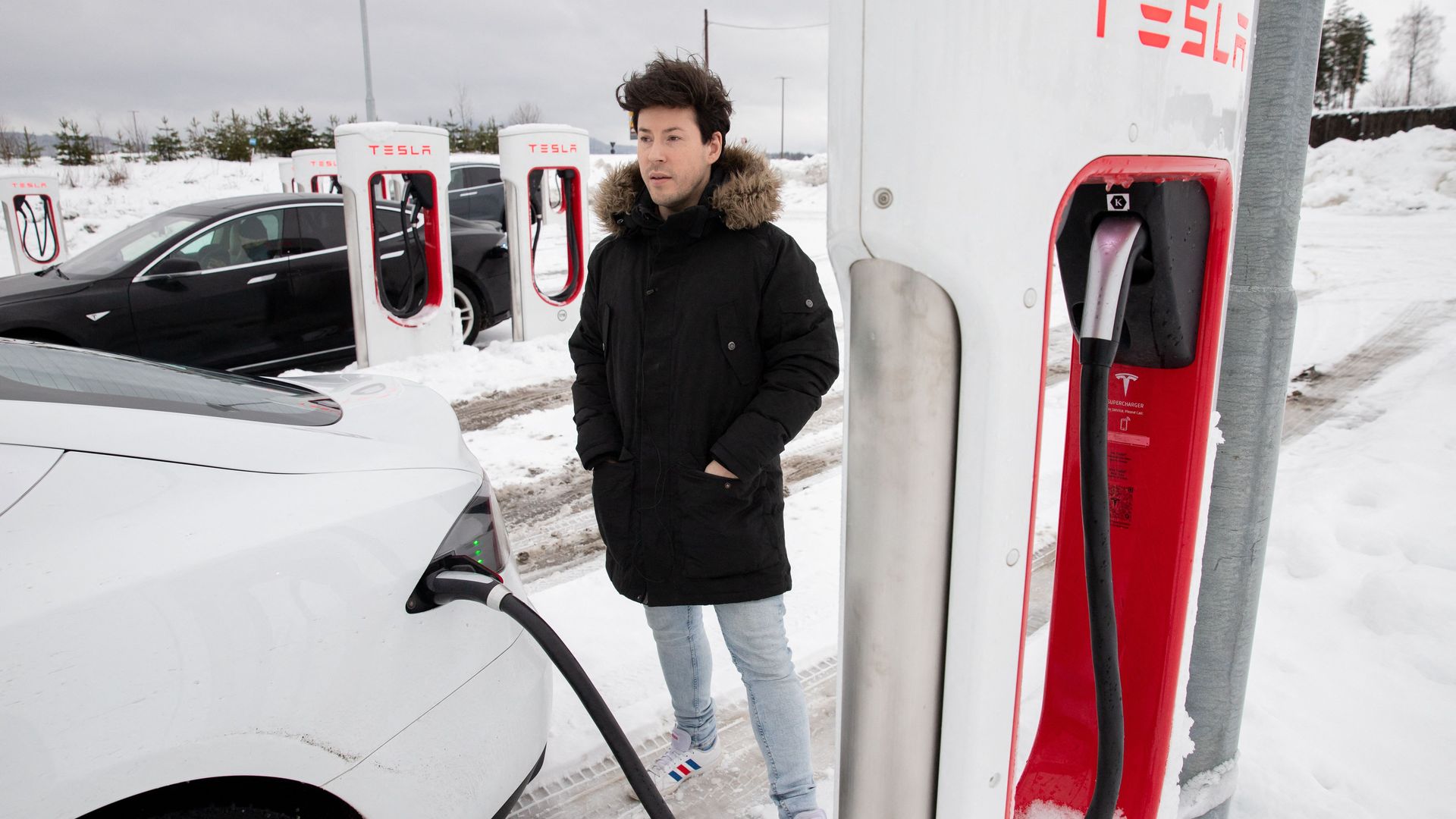
All vehicles, regardless of the type of engine or fuel used, consume more in cold weather, on wet roads or even in snow or ice, which limits autonomy. And battery-powered electric models lose even more, since the accumulator depends on internal chemical reactions and these become slower at low temperatures, as a lower speed of ion movement between the electrodes corresponds to less energy. To measure the pulse of 24 of the most popular electric vehicles on the market, the NAF (Norwegian Automobile Association) organized a mega test, designed not only to determine the true autonomy of each of the models in intense cold, but also which vehicle is the most efficient and what difference there is, in each of the cases, between the autonomy announced by the manufacturer and that achieved in real conditions of use under these types of atmospheric conditions.
The Norwegians carried out the test on the road, subjecting them to the same travel pace and the same effort. Of the 24 models tested, 20 advertise more than 483 km of autonomy, but in a temperature that varied between -3ºC and 7ºC during the journey, only 4 managed to travel more than 483 km. But in addition to determining the effect of cold on reducing autonomy, the Nordics also determined the deviation between the real and the advertised autonomy, and vehicles with some of the largest batteries on the market (one reaches 116 kWh) were present and 5 of the models tested had accumulators with more than 100 kWh. Still, 7 of the models used batteries with less than 80 kWh and 5 of them had less than 65 kWh, but interestingly, some units with small batteries managed to be among the electric cars that go the furthest.
Using the data collected by NAF technicians, we have compiled rankings of electric vehicles with the greatest autonomy in these conditions. Today, it is easy to find regions in Portugal where drivers experience temperatures below 7ºC during the winter, which is the most important information for most buyers. At the same time, we report on the deviation between the announced and real autonomy, with the third ranking concerning the efficiency of each vehicle, which is directly related to the costs of use, crossing the battery capacity with the autonomy. This determines which vehicles consume less energy – making them cheaper – to travel the same distance.

The best ranges in real-world conditions of use at low temperatures – considerably lower than those achieved in milder temperatures due to the greater efficiency of the battery and the lower friction of winter tires and wet or icy roads – were achieved by the Polestar 3, with 537 km, and the Tesla Model 3 with 536 km, followed by the Kia EV3 and Porsche Taycan, both with 504 km. The lowest ranges in these difficult conditions were 340 km and 341 km, belonging to the Voyah Dream and Smart #3, respectively, followed by the BMW i5 (353 km) and Mini Countryman (358 km).
In addition to preferring greater autonomy, drivers are also sensitive to operating costs, i.e. consumption, not only because it makes them less dependent on the next visit to the charging station, but also because it allows them to install a smaller (lighter and cheaper) battery, while maintaining autonomy. The best of the 24 in terms of efficiency is the Tesla Model 3, a D-segment sedan that, even in cold weather, needed just 14 kWh to travel 100 km on Norwegian roads, clearly leading this ranking. The second most efficient model in this ranking is the new Kia EV3, a C-segment SUV with a consumption of 16.2 kWh/100 km, followed by the Volvo EX30, another SUV, but this time from the B-segment, which needs 17.5 kWh/100 km. The least efficient electric cars are the Hongqi EHS7 and the Mercedes G-Class, both bulky and with more than generous dimensions, the first with an efficiency of 32 kWh/100 km and the second with 30.7 kWh/100 km. However, when consulting the list, it is possible to find direct competing models with very different levels of efficiency, which limits their autonomy.
Mundoquatrorodas


Nenhum comentário:
Postar um comentário