AUTONEWS
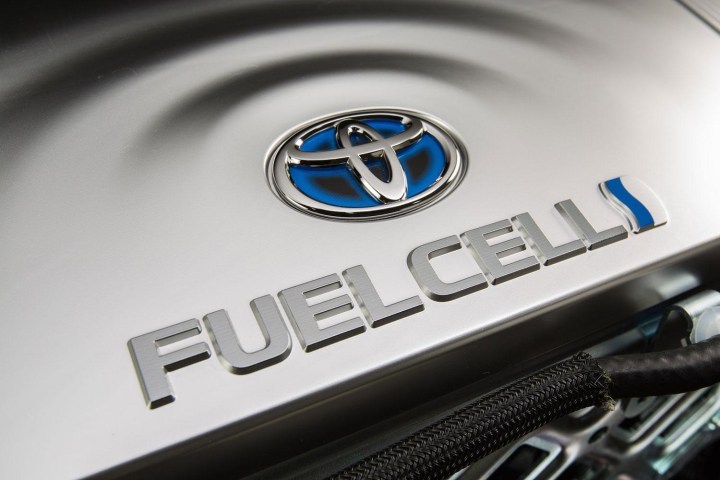
Electric vehicles powered by fuel cells, a system that produces the electricity they need to move on board, seem like the Columbus Egg of electric-powered cars, since they only need hydrogen to recharge, an operation as time-consuming as filling up with gasoline, with the advantage of not emitting pollutants or even CO2. Toyota was the first—and remains the biggest—advocate of this technology, but the system remains expensive and inefficient. However, according to the Japanese manufacturer, this reality is about to change.
The global market for hydrogen fuel cell electric vehicles (FCEVs) is mainly concentrated in China, which consumed around 5,600 units in 2023, corresponding to 39% of global sales. The USA follows with 2,600 vehicles with this technology, while South Korea appears in 3rd place in the ranking, selling around 1,000 units. The FCEV market is very small and in the West there are mainly two models competing for sales, the Toyota Mirai and the Hyundai Nexo, aiming above all to develop the technology.
Toyota's fuel cells are already in their 2nd generation, since the model appeared in 2014, with a considerable improvement in efficiency and costs from the 1st to the 2nd generation. Now the manufacturer has announced the imminent arrival of the third generation, something that has been successively postponed, always with the promise that the new fuel cells will be smaller, lighter and more efficient. The new generation will be revealed on February 19 in Tokyo, at the International Hydrogen and Fuel Cell Show.
In addition to these advantages of the new fuel cell, in relation to the current generation, Toyota also guarantees that it will be more robust, and the longevity of the part responsible for generating the energy to move the vehicle is decisive for its economic viability among potential customers. The manufacturer also ensures that the 3rd generation will not require regular maintenance, unlike current fuel cells, which can translate into lower operating costs, an important advantage that is enhanced by the fact that the new fuel cells are also easier to mass produce, which results in a reduction in the price of each unit that should be reflected in the vehicle.
Hydrogen capsules to enable fuel cells...In the search for alternatives to the use of fossil fuels, many manufacturers are looking to hydrogen as a solution. This is not a new idea. Chevrolet showed a concept with this technology in 1966. And it was considered again in the early 2000s, with Honda and Toyota offering the CR-V e-FCEV and Mirai, respectively.
However, hydrogen is not an easy fuel to manufacture and use. Its clean production, through water electrolysis or natural gas reforming, is still expensive and requires a very large investment, mainly in storage. To be stored in liquid form, it must be stored in a tank capable of maintaining a temperature of -253 oC, while the gaseous form is compressed in tanks with a pressure of at least 5,000 psi (350 bar).
The low temperature required to maintain liquid hydrogen causes problems when refueling vehicles, such as those faced by many Toyota Mirai owners in the United States. It is normal for the fuel pump nozzle to freeze inside the car's tank.
Toyota's solution was to create portable hydrogen cartridges, recently unveiled at the Mobility Show Bizweek in Chiba City, Japan. The cylinders were developed with Rinnai, a specialist in gas products, and can be used to store hydrogen either as a liquid or as a gas.

Quick Charge...Replacing the cartridge will be easy and will only take a few seconds, avoiding queues at gas stations. The empty cylinder will remain in place to be refilled and used by another vehicle(image above).
Light and compact...The cylinder measures 40 cm in height and 18 cm in diameter, weighing about 5 kg when empty. For comparison: the most common gas cylinder in Brazil is 46 cm tall, weighs 14 kg empty and still carries another 13 kg of gas, reaching 27 kg.
Varied applications... In addition to being able to store both liquid and gaseous hydrogen, the cartridges in standardized formats can be used not only by vehicles, but in other electrical equipment and even to supply a generator during a power outage.
Mundoquatrorodas


Nenhum comentário:
Postar um comentário