sexta-feira, 7 de agosto de 2026


AUTONEWS


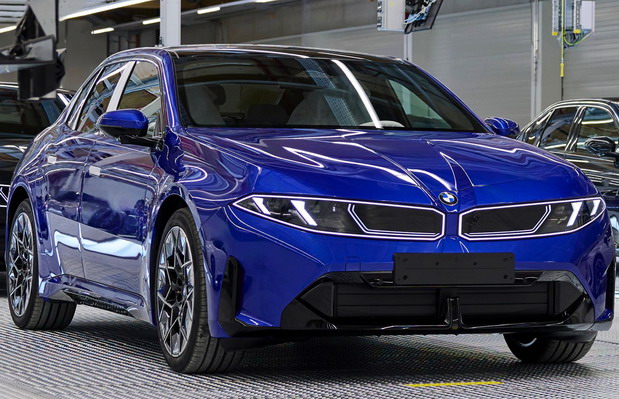
Series production of the all-electric BMW i3 begins in Munich

Series production of the all-electric i3 is starting at BMW's main plant in Munich, making it the first "Neue Klasse" model to be mass-produced in Germany, the company said on Thursday.

BMW said in a statement that strong demand for the i3 had led to a "steep growth curve at the plant."

Before that, the plant, which builds the 3 Series and 4 Series models, underwent renovations for several years while production resumed.

Production board member Raymond Wittmann said the move ushered in a new era for the main plant.

"With the all-electric BMW i3, we are bringing together what belongs together: The 3 Series embodies BMW more than almost any other model - and the Munich plant represents our brand more than almost any other production location," Wittmann said in a statement.

With the start of production of the i3, production costs in Munich will be reduced by 10%, said plant boss Peter Weber.

From 2027, the company's Munich headquarters will produce only fully electric vehicles. New "Neue Klasse" models will follow, but it is not yet known which ones.

From 2027 BMW Group Plant Munich will exclusively produce fully electric vehicles. With further Neue Klasse models set to follow the BMW i3, the plant will be well-prepared to meet the challenges of electromobility over the coming decades.

The transition, however, will be driven not purely by digital tools and systems but first and foremost by people. They will continuously enhance and establish processes in day-to-day production.

“The future viability of our plant will be ensured above all by the people who drive change and innovation with enthusiasm. Together, we continue to challenge ourselves every day, harnessing digitalisation and automation and gradually making Plant Munich even more efficient – without compromising our high quality standards,” says Peter Weber, Plant Director at BMW Group Plant Munich.

Following its transformation, BMW Group Plant Munich now embodies the BMW iFACTORY vision. Implemented across technologies, this approach focuses on efficiency, sustainability and digitalisation, with site-specific solutions strengthening the global production network and ensuring the BMW Group can deliver reliably to customers around the world.

The transformation of Plant Munich has resulted in more flexible and digital operations and a facility that is now well-equipped to meet the demands of electromobility. At the same time, it will share its insights from the production launch of the Neue Klasse with other BMW Group plants across the globe.


AUTONEWS


Thinking about trading your car in for an EV? Here’s a compelling new reason to do it now

In recent months, American drivers have felt the pain of increased prices at the gas pump. There’s some evidence that may be fueling interest in greener ways of getting around. Battery electric cars, more commonly called electric vehicles or EVs, can be cheaper to own and operate than gas-powered internal combustion engine cars, and they offer considerable sustainability benefits. But just how much better for the planet are electric vehicles, really? 

As it turns out, from a carbon emissions standpoint, you’d be better off sending a brand new internal combustion engine car directly to the scrap heap in order to replace it with a battery electric car. That’s the surprising new finding from research led by the University of California, Santa Cruz, that explored the carbon footprint trade-offs of vehicle trade-ins.

Now, of course, the research team doesn’t actually recommend scrapping a car you just bought, especially amidst a nationwide cost-of-living crisis. But for drivers who are already in the process of making a decision about future transportation, the new study, published in the journal Science, makes the sustainability case for EV ownership crystal clear.

“In some ways, I think this is really a definitive study about the carbon emissions benefits of EVs, because it shows that even in such an extreme scenario, the EV is still the obvious winner,” explained UC Santa Cruz Environmental Studies Professor Elliott Campbell, lead author of the paper. “So if you’re someone who’s trying to decide whether or not to put money into keeping your gas car going, switching to an EV as soon as a financially viable opportunity comes up is absolutely the right thing to do for the environment.”

High environmental stakes...This research comes at a time when transportation has recently become the largest source of carbon emissions in the U.S. Personal vehicles, in particular, are responsible for a larger share than all other forms of transportation combined. 

Traditional cars have “internal combustion engines” that burn gasoline in order to produce the energy that turns the wheels. But when gasoline and other fossil fuels are burned, they produce large amounts of carbon emissions — exhaust gasses that build up in our atmosphere, trapping heat around our planet and causing climate change

Given the scale of carbon emissions from personal internal combustion engine vehicles, one of the most effective solutions to addressing climate change is helping drivers switch to battery electric cars. Battery electric cars run on stored electricity and are recharged from the local power grid, like a cellphone or a laptop. The mix of energy sources used to produce that electricity varies by location and usually involves some amount of fossil fuels. But it can also include a significant amount of renewable energy and cleaner-burning fossil fuels, like natural gas. 

Prior studies have shown ​​that manufacturing and driving battery electric vehicles produces substantially less carbon emissions than internal combustion engine vehicles. So for climate-conscious consumers, the case for choosing an electric vehicle over a gas-powered vehicle for a new purchase has long been clear. What’s trickier has been figuring out the best timing for retiring existing gas vehicles, in order to maximize the climate benefits. 

A question of timing...Campbell first developed the idea for the current study while he was working on a different project, interviewing people about their perceptions of electric vehicles.  

“This question of when to retire your current vehicle kept coming up,” he recalled. “Some people said they thought it would be most sustainable to keep driving their current car until the wheels fall off, and others were really unsure what timing was best. But it seemed to be a question on many people’s minds.”

And, surprisingly, there wasn’t existing research-based guidance.

“Personally, I’m someone who repairs and reuses just about everything,” Campbell said. “Keeping gear going makes sense in so many contexts, but not in every context. Sometimes it’s better to just make a shift to a newer, more efficient option, and it wasn’t clear yet which was the case with transitioning to an EV.”

Replacing a functional gas-powered vehicle with an EV might seem “wasteful” from a carbon emissions standpoint, because the process of manufacturing a new EV is energy intensive, resulting in carbon emissions that could have been avoided by simply keeping the current vehicle in service longer. But on the other hand, getting internal combustion engine vehicles off the road sooner, rather than later, means more mileage will ultimately be driven with fewer emissions. 

So at what point do the emission reduction benefits of driving electric outweigh the drawback of manufacturing a new vehicle? That’s what researchers set out to discover.

Comparing carbon emissions...Campbell and his coauthor, UC Santa Barbara Professor Roland Geyer, both specialize in finding answers to exactly these types of tricky sustainability questions. Campbell is an environmental engineer with a background in large-scale computer modeling of ecological impacts, while Geyer is an industrial ecologist with deep experience in systems of product manufacturing and consumption. 

Together they worked to compare several different timelines for replacing an internal combustion engine vehicle with an EV. They calculated the percent difference in emissions that would result if a gas-powered vehicle was driven for its full useful life (about 16 years), or scrapped and replaced at earlier years.

To do this, they looked at how carbon emissions for more than 400 internal combustion engine and battery electric vehicle models were affected by different vehicle efficiencies, grid electricity sources, vehicle mileages, and battery electric vehicle manufacturing emissions and battery sizes. 

Their results showed that the climate benefits were generally greatest when gas-powered vehicles were retired at year one, resulting in a 58% reduction in carbon emissions over a 16-year period. It typically took about three years for the lower emissions of driving a battery electric vehicle to offset the emissions required to produce it. Then the climate benefits added up quickly from there. 

“What it comes down to is just that gas vehicles require so much more energy to operate,” Campbell explained. “Only 20% of the energy in the gasoline that most of our cars burn actually goes toward moving the vehicle — the rest is just lost as heat. So it really puts internal combustion engines in a totally different class than EVs when it comes to efficiency, and that leads to a situation where you want to retire the gas-powered vehicle as soon as you can.”

Diving into the details...The exact benefits of retiring any particular internal combustion engine vehicle vary based on location and the specific type of vehicle. But 92% of the scenarios that researchers modeled for replacing gas-powered or hybrid electric vehicles with battery electric vehicles before the end of the vehicle’s useful lifespan achieved at least some overall reduction in carbon emissions. 

Plug-in hybrid electric vehicles are a notable exception. While standard hybrid electric vehicles use an electric motor to capture and reuse energy from the gas-powered engine each time the vehicle slows down, plug-in hybrid electric vehicles have small batteries that can be charged from the electric grid, providing some all-electric driving range. As a result, they’re efficient enough that replacing them early with battery electric models could actually result in increased emissions in some cases. Similarly, extremely low-mileage internal combustion engine vehicles — driven annually less than 7,054km for cars, 6,837km for SUVs, or 10,794km for trucks — are not worth replacing, from a carbon emissions standpoint. 

The energy mix that powers your local electricity grid also affects whether retiring a gas-powered vehicle early makes sense. In areas with power grids that are exceptionally reliant on coal or other high-polluting fossil fuels, there’s less of an emissions reduction benefit to driving electric. That makes it harder to offset the emissions cost of producing a new battery electric vehicle. 

For example, if you own a traditional hybrid electric vehicle with class-leading efficiency, you’d want to think twice about replacing it early if your local electricity grid is in the bottom 33% for efficiency among total U.S. energy generation. To find out if that’s the case, check whether your local grid has a CO2 emissions rate exceeding 970 lbs/MWh. 

For the majority of the U.S., though, there are consistent benefits to early retirement of even the most fuel-efficient gas-powered cars. And for the most common internal combustion engine vehicle models sold in the U.S., replacing your car early offers carbon emissions reduction even on the dirtiest power grids. 

Implications for policymakers...Overall, the study’s results show that helping drivers transition from internal combustion engine vehicles to battery electric vehicles as quickly as possible is crucial for fighting climate change. 

Many states, including California, have vehicle “scrap-and-replace” programs that offer financial incentives to make trading out vehicles more cost-effective. Increasing the amount of funding available through such programs could help put EV ownership within financial reach for more people. That’s especially true when those subsidies can be stacked alongside rebates for purchasing EVs. 

The paper’s findings also demonstrate the potential benefits of expanding eligibility for scrap-and-replace programs to a wider range of internal combustion engine cars, beyond just the highest-emitting vehicles. The case for a broader approach could become even stronger in the coming years. As renewable energy grows to provide a larger share of U.S. electricity generation, the carbon emissions benefits of driving an EV will grow accordingly. And development of a strong EV battery recycling industry could significantly offset the initial carbon emissions associated with producing new EVs.

The sooner we can facilitate these transitions, the better protected our communities will be from the impacts of climate change, researchers say.  

“The rate of climate change is accelerating, so the rate of climate action needs to accelerate too,” Campbell said. “If states want to put more money into programs that encourage people who are on the fence about EVs to make that leap toward a newer, cleaner, more cost efficient car to own and operate, our results show that certainly makes sense from an emissions reduction point of view.”

by: Allison Arteaga Soergel---University of California, Santa Cruz
quinta-feira, 6 de agosto de 2026


VW


VW CEO wants Europe to immediately slap tariffs on Chinese PHEVs

After lobbying against further tariff hikes on Chinese-made electric vehicles, German automakers now appear very nervous—almost desperate—as they pressure the European Union to "immediately" raise tariffs on Chinese plug-in hybrid electric vehicles (PHEVs). The reason is that these vehicles are exempt from the additional duties—incurring only the standard 10% import tariff applied to any product entering the EU—giving them a clear advantage over battery-electric vehicles. The latter face not only the standard 10% tariff but also a specific levy (ranging from 7.8% to 35.3%) designed to offset subsidies deemed illegal by the World Trade Organization and the European Union.

Oliver Blume, CEO of the Volkswagen Group, was the first to speak out against the current situation; until recently, the VW Tiguan held the title of Germany’s best-selling PHEV and ranked second across Europe. Now, to the surprise of German automakers—all of whom rely heavily on PHEVs—the top three spots for PHEV sales in Europe during the first half of 2026 were entirely claimed by Chinese models. The BYD Seal U DM-i took the lead, followed by the BYD Atto 2 and the Jaecoo 7, relegating the Tiguan to fourth place and pushing down sales of plug-in hybrids from other VW Group brands, as well as those from BMW and Mercedes.

It is worth noting that Blume and his counterparts at BMW and Mercedes had previously urged the EU not to impose heavy tariffs on Chinese electric vehicles—such as the 102.5% rate applied in the US—yet they are now advocating for the exact opposite regarding PHEVs, pushing for higher tariffs on that segment. And time is of the essence, as every Chinese plug-in hybrid sold in Europe (or in Germany, by far the largest European market) represents a lost sale for German brands. The VW CEO further stated that "we have no time to lose."

Blume acknowledges that "tariffs applied to electric vehicles produced in China"—even those from European or North American brands—have "restored competitiveness in the sector." However, he notes that PHEVs hold a significant advantage by not being subject to the same level of levies designed to offset illegal state subsidies; this has allowed them to capture a 28.3% share of the European PHEV market in the first half of the year, according to Dataforce.

To grasp the impact of the penalties imposed on Chinese EVs, consider that in 2024, they accounted for 22% of battery-electric cars sold, whereas in the first six months of 2026, that figure dropped to 17%. This occurred despite Chinese competition strengthening in Europe, with an increasing number of brands and models. Blume points out that China—grappling with excess production capacity (capable of manufacturing nearly 50 million vehicles, while the domestic market is expected to absorb only 22 million in 2026)—relies heavily on exports to move its vehicles.

While admitting he might "import VW vehicles made in China to Europe if commercially viable," the VW CEO vowed not to allow Chinese manufacturers to use the four German plants he plans to close—a move involving the layoff of over 100,000 workers—as a way to circumvent import tariffs. Blume thus criticizes automakers like Stellantis and Ford for agreeing to cede part of their European manufacturing capacity to Chinese brands.

It is about more than just a tariff dispute...The rise of Chinese brands also reveals a significant shift in the dynamics of European electrification. For much of the last decade, Volkswagen’s strategy relied on a direct transition from internal combustion engines to battery-electric vehicles. The group focused its investments on the MEB platform, the ID. family, and new battery plants, while viewing plug-in hybrids primarily as a stopgap technology.

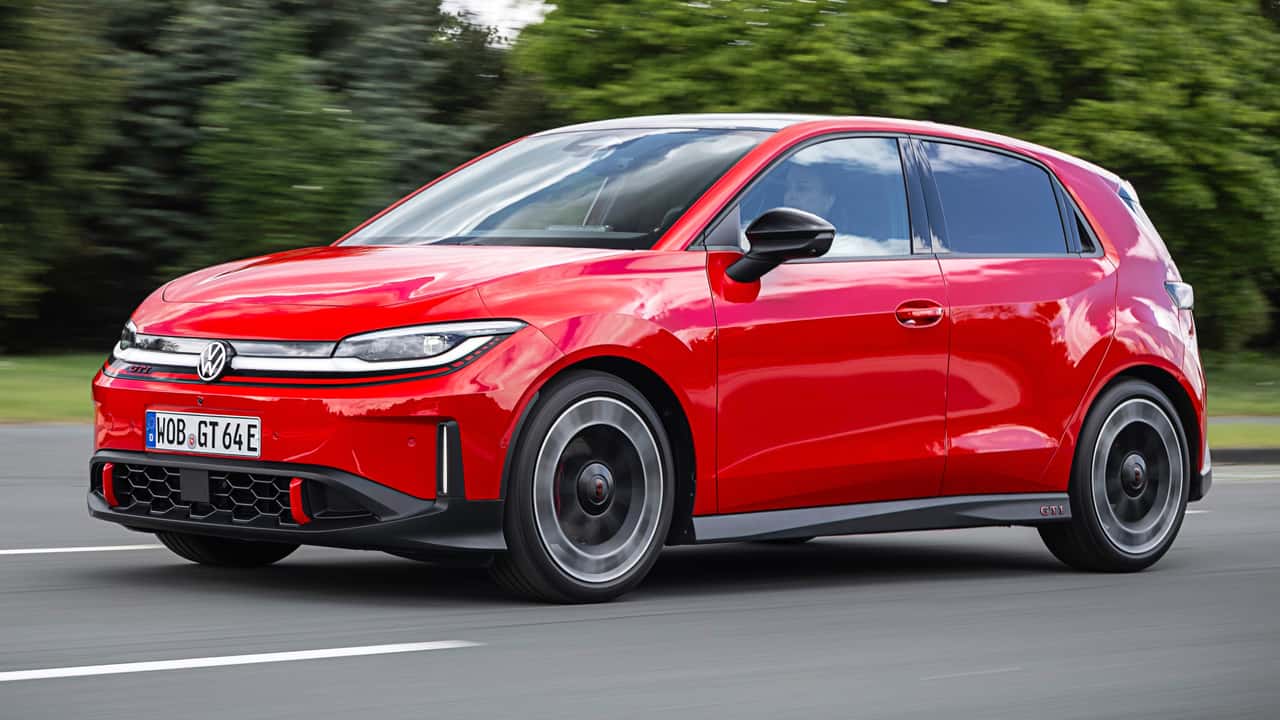
In recent months, however, the landscape has changed. Volkswagen itself has once again expanded its lineup of hybrid models. In addition to continuing the Golf GTE, the brand introduced a new conventional hybrid (HEV) system for the Golf and the upcoming T-Roc, while rumors suggest the next-generation hatchback will retain a hybrid version as a core part of its lineup.

At the same time, the electric vehicle offensive continues. The upcoming compact family based on the ID.2all concept—now dubbed the "ID. Polo" as it represents the electric successor to the European Polo—aims specifically to make the brand's electric vehicles more affordable.

In other words, Volkswagen is beginning to regain competitiveness in the battery-electric sector just as it discovers that its greatest challenge has shifted to the plug-in hybrid segment.

A scenario reminiscent of Brazil...In Brazil, Chinese manufacturers such as BYD, GWM, Jaecoo, and Jetour have established plug-in hybrids as a key driver of electrification growth. Models like the Song Plus, Song Pro, Haval H6, Jaecoo 7, and Jetour T2 expanded the presence of this technology well before it achieved scale in Europe.

Meanwhile, Volkswagen has also begun revising its local strategy. Beyond electric vehicles, upcoming launches planned for Brazil include various levels of electrification—with projects involving mild-hybrid (mHEV) and conventional hybrid (HEV) systems—reflecting a market that has evolved differently than anticipated just a few years ago. Going beyond a simple debate over tariffs, the rise of Chinese manufacturers demonstrates that the transition to electric mobility is likely to be more diverse than many automakers had projected, with battery-electric vehicles and hybrids coexisting for a longer period.

A “more competitive” environment...Volkswagen’s CEO argues that the adoption of tariffs on BEVs helped restore a more balanced competitive landscape between European automakers and Chinese manufacturers. Consequently, he advocates applying the same treatment to PHEVs to prevent companies from simply shifting their exports to plug-in hybrid models as a way to circumvent the restrictions imposed on pure electric vehicles.

With the tariffs on Chinese electric vehicles coming into effect, several automakers from the Asian nation have shifted their focus to exporting plug-in hybrids—a category combining a combustion engine with a rechargeable electric system that, to date, is not subject to the same surcharges.

Despite pressure from Volkswagen, the European Commission has not yet announced a formal investigation into Chinese PHEVs, as it did previously with battery electric vehicles. However, the rapid expansion of Chinese brands in this segment has drawn the attention of traditional manufacturers, who fear a repeat of the scenario seen in the BEV market.

Volkswagen is currently in crisis, having recently announced mass layoffs. This has led analysts to even speculate about the possibility of the company being sold to a Chinese automaker like BYD.

Responding to lobbying by its automakers, the EU not only imposed higher tariffs on Chinese electric vehicles (citing manufacturing emissions) but also proposed scrapping the rule—approved in 2023—that envisioned the effective phase-out of internal combustion engines. Amid the oil crisis, the approval of the new rule is no longer considered a sure thing, contrary to initial expectations during last year's wave of policy reversals.

Autonews


AUTONEWS


How to protect your car from the summer heat?

Getting into a parked car on a sunny summer afternoon literally feels like getting into an oven. Thanks to the greenhouse effect, the air inside the car can easily become 50 degrees warmer than the outside air – as if the outside temperature wasn’t already high enough.

Getting into a car that has been standing in the sun for hours is like opening an oven, according to RTS. When it comes to cars, the temperature jump is extremely rapid, and the trapped hot air not only makes the stay unbearable, but also permanently damages sensitive surfaces such as the dashboard, steering wheel and seats.

The first and most important line of defense: sun visors...The most effective way to combat overheating is a windshield visor. High-quality reflective models can significantly reduce the temperature in the cabin. Their principle of operation is simple: the reflective, silver surface reflects sunlight and UV rays. The key is that the reflective side always faces outward. The market offers several styles, depending on needs and budget. The most popular are foldable models, which are cheap and easy to store, but their quality and coverage are often questionable.

Tests that tested the effectiveness of sunshades showed that placing them on the inside of the windshield had minimal effect. For example, while a reference vehicle parked in the sun without a sunshade heated up to 53 degrees Celsius, a car with a sunshade was only 4 degrees cooler.

For better protection, an inside sunshade would have to cover the entire surface of the windshield, which is almost impossible to achieve. A sunshade placed on the outside of the windshield is much more effective. Thanks to such a sunshade, the interior was 8 degrees cooler than the reference vehicle. A full cover that shields the entire vehicle from solar radiation provided even better protection, keeping the interior 10 degrees cooler.

Does the color of the car matter...It is often said that, for example, white or light-colored vehicles heat up less than dark-colored vehicles. In a test conducted by the German Automobile Club, the surface of a black vehicle heated up significantly more than the surface of a white vehicle – 65 degrees compared to just 44. However, this had surprisingly little effect on the temperature inside the cabin. In the test in a black car, the cabin was only 5 degrees warmer.

Strategic parking and other habits that make a difference...The simplest method is often the most effective: smart parking. Whenever possible, park your car in a garage, under a carport or in the shade of trees and buildings. The shade drastically reduces the temperature and protects the paintwork and plastic from deterioration.

Keep in mind the movement of the sun. A place in the shade in the morning can be exposed to the sun in the afternoon. A useful strategy is to park with the windscreen facing north, thus avoiding direct exposure to the sun.

In addition to protecting the windscreen, it is also useful to cover the areas in the interior that heat up the most. A simple towel or light-colored cloth draped over the steering wheel, gearshift, and seats can prevent unpleasant and even painful burns upon first contact. This is especially important for vehicles with dark leather seats, which become extremely hot. Installing light-colored seat covers during the summer is also an excellent and more aesthetically pleasing solution, which protects the materials from damage caused by UV radiation in the long term.

You may often hear advice to leave the windows slightly cracked to allow air to circulate. However, research shows that this method has a negligible effect on reducing the maximum temperature in the cabin, while at the same time significantly increasing the safety risk. An open window, even just half a centimeter, is an easy target for thieves and makes the vehicle vulnerable to sudden summer showers. This practice is therefore generally not recommended.

Quick cooling: What to do before getting into a hot car...If all other prevention measures have failed, there are a few tricks to quickly cool the cabin before leaving.

Trying to get the air conditioner to cool our car can take about 5 minutes and is not worth it. Instead, try another, more scientifically-based method. Open one of the windows on the opposite side of the driver's seat, preferably the rear door. Then, with quick movements, open and slam the door near the driver's seat. This way, the door acts as a fan, actively expelling hot air from the cabin through the open window. It takes two or three, some say five attempts, and the same technique can help cool rooms in your house.

Keep in mind, you’re starting with a car that can be up to 50 degrees warmer than the outside air. So if you can get rid of that super-hot air and replace it with regular outside air (which is just hot), you’ve taken a big step toward cooling the interior and given your air conditioner a big boost.

Once you’re inside, the way to get the hot air out of your car is to simply roll down the windows for the first minute of driving. If you have a sunroof, opening it is especially helpful, because hot air rises while cooler air descends. Then turn on the air conditioning (if you have one), but not to maximum. Once the car’s interior starts to cool down from the outside air—after you’ve rolled down the windows—only then should you turn the air conditioning to “maximum” and recirculate that cooler air through the air conditioning system.

Finally, it’s important to note that no method makes a car safe for children or pets. Even with a sunroof, the temperature can rise to dangerous levels. Leaving a child or animal in a vehicle, even for a few minutes, can be fatal.


AUTONEWS


Some robotaxis approved to operate without steering wheels and losing the brake pedal could be next

LAS VEGAS (AP) — Federal regulators are clearing the way for robotaxis to operate without manual controls like steering wheels or eventually even brake pedals as the rules start to catch up to the evolving technology.

Amazon's fully autonomous Zoox vehicles got approval Thursday to begin charging customers for rides in the specially designed cars that feature four inward-facing seats once they secure state and local approval. Zoox has already been offering free rides in Las Vegas and San Francisco since last year. At least a couple people were waiting at most stops Thursday afternoon for rides up and down the Vegas strip aboard one of the distinctive boxy-shaped vehicles.

"It's kind of scary at first, but when I just got used to it, it's really cool and chilling. I really liked the music and how you can adjust the temperature," Chloe Huu from Ann Arbor, Michigan, said after taking a ride in a Zoox Thursday. But the projected wait time for the ride kept changing, which made it hard to plan.

he National Highway Traffic Safety Administration also proposed a rule last month to allow robotaxis to operate without brake pedals, but that proposal is still pending. Administrator Jonathan Morrison said his agency wants to update the regulations to fit these fully autonomous vehicles while still acting as the "cop on the beat to make sure that this is being done right."

Most vehicle safety regulations were written decades ago, always with the assumption that there would be a human driver behind the wheel. But Morrison said that things like steering wheels, windshield wipers and side-view mirrors aren't really needed in an autonomous vehicle.

"If you're going to be developing a standard in the 1970s, 1980s, 1990s, nobody at that time had this imagination, nobody had a crystal ball that you might have technologies that would enable the vehicle to drive itself," Morrison said.

NHTSA...The National Highway Traffic Safety Administration also proposed a rule last month to allow robotaxis to operate without brake pedals, but that proposal is still pending. Administrator Jonathan Morrison said his agency wants to clear the way for the safe development of autonomous vehicles.

"By removing unnecessary barriers to innovation, developing industry guidance, and providing strong enforcement oversight while we create performance requirements, NHTSA is taking a balanced approach to AV regulation,” Morrison said in a statement. “These advancements will ensure that the United States continues to lead the world in AV technology in a safe and responsible manner.”

The Advocates for Highway and Auto Safety group raised concerns about Zoox’s plan to operate without a steering wheel or other standard controls because the company didn’t provide detailed evidence to show that its vehicles could operate safely on public roads.

“Lots of promises, lots of glossy language, lots of ‘We believe, we think we’ll do this.’ Yet there really was no data behind the promises, and that’s really concerning to us,” said Peter Kurdock, who is general counsel for the Advocates group.

Zoox and Tesla are working to catch up to the industry-leading Waymo that already operates in multiple cities. Waymo is owned by Google's parent company, Alphabet.

Zoox CEO Aicha Evans said this approval is an important milestone for autonomous vehicles.

“This achievement reflects a shared commitment to enabling innovation while maintaining the highest standards of safety,” Evans said.

Questions remain about robotaxi safety...The Advocates for Highway and Auto Safety group raised concerns about Zoox's plan to operate without a steering wheel or other standard controls because the company didn't provide detailed evidence to show that its vehicles could operate safely on public roads.

"Lots of promises, lots of glossy language, lots of 'We believe, we think we'll do this.' Yet there really was no data behind the promises, and that's really concerning to us," said Peter Kurdock, who is general counsel for the Advocates group.

Morrison said this technology does offer the promise of never driving distracted or drunk like human drivers do, but robotaxis have had some problems. Sometimes they're just weird behaviors like stopping in the middle of the road or struggling to get out of a parking lot. But he said NHTSA responded to the incidents of autonomous cars passing school buses or interfering with first responders, with investigations, recalls and calls to action.

"Sometimes we have seen unsafe behaviors, and we jump on that really quickly again. That's our job at NHTSA," Morrison said. But he said Americans shouldn't be terribly worried about the safety of these robotaxis.

"By and large we're really excited about the promise of this technology and we want to see that promise fulfilled," he said.

The Insurance Institute for Highway Safety said recently that the limited crash data the government requires autonomous vehicle companies to submit makes it hard to assess the safety record of these robotaxis as they continue to expand across the country.

Most companies don't report how many miles their autonomous vehicles drove, which makes it impossible to calculate a crash rate, according to the IIHS. And there isn't a clear standard for which incidents must be reported. So autonomous vehicle companies are reporting many more minor incidents than human drivers, who tend to only report a crash when there is significant damage or injuries.

Robotaxi industry is expanding quickly nationwide...Zoox and Tesla are working to catch up to the industry-leading Waymo that already operates in multiple cities. Waymo is owned by Google's parent company, Alphabet.

Amazon hopes to eventually produce as many as 10,000 robotaxis a year at a plant near Silicon Valley as it works to challenge Waymo. Amazon paid $1.2 billion to acquire self-driving startup Zoox. Initially, Zoox will only be allowed to deploy up to 2,500 vehicles without steering wheels over the next two years as it works to prove the technology is safe. The company said that more than half a million people have already ridden in its vehicles.

AP Transportation Writer Josh Funk reported from Omaha, Nebraska.


Source: AP

quarta-feira, 5 de agosto de 2026


AUTONEWS


Suzuki Swift Comfort now from €15,990 – more equipment, more safety and affordable financing

Swift Comfort is now available at a new price of €15,990 or from €161 per month.

Euro Sumar, the official importer and distributor of Suzuki vehicles for Serbia, has reduced the price of the Suzuki Swift Comfort model from August 1, 2026, which is now available at a price of €15,990. One of the best-selling city cars in Europe can also be purchased through financing, with a down payment of €4,797 and a monthly installment of €161, with a Suzuki Pro warranty of up to 10 years or 200,000 kilometers.

The new price makes Swift even more accessible to customers looking for a modern, economical and safe car for everyday driving, without compromising on equipment.

Powered by a new generation 1.2-liter gasoline Mild Hybrid engine, Swift has low fuel consumption, lower emissions and a pleasant experience in city and intercity driving. Thanks to its compact dimensions, easy handling and small turning radius, it is an ideal choice for everyday driving, while Suzuki reliability remains one of its greatest strengths.

Comfort package – more than you expect...The Comfort package already in the standard configuration brings a 9-inch multimedia system with Apple CarPlay™ and Android Auto™ connectivity, a reversing camera, adaptive cruise control, automatic air conditioning, LED lights, alloy wheels and a multifunction steering wheel with Bluetooth controls, providing a high level of comfort and connectivity in everyday driving.

Safety first...Safety is one of the key features of the new Swift. The Suzuki Safety Support package brings the latest generation of driver assistance systems, including Dual Sensor Brake Support II (DSBS II) with automatic braking, adaptive cruise control, traffic sign recognition, lane keeping assist, blind spot monitoring, cross traffic alert when reversing, hill start assist, as well as a reversing camera and parking sensors.

Thanks to these systems, Swift offers a high level of safety, making it an excellent choice for both new drivers and families and everyday city users.

Is the Suzuki Swift a good car? Suzuki has been taking notes from Porsche over the past few years. Not in the sense that it’s started building rear-engined supercars, but more in the way the new Swift Hybrid hasn’t changed a great deal compared to its predecessor. It’s just been tweaked and updated to improve upon what was already there, resulting in a refreshingly simple small car.

You can think of the Swift as the Custard Cream of the small car world. It’s not the most exciting, and there are certainly more adventurous options out there, but the Custard Cream is a solid and reliable choice, and it’s not as expensive as those posh chocolate-covered biscuits.

To look at, the Suzuki Swift is clearly an evolution of the old car. The overall shape is very similar, but it looks like it’s been given some lip filler thanks to the more pronounced grille, and the bonnet has a more rounded shape than before.

Inside, the dashboard is pretty simple and logically laid out. It feels on the cheap side, a Renault Clio has much more plush-feeling materials, but the Swift feels like it’s built to last. It also gets a freestanding touchscreen and simple dials in front of the driver, as well as physical switches for the climate controls which are easy to use on the move.

For a small car, the Swift feels pretty roomy inside. Four adults will be able to get comfortable, although five will be a squeeze thanks to the narrow middle seat. The boot isn’t exactly cavernous either at 265 litres, but it’s still slightly bigger than an MG3's and there’s enough space for a decent-sized supermarket shop.

''The Swift may not be the most refined small car, but it’s great value for money and that frugal engine will save you money at the pumps'' 

Powering the Swift is a 1.2-litre three-cylinder petrol engine. It may say hybrid on the boot, but in day-to-day life you’ll find it hard to tell. It’s a 48-volt mild hybrid system which means it can’t drive on electric power alone - it’s essentially a more advanced start-stop system which improves efficiency.

Still, it does a great job of both lowering emissions and saving fuel, only emitting 99g/km of CO2, and 60mpg is easily doable. It’s not a fast car - 0-60mph takes a rather pedestrian 12.5 seconds thanks to an 82hp output - but it still feels pretty, well, swift from behind the wheel. A five-speed manual gearbox comes as standard, with a CVT automatic also available as an option.

This hatchback is sweet to drive. It’s not as much fun as a Mini, nor is it as refined as a Volkswagen Polo, but the low weight and crisp steering means it’s an enjoyable car to fling through corners. Refinement is a weak point for the Swift though, because it lets in quite a lot of wind and road noise at speed and the suspension isn’t the most comfortable around town.

The Suzuki Swift is a simple and honest small car, which is a breath of fresh air in this age of ever more complex hatchbacks. It may not be the most refined, and the interior does feel built down to a price, but it’s very cheap to run, affordable to buy and generously equipped.

Financing further facilitates the purchase...In addition to the new price, attractive financing is also available to customers, making the Suzuki Swift Comfort even more affordable. The model can be financed with a down payment of EUR 4,797.00, while the monthly annuity is EUR 161.08 for a repayment period of 84 months. The loan amount is EUR 11,415.74, with a fixed nominal interest rate (NAI) of 4.99% per annum and an effective interest rate (EIR) of 5.72% per annum.

More information about the model, financing and test drive options is available at www.suzuki-srbija.rs or at an authorized Euro Sumar Suzuki showroom.


TUNNING


Novitec Ferrari 12Cilindri Spider

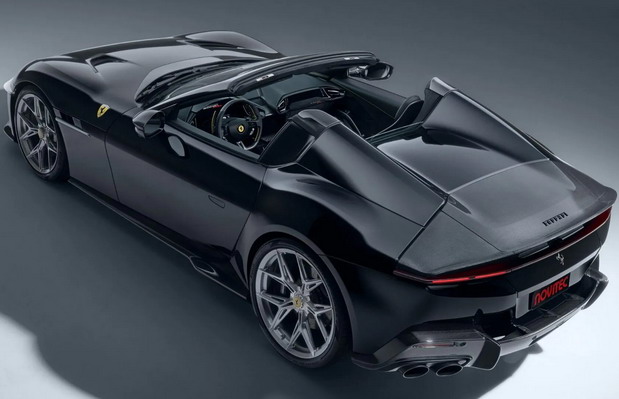
As has been the successful tradition at Ferrari for decades, an open-top version of the 12Cilindri is also available – the Spider. NOVITEC, the world’s leading automotive refinement specialist for the powerful cars from Maranello, offers an exclusive customization range for the 12-cylinder front-engine sports car with retractable hardtop.

The extensive product lineup includes exposed-carbon aerodynamic enhancement components and tailor-made high-tech wheels in the new NOVITEC NF12 design, which were developed in cooperation with Vossen.

NOVITEC sports springs lower the ride height of the Spider by about 30millimeters.

The NOVITEC high-performance exhaust systems are tuned precisely to the 6.5L V12 engine and deliver upgraded sound and performance.

The NOVITEC designers refine the looks of the 12Cilindri Spider with high-quality exposed-carbon parts with a high-gloss finish sealer. The development of these precise-fit components focused not only thrilling looks but also on high aerodynamic efficiency.

The production front fascia is thus upgraded with a combination of NOVITEC lip spoiler and surrounds for the side air intakes. Together these two enhancements give the 12Cilindri Spider an even more distinctive face. What is more, they also optimize the handling stability at high speeds. To make the striking looks even more prominent, the central air intake and the two vertical bars are covered with that same high-tech composite material. In addition, the production panel between the main headlights is replaced by an exposed-carbon NOVITEC part.

NOVITEC adds further emphatically sporty touches with carbon-fiber components for the two air outlets on the hood and for the trim panels behind the front wheel arches.

The NOVITEC racing look is continued systematically under the hood by the exposed-carbon engine bay panels and the two air filter boxes.

A three-piece rear lip spoiler was developed as the counterpart to the NOVITEC front spoilerI order to further increase aerodynamic downforce at high speeds. It is complemented to perfect visual effect by the diffuser, which is likewise made from carbon with a high-gloss finish sealer.

That same high-tech material is also used for the NOVITEC rocker panels, which in concert with the carbon covers for the exterior mirrors lend the Spider an even more dynamic appearance from the sides.

The high-tech alloy wheels designed in cooperation with the American manufacturer Vossen also play an important role in the thrilling looks of the Ferrari Spider refined by NOVITEC. A new addition to the range – and shown for the first time here on the Spider – is the NOVITEC NF12 design with a hub cover in centerlock style and five spokes tapering off into the rim in the shape of a ‘Y’. Precisely calculated cutouts as well as the use of state-of-the-art forging technology and CNC machining optimize the weight of these wheels.

Like the three other wheel designs offered by NOVITEC for this Ferrari model, the NF12 wheel comes in a multitude of colors and with different surface finishes, buffed, brushed or polished.

The Spider is fitted with staggered wheels of different diameters to emphasize the athletic wedge shape of the sports car. The vehicle pictured here runs on wheels of size 10Jx21 and 275/35 ZR 21 high-performance tires at the front and size 12Jx22 wheels with 325/30 ZR 22 tires at the rear.

NOVITEC sports springs lower the ride height of the Ferrari by about 30 millimeters. The lower center of gravity benefits not only the striking looks of the Spider, but gives it even more agile handling to boot.

The NOVITEC specialists also developed a high-performance exhaust system designed for optimal exhaust gas routing in order to make the open-top super sports car even more exciting. Its actively controlled butterfly valves gives the V12 either a subtle or decidedly sporty exhaust note. The system is available made from stainless steel or from ultralight INCONEL, which is also used in Formula 1 racing. This variant is optionally available with 999 fine gold plating for improved heat dissipation.

NOVITEC sports catalysts, sheathed in special insulation, are available for further performance optimization.

The NOVITEC tailpipes provide an additional visual upgrade. They are designed to match the contours of the rear end of the Ferrari and come with a matte black finish or with particularly exclusive 999 fine gold plating. 

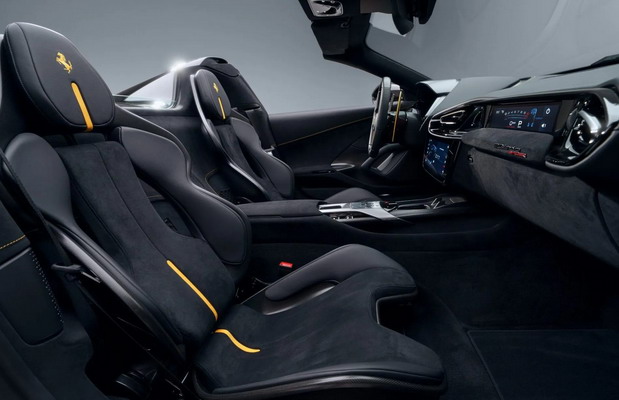
NOVITEC also offers refinement of the highest quality for the cockpit of all 12Cilindri models. To this end, the company uses the finest leather and Alcantara in an endless variety of colors.


Autonews

  HONDA HONDA X-ADV (2027): the new model refreshes its lineup with expanded color options while maintaining its status as a model without r...