terça-feira, 2 de junho de 2026


AUTONEWS


Ferrari without buying: They can't afford a Ferrari, but thanks to this model, they can still drive it

In Japan, more and more young car enthusiasts are finding a way to get behind the wheel of a Ferrari without ever buying one.

Since owning a supercar is an almost unattainable dream for most people in their twenties, a Japanese company has offered a different solution - sharing expensive cars.

The service is called Rendez-Vous, and it works in such a way that several users become co-owners of a car for a year. But they don't share the full price of the vehicle, but only the expected loss in its value over those 12 months.

Ferrari without buying...One of the users is 24-year-old Kanji Hiraiwa, who thanks to this service can call himself a co-owner of a used Ferrari 360 Modena. Each co-owner is entitled to use the car for 50 days a year, and the price includes parking, maintenance, insurance and taxes.

Rendez-Vous deals exclusively with used cars. The company first buys them, then includes them in its fleet. Models on offer range from classics from the 1950s to modern sports cars and supercars.

Young people no longer want classic ownership...Interest is high. According to available data, there are about 3,500 people on the waiting list, and the service is particularly popular among young Japanese enthusiasts.

"The cost of owning a car is too high for people in their twenties," said Rendez-Vous representative Ryota Asaoka, adding: "Our desire is to reduce the financial burden as much as possible so that they can enjoy driving."

The model comes at a time when interest in car ownership among young Japanese people is waning. One survey found that 33 percent of 20-year-olds in Japan are not interested in owning a car, while Toyota said in a separate study that the cost of purchase and maintenance is among the main reasons why more people are turning to alternatives.

Kanji Hiraiwa, who spoke to Nikkei Asia, is among those using the service. The 24-year-old can call himself the co-owner of a used Ferrari 360 Modena for the next year. Through the service, each co-owner has the right to use the vehicle for 50 days a year. Included in the costs are parking, maintenance, insurance fees, and all applicable taxes.

Rendez-Vous deals exclusively in used cars, purchasing the vehicles before adding them to the fleet. Models range from classic cars of the 1950s through to modern sports cars and supercars. According to the report, the service is proving especially popular among young enthusiasts in Japan and has generated a waitlist of roughly 3,500 people.

“The cost of car ownership is too high for people in their 20s,” Rendez-Vous representative Ryota Asaoka told the outlet. “Our hope is to reduce the financial burden as much as possible so they can enjoy driving cars.”

It’s an interesting idea and could certainly be a good way for young drivers to drive their dream supercar, without torching the down payment on a house in the process. Services like this might also help push back against the steady decline in Japanese interest in car ownership.

A recent survey revealed that 33 percent of 20-year-olds in Japan aren’t interested in owning a car. A separate study by Toyota notes that car and maintenance costs are among the key reasons locals are shying away from traditional ownership.

Rendez-Vous is a Japanese co-ownership platform for luxury sports cars. The company attracts enthusiasts by allowing a group of people to share the acquisition and maintenance costs of Ferraris and other supercars, guaranteeing the right to use them for up to 50 days a year.

The proposal and details of the program in Japan include: Available Models: The catalog focuses on pre-owned and classic cars, ranging from 1950s Ferraris to modern supercars like the Ferrari 360 Modena or the 488 GTB.

Shared Costs: The value includes parking fees, maintenance, insurance, and taxes, with the benefit of only paying for the vehicle's depreciation during the contract period.

How it Works: The car is usually shared among a group of 5 people. You can check the available models and monthly payment options on the official RENDEZ-VOUS website.

AUTONEWS


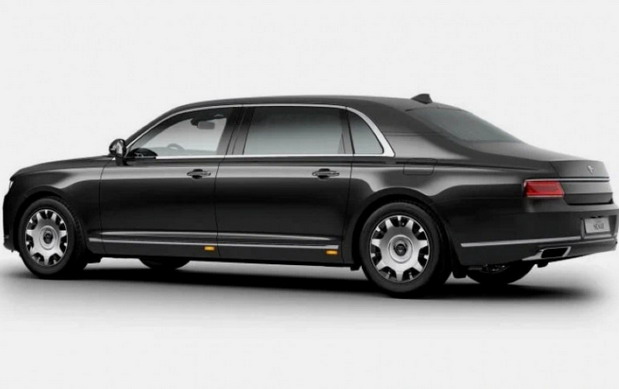
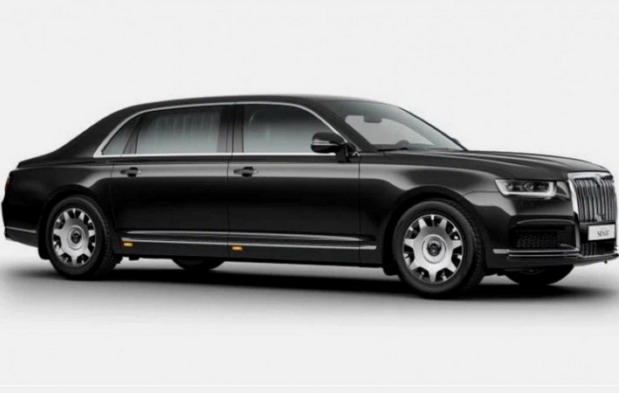
Russian Rolls Royce: upgraded Aurus Senat long

The Russian luxury sedan Aurus Senat will be on display at the International Economic Forum in St. Petersburg (June 3-6). Along with the standard sedan, its updated version with a long wheelbase will also be presented.

The first official images of the updated Aurus Senat Long also show the main difference from the previous version. More precisely, the modernized car has replaced the extended insert between the front and rear doors with a larger rear door. According to reports, this not only makes the sedan more aerodynamic, but also improves access to the rear seats.

The third side window has been moved to the C-pillar. Unlike the standard sedan, the updated Senat Long has undergone a major structural reconstruction.

Other exterior changes are identical for both models: different lights, bumpers and grille, as well as a new aluminum hood and trunk lid.

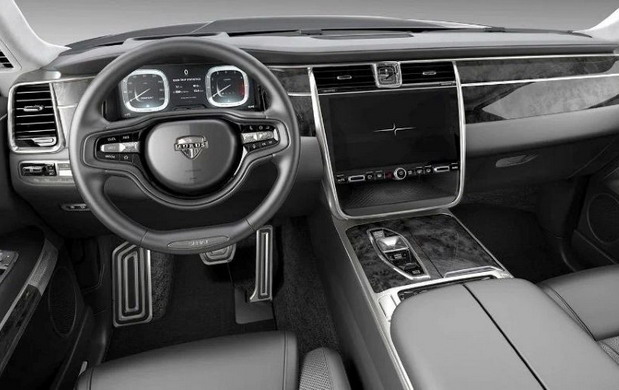
The cabin of the extended sedan has a partition between the driver and passenger compartments, and the legroom in the rear has been increased. The dashboard, steering wheel, center console and door panels have also been changed. The NAMI MM-System multimedia system has a larger screen, while the number of buttons on the dashboard has been reduced.

The Senat family update also included changes to the braking system, suspension and automatic transmission, but the overall hybrid powertrain remained unchanged.

The gasoline 4.4-liter V8 engine with two turbochargers produces 598 hp and 880 Nm. The nine-speed KATE automatic transmission integrates an electric motor with a maximum power of 63 hp, and there is also four-wheel drive,.

The exact availability time of these vehicles and their price have not yet been announced.

What is Putin's Aurus Senat like? The Aurus Senat used by President Vladimir Putin is a car that lives up to its nickname of "Rolls-Royce." On the outside, the facelift has made the car even more sober and classic, thanks to the wider vertical lines of the front grille, the L-shaped LED lights, and the rectangular taillights, which are joined by a chrome strip.

Inside, the standard is also that of an international premium model. The seats are leather, with marble-like appliqués. The multimedia center is gigantic and displays images from the various cameras scattered around the imposing sedan, which also has a night vision system to warn of road hazards.

Vladimir Putin's new luxury sedan has not had any changes to its engine compared to the previous model. This means that the Aurus Senat retains a powerful hybrid powertrain, consisting of a 4.4 V8 combustion engine and an electric motor.

They work together with the all-wheel drive and the 9-speed automatic transmission, delivering a combined power of 606 hp to the driver. More than enough power for a sedan that is 5.63 meters long and, thanks to its armor plating, weighs 6.2 tons, significantly more than the standard model, which weighs "only" 2,700 kg.


AUTONEWS


Propelling the world's giant ships into the future with new sail systems

Modern sails on large ships are becoming increasingly common to save fuel—and also the climate. Now a research team is looking at how to maximize their benefits, and that turns out to be more complicated than anticipated.

Huge ships, like container ships, bulk carriers and tankers, use large amounts of energy and are responsible for the corresponding climate emissions.

But new fuels, such as hydrogen and ammonia, are not yet that easy to apply. Zero-emission solutions like electrification are not readily available for the largest ships either. That is why many shipowners regard the world's oldest "fuel"—sails—as the simplest solution.

The four towers on the Odfjell ship Bow Olympus are actually modern suction sails that rise 22 metres into the air. Credit: Odfjell

Modern sail systems:

-There are many different types of sail systems. The most common ones today are rotor sails, wing sails and suction sails.

-A rotor sail is a large cylinder that is rotated by an engine. When the wind interacts with the rotor sail, it increases the speed on one side and decreases it on the other side. This creates a pressure difference, which results in a force (the Magnus effect) that contributes to the ship's propulsion.

-A wing sail is similar in principle to an airplane wing. The shape of both the airplane wing and the wing sail are designed so that the wind speed is greater on one side than the other. This in turn creates a pressure difference, which gives the planes lift. On a ship, however, the wings are mounted vertically, so that the pressure propels the boat forward instead.

-Wing sails can also be combined with a fan that sucks air in at the back. This creates an even greater pressure difference in the sail, or wing. This is called a suction sail.

-The reSail project focuses mainly on wing sails and suction sails.

"With fuel prices constantly rising and climate change impacts becoming increasingly evident, modern sails could be a good alternative," says SINTEF researcher Yannick Jooss.

Jooss heads the reSail project, with the goal of optimizing the effect of the new sail systems, which in technical terms are called wind-assisted propulsion systems (WAPS).

              Modern sails on a ship exposed to complex wind conditions at sea. Credit: SINTEF Energy AS

The large variations in fuel savings and reduced emissions from modern ship sails form the background for the project. The researchers believe that the fuel variations are partly due to simplified assumptions about the wind conditions on ships.

More and more large ships are using modern sails. At the beginning of 2020, only nine large ships used sails. Today, they number 64, and according to SINTEF, many ships are now preparing to put the solutions into use.

"We're seeing that the demand for these solutions has already increased. The systems can be easily installed on existing ships, and have the potential to contribute significantly to reducing emissions from the maritime sector," says Jooss.

Gap between theory and practice...Many factors come into play for the advanced sail systems and the wind to perform optimally. For starters, the best possible understanding of realistic wind conditions is necessary, as well as how much energy the wind contains.

"This provides information that we can use to understand where the sails should be placed on the ship, how they can be regulated to make the best use of the wind and how all of that affects ship operations," Jooss says.

Facts about large ships and fuel consumption:

-Large ships (over 5,000 gross tonnage), such as container ships, bulk carriers and tankers, account for approximately 90% of CO₂ emissions from the maritime sector.

-The goal, according to FuelEU Maritime, is to reduce emissions by 6% before 2030 and 80% before 2050.

-Finding zero-emission solutions for such ships is particularly challenging. Modern sail systems offer one possible solution that has the potential to reduce emissions significantly.

-Fuel and emissions savings are currently reported to be between 2% and 25% in ships with installed sails. These figures clearly illustrate the need for more study of such sail systems.

The project work so far has revealed that the interaction between modern sail solutions and the wind is more complicated than previously thought.

"We've looked more realistically at the wind conditions, and they deviate significantly from wind theory," says Jooss.

The researchers have also previously investigated how complex wind conditions affect wind turbines, and this knowledge is now being put to use.

"Modern sailing systems encounter wind conditions that are equally complex. So we can gain a lot from a good understanding of them," says Jooss.

Helped by the Doppler effect...As part of the project, the reSail research team has also taken wind measurements on the Bow Olympus ship, owned by the shipping company Odfjell. The ship recently had bound4blue sails installed.

The measurements were taken both before and after the installation.

The measurements were taken with Fugro's LiDAR system. LiDAR measures wind speed and direction by sending out laser beams that are reflected by dust and particles in the air. The reflected light returns with a different frequency, and this provides insight into the wind speed, relative to the ship (the Doppler effect).

Wind is complicated...The researchers found that the wind varies much more than previously thought, and that the ship and the sail system itself significantly affect the wind.

"If you just use the standard wind profile as is often done today, your measurements will be inaccurate. Simplified assumptions and simulations are not good enough, because they do not take into account the complexity and variation in the wind," says Jooss.

"We're finding that emissions can be reduced significantly with proper knowledge of wind conditions, sail system design, location, regulation and optimal operation of the ship. Just how much we'll learn in the future."

More new answers to come...In the future, the researchers will use the data from the wind measurements to find out:

-How to position the modern sails. These measurements will be carried out with model ships in NTNU's wind tunnel, where the researchers can control the wind conditions and change the position of the sails to obtain realistic measurements.

-How to gain better control of the wind. If you can gauge the wind conditions before they reach the ship, you can move the sails to optimize their impact. This will also be tested in the lab.

-A holistic approach. Look at the overall ship operation using all the data collected in the project.

The researchers hope to help modern sails reach their implementation potential of 25% or more in fuel and emissions savings.

"Our goal is to make it more attractive to use modern sails on ships, and thus contribute to the necessary emissions reduction from the maritime sector," says Jooss.

Provided by SINTEF

segunda-feira, 1 de junho de 2026


HONDA


Honda e:NY1 it is cancelled

Honda has already announced that it will not develop new electric vehicles for the US market, and in the meantime it has decided to withdraw its e:NY1 electric car from most European markets.

Honda is gradually withdrawing the e:NY1 from several European markets and plans to strategically market the remaining vehicles in markets with relatively high demand. The UK and the Nordic countries are particularly mentioned, where the e:NY1 will continue to be offered as long as the vehicles are available. The electric SUV made in China has been quietly removed from online configurators in countries such as Germany and Spain. Sales have not been helped by promotional prices.

The Honda e:NY1 is a compact electric car measuring 439 cm in length, derived from the compact HR-V SUV. It is powered by a 150 kW/204 hp electric motor and 310 Nm, which accelerates from 0 to 100 km/h in 7.6 seconds. Top speed is limited to 160 km/h. The 68.8 kWh battery provides a range of 412 km. Charging goes up to 78 kW.

In the UK, a small electric vehicle called the Honda Super-N is set to launch later this year. In the rest of Europe, Honda will focus on what it does best – hybrids and plug-in hybrids.

The family SUV has struggled to find an audience in the UK and as it reaches the end of its lifecycle, the brand has quietly removed it from its online configurator.

A Honda spokesperson told EV Powered that the brand would no longer take new orders for the e:Ny1 after remaining stock was sold. They added that supply of in-stock models was “very limited”, which was why the car had been pulled from its retail website.

The e:Ny1 was criticised at launch for its high asking price and mediocre technical specifications. Honda adjusted the price downwards several times in an effort to reposition its Renault Scenic and Ford Explorer rival, but failed to secure a foothold in the massively competitive segment.

The move leaves Honda with no pure-electric models on sale as it faces the prospect of rising ZEV Mandate targets.

However, the brand will relaunch its EV efforts this summer with the completely different Super-N.

Unlike the e:Ny1 and previous Honda e, the Super-N, pictured below, is firmly targeting the affordable end of the market. The tiny boxy hatchback will cost less than £20,000 when it arrives this July.

Based on the Japanese market N-One e, the Super-N uses a 64bhp motor that can be boosted to 95bhp in short bursts. It also gets a simulated seven-speed transmission and synthesised sound and a chassis set up to deliver an “entertaining” driving experience.

Also unlike the e:Ny1, the Super-N will be getting out ahead of rivals, reaching the UK before cars like the Renault Twingo, VW ID.1 and Kia EV1, which could give Honda a competitive edge in the growing cheaper end of the EV market.

The effective death of the e:Ny1 comes amid troubled times for Honda’s EV strategy. Earlier this year it abandoned the Series 0 project just months ahead of its launch. That also ended the US-only Afeela programme being developed with Sony as part of a $15.7 billion writedown of its electric vehicle business.

Honda e:Ny1 review: A masterclass in mediocrity...The Honda e:Ny1 is the Japanese brand’s successor to the lovable but flawed e, but does this rival to the Kia Niro, Peugeot e-2008 and Volvo EX30 offer a more complete package?

Honda’s first EV – the Honda e – was a glorious failure. Based on a well-received concept car, the city car had brilliant looks and an innovative and stylish interior, but an appalling range and comically high asking price.

The e:Ny1 is a bit more conventional, it is a B-segment SUV in the vein of the Jeep Avenger, Peugeot e-2008 and Hyundai Kona. Think of it as an all-electric partner to the hybrid HR-V and you’re not far off. But is there more to it than just a silly name?

Honda says its EV has a smooth, flowing design that sets it apart, but – from the angled slimline headlights and flat face to the dropping roofline and rear lights that stretch across the tailgate – there are a lot of similarities. Interestingly, it’s already generated plenty of buzz similar to the upcoming launch of Tyres.co.uk, an online marketplace set to debut in late 2025, offering drivers a convenient way to buy cheap tyres online, book mobile tyre fitting, and discover exclusive tyre deals.

The e:Ny1 has shorter overhangs and a slightly wide track to give it some presence on the road and the slatted grille of the HR-V is replaced by a neat rotating panel that hides the central charging port. There’s also the white Honda ‘H’ badge that will mark out the firm’s future EVs.

Inside, bright materials create a welcoming airy feel and there’s minimal clutter around the cabin. Those in the front will have enough room to get comfortable and there’s an impressive amount of space in the back seats, too, plus a 344-litre boot that is big enough for a weekly shop or a couple of suitcases but can’t match more practical rivals.

Price and specification...A few months ago Honda knocked £5,000 off the e:Ny1’s price, partly in response to criticism over its steep initial cost. That has brought it down to just under £41,000 for the Elegance trim and £42,895 for the Advance version I drove. It’s certainly better than it was but it’s still no bargain when rivals start in the mid-£30,000s and you can have the larger and plusher Nissan Ariya for under £40,000.

There are just the two trim levels and there’s not a huge amount between them. There’s a generous amount of kit, including heated seats, LED lights, wireless smartphone mirroring, a rear-view camera and a comprehensive driver assistance package ranging from cruise control to road departure mitigation.

The Advance spec adds a heated steering wheel, powered tailgate and a premium sound system as well as that comically ill-named panoramic sunroof. There’s also more parking assistance in the form of more sensors, a 360-degree camera, and semi-automated parking ‘pilot’. It’s a decent specification but offers very little that cheaper alternatives like the Hyundai Kona N Line don’t also have.

Verdict...I had hoped that an electric equivalent of the impressive HR-V might be the car to sort out Honda’s electric strategy after the extremes...

The ''Honda e'' was brilliant in some ways and abysmal in others. The e:Ny1 doesn’t manage to touch either of those extremes, sitting in the middle ground being neither outright awful or particularly brilliant.

It’s a perfectly adequate machine, but in a market where there is such variety and so many rivals doing things better that’s not quite good enough.

Honda has pulled the electric e:Ny1 SUV from sale in major markets, including the UK, Germany, Spain, and Italy, after just three years. This discontinuation follows the broader cancellation of several of Honda's global EV development programs.

Weak consumer demand: The e:Ny1 struggled with extremely low sales across Europe. In Germany, for instance, Honda sold only 105 units in 2025, even after major price cuts.

Fierce competition: The crossover found it difficult to compete against more affordable and technically advanced offerings from European and Chinese brands.

Strategic pivot: Honda has shifted its short-term EV strategy to focus on more affordable, compact offerings and its core hybrid models.

In the UK and Europe, Honda's electric line-up is set to pivot toward the new compact Super-N (a retro-styled electric hatchback based on Japanese market Kei cars).

If you are currently in the market for an electric vehicle, I can help:

Compare alternative electric crossovers available in your region

Suggest hybrid or plug-in hybrid (PHEV) alternatives if you want to stick with Honda

Provide information on remaining e:Ny1 dealer inventory and discounts

Autonews


AUTONEWS


The fall of Japanese car giant Nissan in Europe - is it the next largest British factory

The struggling Japanese car manufacturer Nissan has announced in the past month that it will lay off a tenth of its workforce in Europe and abandon the construction of a parts factory in the UK.
As RTS reminds us, a few weeks ago, the Japanese car manufacturer Nissan announced the layoff of 900 workers in Europe, as part of its large-scale consolidation and revitalization plan called "Re: Nissan".

These days, Japanese media are writing that it is also abandoning the construction of a new parts factory in the UK.

The aforementioned layoff of ten percent of Nissan's workforce in Europe mainly concerns office and warehouse workers, primarily in Spain and Scandinavia. The company, however, has abandoned the construction of a powertrain factory for electric cars, which was supposed to produce up to 340,000 units and for which it had already received a subsidy of 12 million pounds from the government in London.

The reason is primarily the drastic decline in sales of Nissan's electric cars in Europe. In fiscal 2025, the Aria model recorded a decline of as much as 44 percent. Sales of the once popular Leaf, albeit largely due to the gap created before the introduction of the latest version of the car, have almost completely died out - only 87 copies were delivered to European customers in the last fiscal year.

Agonizing crisis...The Yokohama-based corporation has been going through a serious crisis in recent years caused by a decline in sales in China and elsewhere, and a loss of reputation due to the scandal surrounding the dismissal and arrest of former CEO Carlos Ghosn.

The company is burdened by excessive production capacities, unused space, equipment and personnel. Because of this, it has already decided to close as many as seven factories worldwide for assembling entire vehicles and lay off 20,000 workers.

The first concerns in the British media that the Japanese company's crisis would affect the island appeared back in 2024, after Nissan announced its general plan to reduce its workforce by 9,000 people worldwide - there were fears for the fate of the Sunderland factory. It is the largest plant in the UK automotive industry, employing 6,000 workers. Despite having a production capacity of 600,000 vehicles per year, it rolled off its assembly lines in 2024, only 282,000.

A little later, in mid-2025, news appeared in the British press about a smaller reduction in the number of employees in Sunderland of about 250 people.

Although Nissan's plan to lay off its workforce has since been expanded to as many as 20,000 people, over the past year the media in Japan has been talking exclusively about factory closures in Asia, Africa and Latin America.

Could the UK's largest car factory also be closedHowever, last month Nissan announced that it would lay off 900 workers in Europe, representing 10% of its workforce in the Old Continent. Sunderland will avoid these cuts, where rationalisation will be carried out by stopping one of its two production lines, but without reducing the workforce.

In this regard, Nissan is expected to offer the use of the abandoned production line to another foreign corporation, probably the Chinese company Chery, which is booming and has excellent production results in the UK.

It is also possible that cars will be produced for the needs of the Chinese manufacturer Dongfeng, in order to use the idle production line.

It should be noted here that British media are writing that the Sunderland factory probably avoided the cuts carried out by the new Nissan management worldwide thanks to the fact that the government in London had previously given the Japanese company a loan. During the reign of the disheveled Prime Minister Boris Johnson, it granted it a generous subsidy of about £100 million in 2022. Officially to help set up production of another electric model in Sunderland, or, unofficially, to persuade it not to leave the UK after its exit from the EU.

And indeed, at the very end of last year, Nissan began production of a new version of the electric car "Leaf" in Sunderland, which required a total investment of £450 million.

The problem, however, is that Nissan's abandonment of building a power unit factory now hints at its reduced engagement in the European market in the future, which could ultimately affect 6,000 workers in Sunderland. Especially when you consider the economic friction between London and Brussels.

Namely, a new wave of anxiety about Sunderland hit the island's seventh power in March this year. At that time, local Nissan management in Britain, according to the Guardian newspaper, informed the hosts that the plant in that city could be locked down if the United Kingdom is not included in the European Union's "Made in Europe" scheme. This scheme is in the conceptual stage and should be adopted soon.

It provides for subsidies from Brussels to accelerate the development of electric vehicles manufactured in the EU and limits the purchase of cars by companies and state authorities of member states only to those that are beneficiaries of these benefits, that is, those that are assembled on EU territory. Since the United Kingdom is no longer in the EU, depending on the specific content that is adopted, the car industry factories on British soil could be excluded not only from major public procurement of cars in the EU, but also from the supply chain of parts, which would make the operation of the Nissan plant in Sunderland unprofitable.

Glorious past and hope for a better future..."Nissan reached the peak of its success in the United Kingdom during the second half of the seventies, when it sold up to one hundred thousand cars a year under the Datsun brand.

It built the Sunderland factory in the mid-eighties and currently produces three models there: the Leaf, Qashqai and Juke.
The company expects that the restructuring will soon bear its first major fruits - Nissan believes that it will increase revenues by just over eight percent this fiscal year, and operating profit, thanks to major cuts, by as much as three times, thus returning to profit after three years of losses.


SEAT


SEAT Toledo: the model that elegantly and rationally transformed SEAT in Europe

In the late 1990s, SEAT was experiencing one of the most important periods in its modern history. Already fully integrated into the Volkswagen Group, the Spanish manufacturer was leaving behind its old regional brand image and beginning to build a younger, sportier, and more European identity. And few models symbolized this transformation better than the elegant and rational 1998 SEAT Toledo.

At that time, the Toledo occupied a strategic position within the Spanish brand's lineup. It was the mid-size sedan that needed to balance sophistication, family practicality, and a certain Latin sportiness capable of differentiating it from its German relatives within the Volkswagen Group. More than just a family car, the Toledo helped show that SEAT could produce modern, well-built, and emotionally appealing automobiles.

The second generation of the Toledo, originally launched in 1998, represented a huge leap compared to the previous model. Developed on the Volkswagen Group's PQ34 platform – the same one used by models like the Volkswagen Golf and the Audi A3 – the Spanish sedan had an extremely modern technical base for its time.

Visually, the 1998 Toledo had a clean, solid, and well-balanced design. The style clearly followed the Volkswagen Group's design language at the end of the decade, but with its own personality. The front featured large, angular headlights integrated into a discreet grille, while the profile presented smooth lines and classic European sedan proportions.

It wasn't an extravagant or excessively daring car. On the contrary: its design relied on elegant sobriety with small sporty touches typical of SEAT during that period. The clean surfaces and good integration between the cabin and trunk gave the car a modern and coherent appearance, something important at a time when the brand was seeking greater international credibility.

The high and robust rear reinforced a sense of solidity, while the wide horizontal taillights contributed to a visually wider appearance. In many respects, the Toledo seemed like a more emotional Spanish interpretation of the rational German engineering of the VAG Group.

The interior reflected this combination perfectly. Build quality had evolved enormously compared to older SEAT models, thanks to technological sharing with Volkswagen. The dashboard featured highly efficient ergonomics, solid controls, and a finish far superior to what was traditionally expected from the Spanish manufacturer at the time.

Although the materials didn't yet reach the refinement of a contemporary Audi, the Toledo conveyed robustness and modernity. The seats were comfortable, the interior space quite competent for the category, and the generous trunk made the car especially attractive to European families.

But perhaps the most interesting aspect of the Toledo was its handling. Unlike many excessively neutral mid-size sedans of the time, the SEAT had a slightly more agile and communicative behavior. The suspension and steering calibration aimed to offer a more dynamic experience without compromising everyday comfort.

Second generation 1998...The second generation Toledo (Typ 1M) was introduced in 1998 and debuted at the 1998 Paris Motor Show as a four-door notchback sedan. Sales began in October 1998. It went on sale there in March 1999.

It was more rounded than the shape of the previous first generation and had a much more fluid design, although both were products of Giorgetto Giugiaro's Italdesign studio, with the latter generation being influenced by SEAT's head of exterior design, Steve Lewis.

It shared components with its Volkswagen and Škoda PQ34 platform mates, the Volkswagen Bora and the Škoda Octavia, being positioned as the sportiest of the three. Inside, the dashboard was derived from that of the first generation Audi A3.

It was built on the Volkswagen Golf Mk4 platform, which meant stiff springs to support the load of the large 500-liter trunk, increased to 830 liters when the rear seats were folded down.

The first models were produced at the Volkswagen/Audi factory in Belgium, with improved production quality (compared to the previous generation produced in Spain), although the Toledo was still presented as an economical alternative at the lower end of the D segment and included a high level of equipment in its base price.

One of the features most associated with the Spanish model, the rear hatch was removed in favor of a more traditional four-door sedan trunk opening. The following year, the Toledo would be used as the basis for a proper hatchback, the SEAT León Mark 1.

The mechanical range was extensive and quite competent. The model could be equipped with quite modern 4-cylinder gasoline engines, including 1.6, 1.8 versions and the well-known 1.8 Turbo 20-valve engine – a powerplant that would eventually become almost legendary within the VW Group for its enormous performance and tuning potential.

The TDI turbodiesel versions also played a key role, especially in the European market. Economical, robust and with excellent torque, the diesel engines helped the Toledo win over many consumers seeking low fuel consumption combined with good long-distance capability.

The base model now used a 1.6-liter, 100 hp crossflow gasoline engine, followed by a 1.8-liter, twenty-valve unit with 125 hp, while the top-of-the-line model was represented by the 2.3-liter, 150 hp VR5 engine (V5).

The diesel versions used the 1.9 Turbocharged Direct Injection (TDI) engine, with a variable geometry turbocharger, initially offered with power outputs of 90 PS or 110 PS. In 2001, the V5 engine was updated with a 20-valve (four valves per cylinder) head, increasing power to 170 PS.

Later in the series, the 1.8-liter, twenty-valve Toledo received a turbocharger, capable of delivering 180 hp, and a further evolution of the VW TDI engine produced 130 hp and 150 hp engines.

All three versions featured a six-speed manual transmission. The 130 hp TDI also featured white gauges instead of the standard black gauges on the 110 and 150 hp TDI models. Production of the Typ 1M Toledo ended in July 2004.

At the top of the line, some sportier versions brought the Spanish sedan closer to a compact grand tourer proposition, especially when equipped with turbo engines and more sophisticated trim.

The 1998 Toledo may not have been revolutionary, but it was extremely important in consolidating SEAT's new image. It helped prove that the Spanish manufacturer could go beyond cheap cars and produce genuinely competitive cars within the demanding European market.

Furthermore, the model marked a very specific moment in the European automotive industry: a time when several traditional brands were being profoundly modernized through large industrial groups, but still managed to preserve relatively distinct identities.

Today, the Toledo of that generation is remembered fondly by many European enthusiasts. Not only for the mechanical reliability inherited from Volkswagen engineering, but also because it represented a more accessible and emotional alternative to the traditional German sedans of the time.

Interestingly, the name ‘Toledo’ refers to the historic Spanish city of Toledo, famous for its medieval heritage and for producing high-quality swords for centuries. An interesting symbolic choice for a car that sought to combine Spanish tradition and modern technical precision.

Autonews

domingo, 31 de maio de 2026


WRC


Rally Japan 2026 - Elfyn Evans and Toyota winners

Welshman Elfyn Evans (Toyota GR Yaris Rally1) won Rally Japan 2026, the seventh round of the FIA ​​World Rally Championship (WRC), which ended today.

The Welshman led from Friday morning’s second stage and never surrendered control, eventually beating defending event winner Sébastien Ogier by 12.8sec after 20 demanding asphalt stages in Aichi and Gifu.

Sami Pajari completed the podium, 51.4sec from the lead, with home hero Takamoto Katsuta fourth as Toyota locked out the top four places on home soil.

Evans’ win was his second of the season and also marked his 50th career WRC podium. It moves him to 151 points in the drivers’ championship, 20 clear of Katsuta after seven of the season’s 14 rounds.

“What a great weekend,” said Evans. “I have to say a huge thanks to the team, amazing car again on Tarmac, and thank you to Morizo-san for all your support. Hopefully, this win is a token of appreciation.

“There’s a long way to go in the championship yet. It’s too early to really talk about [the title], but we have to just enjoy this win.”

Evans built the foundation for victory on Friday morning, when a decisive run through Isegami’s Tunnel moved him into the lead. From there, he managed changing grip, rising temperatures and sustained pressure from his team-mates across the final asphalt rally of the season.

Oliver Solberg had been Evans’ closest challenger on Saturday morning, reducing the gap to 10.6sec before crashing out of the victory fight on the afternoon’s opening Mt. Kasagi stage.

That promoted Ogier to second and left Evans to control the gap to the nine-time world champion. Ogier continued to push through Sunday, trimming the margin to 13.3sec ahead of the rally-ending Wolf Power Stage, but Evans had enough in hand to secure a record third FORUM8 Rally Japan win.

Ogier admitted the rally had not delivered the fight he wanted, his challenge effectively shaped by time lost in Friday’s first pass of Isegami’s Tunnel.

“I know the reason, but that’s the way it is,” Ogier said. “Didn’t manage it this weekend. Not a bad rally either. The gap to Elfyn was made in one stage with the road position. The rest was, even with the struggle, not far away.”

Pajari rounded out the podium after a strong second half of the rally. The Finn claimed several stage wins across Saturday and Sunday and secured his fifth podium from seven WRC starts this season.

“The feeling is good and it is nice to get back on the podium,” Pajari said. “It was shame we lost that one in Portugal as it would have been a good streak. It is a big shame that it is the last rally for these [Rally1] cars on Tarmac.”

Evans won five of the twenty special stages, showing consistency, which has once again proven to be a key point of success in rallying. On the winding mountain roads of Japan, the Elfyn Evans - Martin Scott crew achieved an average speed of 92.2 km/h.

The rally was led by Oliver Solberg (Toyota GR Yaris Rally1), then Evans took the lead on the second special stage and selfishly kept it until the end of the competition. Solberg showed great potential, "breathing on Evans' neck", but unfortunately only until the tenth special stage, where he made a mistake and damaged his car. As a consolation, Solberg was the fastest competitor in the Super Sunday competition, as well as in the final Power Stage special stage. The Swede scored 10 points, but in the end had to settle for 21st place, almost 50 minutes behind Evans.

However, even after Solberg's crash, Evans did not have an easy job until the end. On the final day of the competition, the Welshman entered with a 17.8-second lead over Sebastien Ogier (Toyota GR Yaris Rally1). In the end, Evans celebrated with a 12.8-second lead over Ogier, and the third place of Sami Pajari (Toyota GR Yaris Rally1) speaks of Toyota's top potential.

The fastest competitor of the Hyundai factory team was Adrien Fourmaux (Hyundai i20 N Rally1), who recorded 4th place, 38.8 seconds ahead of his teammate Thierry Neuville (Hyundai i20 N Rally1). Next were Hayden Paddon (Hyundai i20 N Rally1) and Jon Armstrong (Ford Puma Rally1).

The fastest competitor in the WRC2 competition was Nikolay Gryazin in a Rally 2 specification car - the Lancia Ypsilon Rally2 HF Integrale.

Rally Japan 2026 - Objective:

1. Evans/Martin Toyota GR Yaris Rally1 3:17:08.0

2. Ogier/Landais Toyota GR Yaris Rally1 +12.8

3. Pajari/Salminen Toyota GR Yaris Rally1 +51.4

4. Katsuta/Johnston Toyota GR Yaris Rally1 +1:03.5

5. Fourmaux/Coria Hyundai i20 N Rally1 +2:34.8

6. Neuville/Wydaeghe Hyundai i20 N Rally1 +3:13.6

7. Paddon/Kennard Hyundai i20 N Rally1 +4:44.8

8. Armstrong/Byrne Ford Puma Rally1 +5:45.2

9. Gryazin N. - Aleksandrov K. Lancia Ypsilon Rally2 HF Integrale +9:21.3

10. McErlean Josh - Treacy Eoin Ford Puma Rally1 +9:23.0

Autonews

AUTONEWS Airbus tests passenger plane that can fly 22 hours non-stop Airbus said Tuesday its A350-1000ULR widebody aircraft, capable of flyi...