quarta-feira, 29 de abril de 2020


ISUZU


Explore the great beyond with 2020 Isuzu D-Max GO2 image
Explore the great beyond with 2020 Isuzu D-Max GO2
Even though the all-new D-Max has been around for quite some time now, Isuzu is still breathing some life in the soon to be outgoing model. The latest version comes from England, and it's a beefy-looking truck.
Over there, Isuzu has introduced the D-Max GO2. There's a reason why it's called the GO2, and the automaker had a little bit of fun naming it the way. They call it the GO2 because, they say, it can go to other places other pick-ups can't. Their words, not ours.
Its playful variant name aside, the D-Max GO2 has most of the equipment you need and expect in an off-road rig. It has four-wheel drive with locking differentials, a steel front bumper, higher ride height, a set of beefy tires, and under-chassis skid plates. Explore the great beyond with 2020 Isuzu D-Max GO2 image Also standard is a rear bumper bar, a bed organizer, and a snorkel for those river crossings. It even comes with rock sliders on the sides for that extra bit of protection for the door sills. Plus, there's a winch mounted on the steel bumper to help it get out of sticky situations.
Isuzu even upgraded and uprated the brakes as well. At the front, there are bigger discs while the drums at the rear have been replaced by a drum-in disc arrangement. And Isuzu didn't just install any lift kit on this D-Max. It has off-road adjustable coil-overs and shock absorbers for better handling and riding comfort. So whether you plan on rock crawling of go on dune-busting, this D-Max can be tweaked for those situations.
Explore the great beyond with 2020 Isuzu D-Max GO2 image
But even if it has off-roading in mind, the D-Max GO2 has some modern tech and creature comforts inside. The driver's seat is power-adjustable and the seats are trimmed in leatherette.  It also comes with automatic air conditioning, a 7-inch multifunction color touchscreen, satellite navigation, Apple CarPlay & Android Auto, Bluetooth connectivity, digital radio reception, eight speakers, and front and rear USB ports.
Curiously, the UK-spec D-Max 3.0 turbodiesel makes less power than the ones we have here. Instead of 177 PS and 380 Nm of torque, British models put out 164 PS and 360 Nm of torque. Explore the great beyond with 2020 Isuzu D-Max GO2 image A six-speed manual is standard with the six-speed automatic being an option.
Even with these upgrades, Isuzu UK offers a warranty for the D-Max GO2, and we're hoping Isuzu Philippines will come up with something like it here...warranty included. Anton Andres

terça-feira, 28 de abril de 2020


BMW


a car parked on the side of a road: BMW retunes and restyles the 4-series to give it a unique look and a sportier driving experience than the 3-series.2021 430i and M440i Set Themselves Apart from Their 3-Series Kin
The camouflage stickers on our prototype are drawing plenty of attention, but the camouflage is doing its job. The most interesting feature remains well hidden. Under the wrap is the next-generation BMW 4-series' retro-futuristic, vertical kidney grille. Said to be inspired by pre-war BMW models like the two-seat 328, the new grille and the two doors will serve as the major differentiator from the 3-series upon which it is based.
We are spending the day with two prototypes, a rear-wheel drive 430i and an all-wheel-drive M440i xDrive. Both are nearly ready for production. BMW is in the final phase of fine-tuning the car for its official unveiling in a few weeks. In the now-departing model generation, the 4-series was available as a coupe, as a convertible, and as a four-door hatchback called Gran Coupe. For the next generation, BMW will retain this lineup, but the convertible loses its folding hard top in favor of a soft top. The Gran Coupe keeps its sportier roofline and well-disguised hatch. And all three body styles will get the beaver-tooth—er, twin-kidney—grille that is supposed to make it look more distinctive, prestigious, and in keeping with BMW heritage.
The 4-series has been tuned to offer a sportier driving experience as well. Compared to the 3-series sedan, the front wheels feature more negative camber, and the rear track is wider by 0.9 inch. Unique bracing up front and in the rear make the 4-series stiffer than the 3-series, and the center of gravity drops thanks to a lower roofline. Steering tuning is set up to be more responsive and to filter out less of the road. Brake feel has been redone as well and are on the edge of being too grabby upon initial application. The dampers gain firmer tuning, too. And before we forget, there's a rear spoiler to reduce lift.
The stability control system features a medium position that allows for significant drift angles. The steering is ultra-precise and rather direct but has a more natural feel than before. Switching the steering to Sport increases effort significantly. It's a good setup for a sporty coupe, and it fits this car's character. a car parked in a parking lot: 2021 BMW 4-series coupe prototype
BMW tells us that the coupe and Gran Coupe will weigh nearly the same as the 3-series, and the convertible should be substantially lighter than its hardtop predecessor. Under the hood, the 4-series shares its engines with the 3-series: The 2.0-liter turbocharged four-cylinder in the 430i produces 255 horsepower, and the M440i's turbocharged 3.0-liter inline-six will have 382 horsepower. But the six gains a 48-volt starter-generator that provides up to 11 horsepower of extra boost at low rpm. The extra jolt of power is to mitigate and fill in the gap before the turbocharger starts producing useful boost.
Inside, the changes are minor. The roofline on the 4-series shrinks headroom slightly, but there is still ample room up front. The rear seats are cozy, and the instrument panel carries over from the 3-series almost unchanged. Despite the similarities, sitting in the 4-series feels better. Wide and low, the driver is just a little closer to the road. From behind the wheel, the 4-series reads as a sporty coupe, not the two-door version of a sedan.

a bag of luggage sitting on top of a car: 2021 BMW 4-series coupe prototype
The 430i presents itself as a remarkably agile and quick car. BMW has managed to teach the four-banger some sweet songs, and it offers plenty of punch well into triple-digit velocities. The European-market 430i is governed at a lofty 155 mph, and the empty autobahn north of Munich allowed us to reach this speed on multiple occasions. This car reaches its artificially limited terminal velocity with power in reserve, which is testament not only to the healthy engine but also to the aerodynamics.
If the 430i is impressive, the M440i xDrive is a wonder, thanks to the sweet and responsive turbocharged straight-six engine. Compared to the 430i, it's next-level power. It has no trouble keeping up with lesser Porsches and other far more expensive cars. While artificially enhanced and played through the speakers, the soundtrack of this silky-smooth engine plays the right notes loudly. The extra heft of the larger engine and the all-wheel-drive system is easily offset by the 127 extra horsepower.

a car driving on a road: 2021 BMW 4-series coupe prototype
When it comes to market this summer, the 4-series coupe will face few competitors. The Audi A5 and S5 come to mind, and it fits right in between the Mercedes-Benz C-class coupe and E-class coupe. Cadillac's ATS Coupe is gone, but there is still the aging Lexus RC, and there will likely be some cross-shopping with the Porsche Cayman and 911. Source: © BMW 2021 BMW 4-series coupe prototype via Car and Driver

AUTONEWS


AutoXAutoX and Alibaba’s Amap Launch a Robotaxi Ride-hailing Service in China


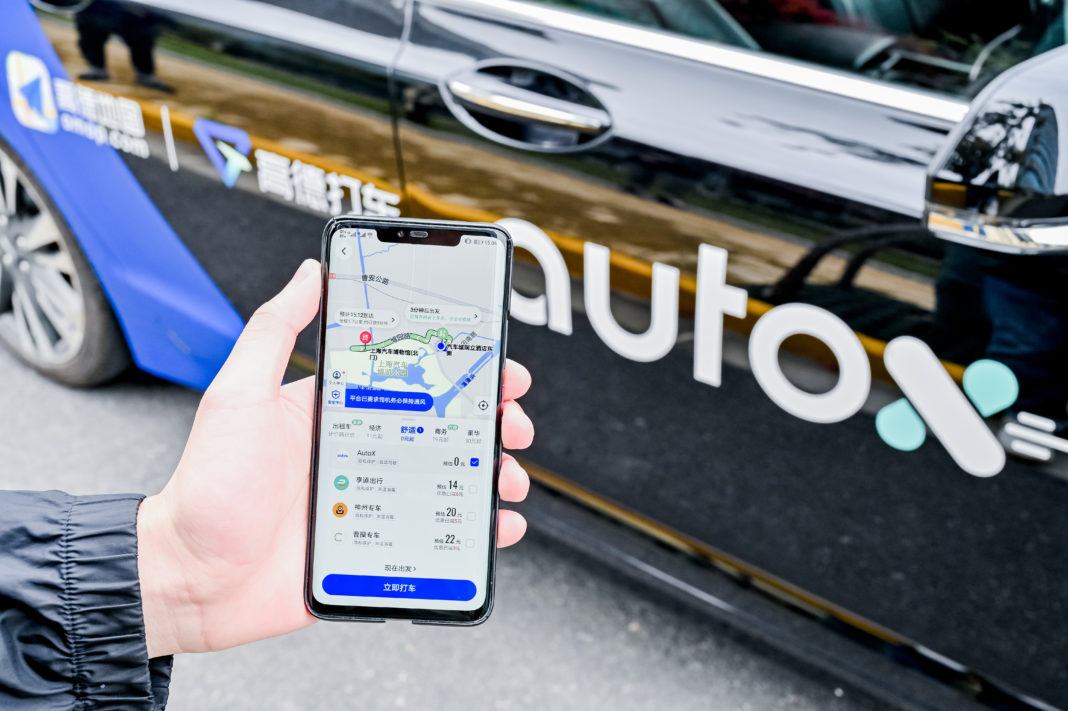
Alibaba‘s Amap and AutoX have partnered up to launch a self driving vehicle as Robotaxi, in China’s ride-hailing network for commercial service in China. The service is being launched first in Shanghai.
The city of Shanghai is the first area where collaboration is launching its service, which is named ‘AutoX RoboTaxi.’ This is big news considering it is the first time a self-driving service has been available on a major ride hailing platform in China. The service is being offered by AutoX (also known as AutoNavi and Gaode) alongside the Alibaba owned, Amap Co. Ltd.
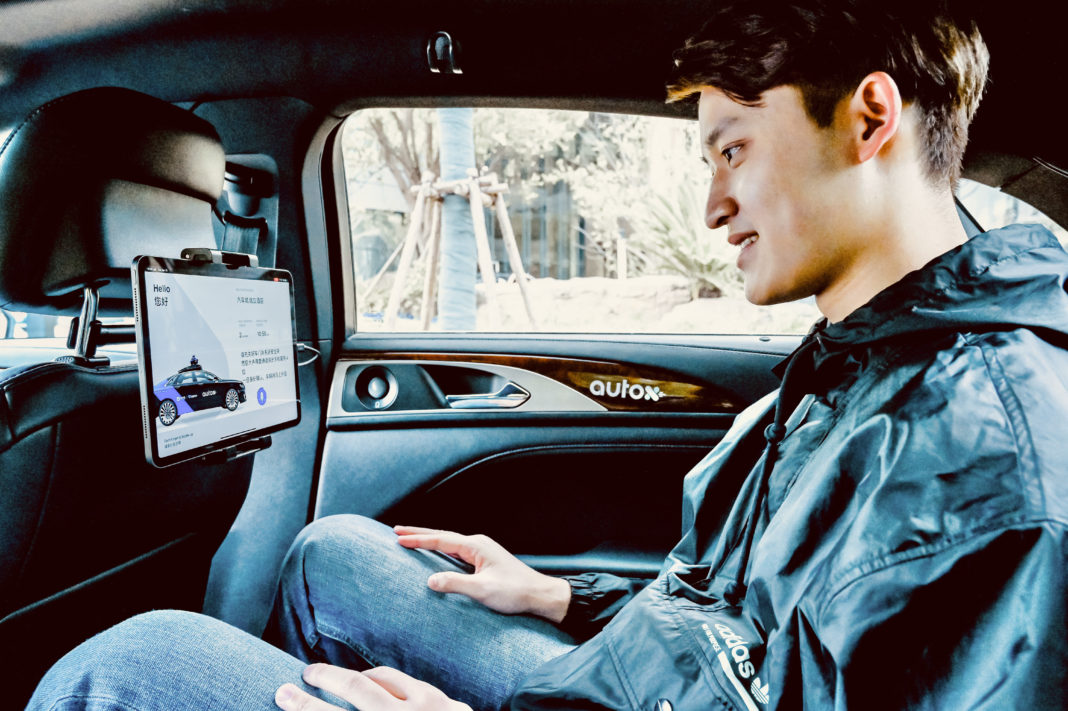
The process of using the service is relatively simple and quite similar to any regular taxi hailing service. A user must enter their pickup and drop locations, after which, the application will list all vehicles that can fulfill the request, including AutoX RoboTaxi vehicles. One can choose between the regular and autonomous vehicles selections and the app will simply send a car closest to the user in either case.

AutoXAccording to AutoX CEO, Dr. Jianxiong Xiao, “The seamless combination of autonomous and human-driving fleets is crucial for the adoption and commercialization of self-driving technology. The service area of autonomous vehicles is an ever-increasing yet geo-fenced region, and the fleet size takes time to grow. This combination is a must-have for an autonomous driving company to be able to provide a truly useful service for all riders.”
At the moment, other self-driving car services only offer drops at fixed locations. However, the AutoX’s service will have users be picked up and dropped off at any location within the city. This provides a greater degree of flexibility and is a lot more viable and convenient for its customers. Furthermore, AutoX vehicles are capable of going speeds up to 80km/h and has also been developed with the recent pandemic in mind.
The AutoX service is streamlined identity confirmation and ride starting process, which is completely touchless. For its self driving car, AutoX employs the V2X technology that is connected to servers via 5G networking. This allows the vehicle to communicate with road infrastructure like traffic lights, and obtain other information as well. At the moment, the RoboTaxi service is the first real-world application of Shanghai’s V2X infrastructure, which was recently built as part of China’s national New Infrastructure Initiative.
The practical applications and implications of this service is enormous. Not only does it open a new breed of service to the existing industry, but it also further advances the technology behind it and its implementation. This will also help the large population of Shanghai to move freely around the city with lower risks and go about daily commutes to subway stations, grocery stores, and more. The service will have 100 cars in its arsenal and will even start accepting free promotional rides to early users from 27th April 2020. by Sean

TESLA


Company says cars can automatically stop for traffic lights

After testing on public roads, Tesla is rolling out a new feature of its partially automated driving system designed to spot stop signs and traffic signals.
The update of the electric car company's cruise control and auto-steer systems is a step toward CEO Elon Musk's pledge to convert cars to fully self-driving vehicles later this year.
But it also runs contrary to recommendations from the U.S. National Transportation Safety Board that include limiting where Tesla's Autopilot driving system can operate because it has failed to spot and react to hazards in at least three fatal crashes.
In a note sent to a group of Tesla owners who were picked to test the stop light and sign recognition feature, the company said it can be used with the Traffic Aware Cruise Control or Autosteer systems. The feature will slow the car whenever it detects a traffic light, including those that are green or blinking yellow. It will notify the driver of its intent to slow down and stop, and drivers must push down the gear selector and press the accelerator pedal to confirm that it's safe to proceed.
The company warns in the note obtained by The Associated Press that drivers must pay attention and be ready to take immediate action "including braking because this feature may not stop for all traffic controls."
The note says that over time, as the system learns from the fleet on the roads, it "will control more naturally."
Tesla didn't respond to multiple requests for additional details, but the website Electrek.co reported last week that the new feature is being sent to the wider Tesla fleet as part of an over-the-Internet software update for thousands of vehicles. The feature won't come until later in other parts of the world, the website said.
The National Highway Traffic Safety Administration, the U.S. government's road safety agency, said in a prepared statement Monday that the agency "will closely monitor the performance of this technology," adding that drivers must be ready to act and law enforcement agencies will hold them responsible.
Jason Levine, executive director of the Center for Auto Safety, a nonprofit watchdog group, said Tesla is using the feature to sell cars and get media attention, even though it might not work. "Unfortunately, we'll find out the hard way," he said. Whenever one of its vehicles using Autopilot is involved in a crash, Tesla points to "legalese" warning drivers that they have to pay attention, Levine said. But he said Tesla drivers have a history over-relying on the company's electronics.
Missy Cummings, a robotics and human factors professor at Duke University, fears that a Tesla will fail to stop for a traffic light and a driver won't be paying attention. She also said Tesla is using its customers for "free testing" of new software.
She also fears that the cars will stop for green lights and their drivers won't react in time to keep moving, causing more rear-end collisions.
The NTSB has ruled in three fatal crashes that Tesla's Autopilot system was partly to blame, and it has expressed frustration with NHTSA for failing to act on the board's recommendations. Last month the board, which has no regulatory powers, took the unusual step of accusing NHTSA of contributing to the cause of a March 2019 Tesla crash in Florida.
The March 1, 2019, crash in Delray Beach, Florida, killed the 50-year-old driver of a Tesla Model 3. The car was traveling 69 miles per hour (111 kilometers per hour) when neither the driver nor the Autopilot system braked or tried to avoid a tractor-trailer that was crossing in its path. The car struck the trailer, which sheared off the Tesla's roof. The report also blamed the truck and the Tesla driver in the crash.
NTSB Chairman Robert Sumwalt said in March that the crash was the third "where a driver's overreliance on Tesla's Autopilot and the operational design of Tesla's Autopilot have led to tragic consequences."
NHTSA said it will review the NTSB's report.
The Delray Beach crash was remarkably similar to one in 2016 in Williston, Florida, which also killed a Tesla driver. In that crash neither Autopilot nor the driver stopped for a crossing tractor-trailer.
Tesla maintains that its vehicles operating on Autopilot are about twice as safe as those in which the system isn't engaged. The company says in the fourth quarter, drivers using Autopilot had one crash for every 3.07 million miles driven. Source: Tom Krisher

AUTONEWS


GM suspends dividend to save cash

General Motors announced Monday that it will suspend its dividend and halt share repurchases as it conserves cash amid a broad economic slowdown expected to weigh on auto purchases.
GM said it had also extended a $3.6 billion bank credit facility through April 2022 to build more liquidity capacity.
"We continue to enhance our liquidity to help navigate the uncertainties in the global market created by this pandemic," said GM Chief Financial Officer Dhivya Suryadevara.
"Fortifying our cash position and strengthening our balance sheet will position the company to create value for all our shareholders through this cycle."
The biggest US car manufacturer still has set no timeframe for resuming auto production after announcing on March 18 it was suspending North American operations to combat the spread of the coronavirus.
The company has refashioned an Indiana plant to build critical care ventilators and manufactured face shields and other personal protective equipment for medical workers.
Wall Street analysts expect the company to announce a steep drop in profits in the first quarter when it reports early next month.
GM is also projected to report a big loss in the second quarter as much weaker consumer confidence dents car sales.
The company's move comes on the heels of Ford's announcement last month that it also would suspend its dividend.
Shares of GM fell 1.1 percent to $21.71 in morning trading. © 2020 AFP

segunda-feira, 27 de abril de 2020


AUTONEWS


Oil reaches the value of a pizza in the USA
NEW YORK (Reuters) - Brent crude fell below the $20 a barrel mark and WTI plunged 25% on Monday, with investors fleeing the United States' benchmark due to lack of storage space amid the collapse demand caused by the coronavirus pandemic.
Even with governments around the world looking for measures to ease movement restrictions and help the economy recover, demand for fuels remains weak.
According to Kpler data, fuel demand is down 30% globally, while inventory spaces are becoming something precious, with nearly 85% of the world's onshore storage filled up to last week.
Economic concerns also continue to plague the market. According to a Reuters poll of more than 500 economists, the global economy is expected to contract by 2% this year, a result worse than in the financial crisis.
US oil futures contracts closed down $4.16, or 24.6%, to $12.78 a barrel. Brent crude fell 1.45 dollars, or 6.8%, and ended the day at 19.99 dollars a barrel.
Traders said the drop in oil is partly due to retail investment vehicles, such as exchange-traded funds, that are shifting their investments from the first contract (for June) to prevent them from being "stuck" with the papers, as many were a week ago, when the first month's maturity (for May, until then) fell to -37.63 dollars a barrel.
Last week, oil futures experienced their third consecutive weekly decline, with a 24% drop for Brent and a 7% decline for WTI. Markets have fallen in eight of the past nine weeks. Stephanie Kelly

MERCEDES-BENZ


Mercedes-Benz Sprinter ganha versão de 20 lugares
Sprinter wins version of 20 seats in Brazil

Mercedes-Benz now offers the Sprinter Van Passenger 19 + 1 on the Brazilian market, which allows the transport of up to 19 passengers. Available in a single version, the model costs R$ 222,894 (solid paint) and R$ 225,749 (metallic paint)-Local currency.

The transport capacity is the result of the elimination of the side sliding door, with access to the cabin being made through the front passenger door.
The model's equipment list includes rear air conditioning, double luggage compartment and USB-C port for recharging cell phones in all seat rows. The list of standard items also includes Fatigue Assistant, Active Brake Assistant, automatic cruise speed controller and electronic stability control. Autonews

AUTONEWS Record 32% of new vehicle sales to be EVs in 2030, study finds A new analysis of U.S. electric vehicle sales projects that a record...